Finding dependable wholesale chenille letter patches suppliers requires more than comparing catalog photos. A patch may look plush on a screen, yet arrive with loose yarn, uneven borders, or weak adhesive. The best suppliers show consistent stitching, accurate colors, clear minimum order quantities, and realistic production timelines.
Textile sourcing consultant Lena Ortiz explains, “A good patch supplier proves quality through samples, not promises.” Her point matters when ordering hundreds of pieces for varsity jackets, uniforms, caps, or retail collections. Buyers should inspect the chenille pile, felt backing, merrowed edge, letter shape, and attachment method. Ask for a physical sample whenever possible. Small details matter.
This guide reviews seven wholesale chenille letter patches suppliers through practical sourcing criteria. It considers customization, embroidery precision, pricing transparency, communication, packaging, and fulfillment reliability. Some suppliers may offer lower prices, but cheaper production can bring inconsistent sizing or delayed delivery. That is not always obvious.
I have also included a few cautions. Supplier information can change, and online reviews may not tell the whole story. A strong rating does not replace a sample inspection. Even experienced buyers can overlook thread tension or color variation under factory lighting. Consider this a working shortlist, not a permanent verdict. Before placing a large order, confirm current specifications, delivery terms, sample approval, and replacement policies. The right wholesale chenille letter patches partner should make production easier, not create another quality-control problem.
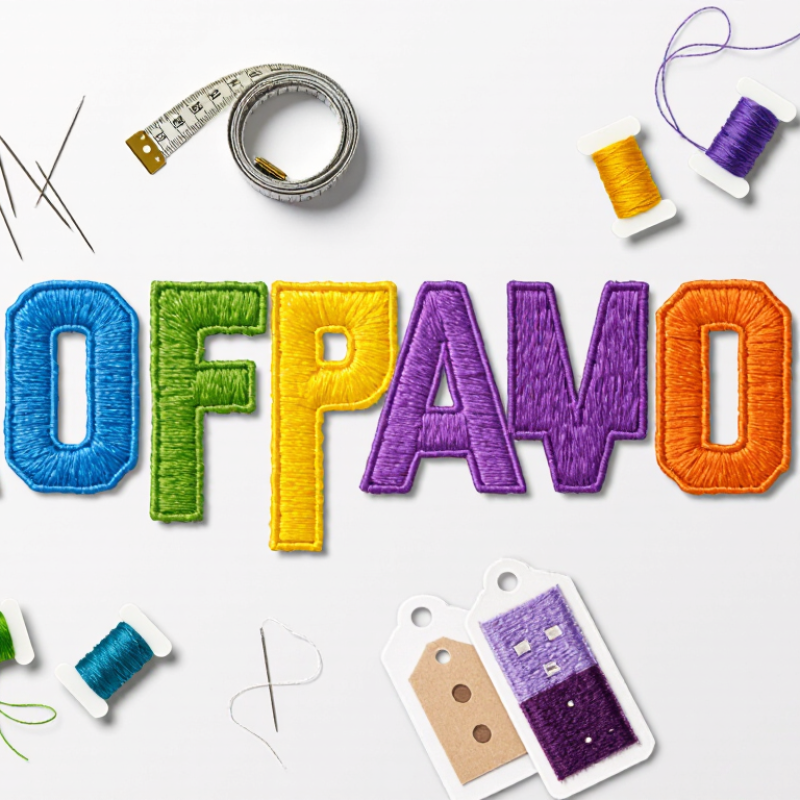
Chenille letter patches are raised fabric emblems made with soft, looped yarn. Their fuzzy surface gives jackets, uniforms, caps, and bags a bold school-style appearance. The letters usually sit on felt, twill, or another stable backing. Heat-seal adhesive, sewing edges, or both can secure the patch.
Wholesale supply begins with clear artwork and measurable specifications. Buyers should provide letter height, colors, border style, backing type, quantity, and delivery date. A reliable supplier normally sends a digital proof before production. Request a physical sample when texture and color accuracy matter. Screens can misrepresent both shades and density.
Minimum order quantities often affect unit prices. Larger orders may reduce costs, but storage can become a problem. Ask about sample fees, production capacity, packaging, and inspection procedures. Check whether the supplier can maintain consistent letter spacing across repeated batches. Small flaws matter. Loose yarn, uneven borders, or weak adhesive can create returns. A simple pull test and wash test reveal useful weaknesses. I have found that the cheapest quotation is not always the most efficient choice. It may exclude sampling, revised artwork, or reliable packing. Keep written records of approved colors and measurements. Even careful buyers can overlook one detail.
Choosing among wholesale chenille letter patch suppliers requires more than comparing catalog photos. I examine physical samples under bright light. Dense, even yarn should create clean letter edges without bald spots. The backing must feel firm, but it should not crack when gently flexed. Ask for close-up images of the reverse side, stitching, and border finish.
Material consistency matters. Request fiber details, color references, wash-care guidance, and batch inspection records. A dependable supplier should explain how they test colorfastness and adhesive strength. Confirm the minimum order quantity, sample fees, production time, packaging method, and replacement policy in writing. Small details become expensive problems later. Communication also reveals professionalism. Clear replies, realistic deadlines, and accurate invoices usually indicate stronger production control.
I once trusted a low quote before checking the sample. The letters looked attractive, but the yarn height varied across the patch. That mistake changed my evaluation process. Now, I order a pre-production sample and compare it with the approved artwork. I also test several pieces after washing, even when the supplier provides reassuring claims. Ask whether quality checks occur during production or only before shipment. A supplier with documented processes, traceable materials, and responsive after-sales support offers better reliability. Still, no evaluation is perfect. Human inspection can miss defects, especially in large orders. Random checks from every carton provide a more honest picture.
The seven profiles below represent practical wholesale chenille letter patch supplier types. A factory-direct embroidery specialist suits bulk schoolwear orders. A low-MOQ studio helps small fashion labels test initials. A sportswear producer offers dense chenille, durable twill backing, and heat-seal options. A uniform supplier focuses on repeat colors and stable sizing. A private-label workshop supports custom fonts and sample revisions. An export-oriented manufacturer may provide carton packing and inspection records. A trading supplier can compare several factories, though quality control may be less consistent.
The market context supports careful selection. Textile Exchange’s Materials Market Report 2024 states that polyester represented about 57% of global fiber production in 2023. This matters because synthetic chenille yarn can improve color consistency, but recycled content and backing materials need verification. Grand View Research estimates the custom T-shirt printing market will grow at about 11% annually through 2030. That growth signals stronger demand for personalized apparel, yet chenille patches require different testing. I would request a 10-by-10-centimeter sample, then check loose fibers, edge stitching, letter height, and adhesive strength after washing. One overlooked detail is the reverse side.
Tips: Ask each supplier for MOQ, lead time, yarn composition, backing temperature, and a pre-production sample. Compare the same letter design across all seven quotes. Photograph defects under bright light. Do not trust a color chart alone. A supplier promising every finish may be less specialized; that is worth questioning. Personally, I would accept a slightly higher unit cost for stable lettering and documented inspections. Cheap samples can become expensive rework.
Comparing seven wholesale chenille letter patch suppliers requires more than checking catalog photos. I request physical samples before judging quality. Dense stitching should hold its shape around curved letters. The felt backing should feel firm, not thin or fuzzy. Small details count.
I also inspect edge trimming, adhesive coverage, and color consistency under daylight. A 3-millimeter chenille surface often looks richer than a flat, loosely stitched design. However, thickness alone does not guarantee durability.
A wash test can reveal loose threads, shrinking, or peeling adhesive. That matters. Some suppliers offer attractive samples but cannot repeat the same finish in larger batches.
Customization affects both appearance and cost. Ask whether suppliers can match Pantone colors, adjust letter height, and create custom outlines. Metallic thread, unusual borders, and individual names usually increase production time.
Pricing should include setup charges, sampling fees, packaging, and shipping. A low unit price may become expensive after these additions.
Minimum order quantities also deserve careful comparison. One supplier may accept 50 pieces per design, while another requires 500. Lower minimums suit small clothing launches, but the unit price may rise noticeably. Larger orders can reduce costs, although unused inventory creates its own risk. I would request identical specifications from all seven suppliers before comparing quotes. My own evaluations are not perfect; color judgment can vary between screens and fabric samples. Written specifications and dated sample photos make supplier claims easier to verify.
Selecting the right wholesale chenille letter patch supplier requires more than comparing prices. Request physical samples before placing a large order. Check the letter height, thread density, backing strength, and edge stitching. Rub the patch against denim to test shedding and color transfer. Small flaws become expensive when repeated across hundreds of pieces.
Ask each supplier for a clear quotation. It should include unit pricing, sample fees, minimum order quantity, setup costs, packaging, and shipping terms. Confirm production time in writing. A reliable supplier explains how artwork is approved and how changes are recorded. Send a measured design file, not only a phone image. Specify colors, dimensions, adhesive type, and backing material. Details prevent avoidable rework.
Communication matters during ordering. Notice how quickly the supplier answers difficult questions. Do they explain limitations honestly? Do they offer a pre-production sample? I once focused too heavily on the lowest price and overlooked a vague delivery promise. That decision caused delays and extra handling costs. The lesson still matters: value is not the cheapest quote. Keep invoices, approved proofs, inspection photos, and delivery records together. If the supplier cannot provide consistent quality evidence, compare another option. A small trial order may feel inconvenient, but it reveals stitching, packing, and communication problems before a larger commitment.
Anonymous supplier comparison based on common wholesale specifications and practical purchasing requirements
| Supplier Profile | Typical Production Region | Best Suited For | Common MOQ | Sample Lead Time | Bulk Lead Time | Typical Wholesale Price* | Customization Capability | Key Documents to Request | Recommended Order Check |
|---|---|---|---|---|---|---|---|---|---|
| Profile 1 High-volume |
East Asia | Large uniform orders for apparel distributors and promotional programs | 500–1,000 pieces per design | 5–10 business days | 20–35 business days | US$0.45–1.20 per piece | Standard chenille letters, custom colors, iron-on backing, sew-on backing, merrowed borders | Material composition, color standard, pre-production approval, packing details | Confirm color consistency across the full production batch |
| Profile 2 Low MOQ |
South Asia | Small clothing labels, online sellers, and test launches | 50–200 pieces per design | 7–12 business days | 18–30 business days | US$0.80–2.20 per piece | Small-batch lettering, basic shape changes, limited color matching, adhesive backing | Sample photos, size chart, backing instructions, carton quantity | Order a paid sample before approving a larger quantity |
| Profile 3 Fast turnaround |
North America or Europe | Urgent retail replenishment and local event merchandise | 100–300 pieces per design | 3–7 business days | 10–20 business days | US$1.50–4.00 per piece | Rapid artwork review, standard letter fonts, sew-on and heat-seal options | Production schedule, shipping terms, tax information, quality policy | Verify the guaranteed dispatch date in writing |
| Profile 4 Premium finish |
East Asia or Europe | Premium varsity apparel, fashion collections, and boutique orders | 200–500 pieces per design | 7–14 business days | 25–40 business days | US$1.20–3.50 per piece | Dense yarn coverage, layered lettering, detailed borders, custom felt bases, multiple finishes | Stitch density, yarn specification, artwork proof, defect tolerance | Inspect edge coverage, letter spacing, and backing adhesion |
| Profile 5 Private-label ready |
East or Southeast Asia | Resellers that need custom packaging and repeatable production | 300–800 pieces per design | 7–12 business days | 20–35 business days | US$0.70–2.00 per piece | Custom header cards, individual bags, barcode labels, insert cards, standard patch formats | Packaging proof, carton dimensions, barcode placement, commercial invoice | Approve packaging artwork separately from patch artwork |
| Profile 6 Custom artwork |
East Asia | Complex initials, school-style lettering, and multi-color designs | 200–600 pieces per design | 8–15 business days | 25–45 business days | US$1.00–3.00 per piece | Artwork digitization, custom fonts, multiple felt layers, appliqué details, irregular shapes | Digitized proof, vector artwork confirmation, Pantone or physical color approval | Check that the final sample matches the approved digital proof |
| Profile 7 Eco-conscious |
Asia or Europe | Retailers seeking recycled or lower-impact material options | 300–1,000 pieces per design | 10–15 business days | 25–45 business days | US$1.10–3.20 per piece | Recycled felt or yarn options where available, sew-on backing, paper-based packaging | Fiber-content statement, recycled-material evidence, packaging specification, test report | Confirm whether environmental claims apply to the whole patch or only selected components |
*Price ranges are indicative wholesale benchmarks for chenille letter patches and can change according to size, stitch density, backing type, number of colors, packaging, order quantity, shipping method, and destination. Before placing an order, request a physical sample, a written quotation, production tolerances, delivery terms, and a pre-production approval.
They are raised fabric emblems made with soft, looped yarn. Their fuzzy surface creates a bold school-style appearance. They can decorate jackets, caps, uniforms, and bags.
Provide letter height, colors, border style, backing type, quantity, and delivery date. Include adhesive preferences and exact measurements. A phone image alone is not enough.
Yes, request a digital proof and physical sample. Physical samples show texture, color, thickness, and edge quality. Screens can misrepresent shades and stitching density.
Inspect thread density, edge trimming, adhesive coverage, and backing strength. Rub the patch against denim to check shedding and color transfer. Try a simple pull test.
No. A thicker surface may look richer, but thickness does not prove durability. Wash testing can reveal loose threads, shrinking, or peeling adhesive. That detail is easy to miss.
Custom colors, letter heights, outlines, metallic thread, and individual names can increase costs. Ask whether setup charges and sampling fees are included. Unusual borders may require more production time.
Compare unit prices, minimum orders, setup costs, sample fees, packaging, and shipping. A low quotation may exclude important services. Cheap can become expensive.
A lower minimum order reduces unused inventory risk. Some suppliers may accept 50 pieces per design, while others require more. The unit price can rise noticeably.
Keep approved proofs, color records, invoices, inspection photos, and delivery details together. Confirm production time in writing. Clear records prevent avoidable rework.
Usually, yes. It can reveal stitching, packing, delivery, and communication problems early. I once trusted the lowest price too much. That choice caused delays.
This guide explains what wholesale chenille letter patches are, how they are produced, and how wholesale purchasing typically works for retailers, apparel makers, schools, teams, and custom merchandise businesses. It outlines the main factors to consider when evaluating suppliers, including embroidery density, chenille texture, backing options, color accuracy, stitching durability, customization capabilities, production speed, communication, and order consistency. The article also presents profiles of seven types of wholesale suppliers, helping buyers understand the different strengths they may offer without focusing on any specific brand.
A practical comparison of product quality, customization choices, pricing structures, and minimum order quantities makes it easier to identify the best fit for different business needs. The final section provides a step-by-step approach to selecting and ordering from the right supplier, including requesting samples, confirming artwork and specifications, reviewing timelines, clarifying shipping terms, and checking quality before placing larger orders. With careful research and clear communication, buyers can source reliable wholesale chenille letter patches while balancing appearance, cost, and production requirements.