Choosing the right custom tracksuits manufacturer affects every stage of global teamwear production. Fabric quality, accurate sizing, stitching strength, and delivery reliability all matter. A supplier may show impressive product photos. That is not enough.
Experienced buyers usually request physical samples before placing bulk orders. They inspect fleece weight, zipper movement, seam finishing, and color consistency under natural light. They also review size charts and test several garments after repeated washing. Small details become expensive problems later. A dependable manufacturer should explain fabric composition, production capacity, minimum order quantities, packaging, and quality-control procedures clearly.
Yvon Chouinard, Patagonia’s founder and an influential apparel industry pioneer, once said, “The more you know, the less you need.” This principle applies to custom tracksuits. Better knowledge helps buyers avoid unnecessary trims, weak fabrics, and confusing specifications. It also encourages practical design choices for schools, clubs, retailers, and corporate teams.
The best custom tracksuits manufacturer is not always the cheapest option. A low quotation may hide limited sampling, inconsistent measurements, or delayed communication. Experience teaches a harder lesson: even strong factories can make mistakes. The difference lies in how quickly they identify, document, and correct them.
This guide examines the qualities global buyers should verify before choosing a production partner. It considers materials, customization options, factory experience, inspection standards, and communication. The goal is simple. Select a supplier that can deliver attractive tracksuits consistently, not just once.
Custom Tracksuits: Definition, Components, and Core Features
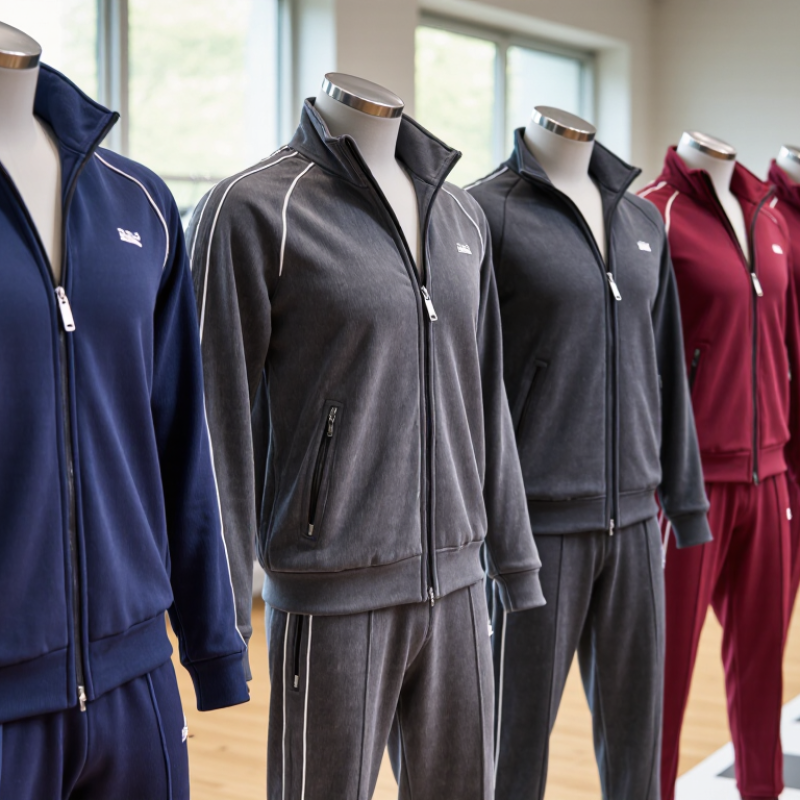
Custom tracksuits are coordinated sportswear sets, usually pairing a zip jacket with matching trousers. They support training, travel, team identity, and everyday comfort. A reliable set starts with fabric selection. Polyester offers durability and quick drying, while cotton blends provide a softer hand feel. Other components include ribbed cuffs, drawcords, zippers, pockets, lining, labels, and decoration methods such as embroidery or heat transfer. Each detail affects comfort and production cost.
Core features should match the buyer’s intended use. Flexible fabric supports movement during warm-ups, while breathable panels can reduce heat during active sessions. Strong seams and quality zippers help the garment survive repeated washing. In practical production work, a clear measurement chart is essential. A sample should be checked for sleeve length, trouser rise, pocket position, and color accuracy before bulk manufacturing. A design may look excellent on a screen yet feel heavy when worn. That weakness deserves honest review.
Tips: Request fabric weight, colorfastness, shrinkage, and seam-strength information. Confirm decoration placement with a physical sample. Use size grading that reflects the target market, not assumptions. Keep approval records for measurements and materials. Small errors become expensive at scale. Global buyers should also ask for consistent packaging, inspection photos, and clear production timelines. A capable manufacturer communicates limitations early, because perfect customization is rarely achieved through artwork alone.
How to Select a Custom Tracksuits Manufacturer
Choosing a custom tracksuits manufacturer requires more than comparing prices. Textile Exchange’s Materials Market Report 2024 reports that global fiber production reached 124 million tonnes in 2023. It may reach 160 million tonnes by 2030. This growth increases the need for verified materials and responsible production. Ask manufacturers for fabric composition, GSM, colorfastness results, and fiber traceability. Request current factory photos and recent production samples. A polished website proves very little.
Tips: Test one sample before placing a bulk order. Check stitching, zipper movement, shrinkage, and size grading. Confirm the minimum order quantity, production timeline, packaging, and payment terms in writing. ISO 9001-based quality procedures can indicate controlled processes, but certification alone is not enough. Visit the facility when possible, or use an independent inspection service.
Experienced buyers also review communication speed and problem-solving habits. A reliable manufacturer explains defects instead of hiding them. Ask how they handle shade differences between fabric batches. Confirm whether the same pattern can be reproduced six months later. This matters for teamwear and repeat orders. Sustainable claims deserve evidence, including audit records or transaction certificates. Some suppliers offer impressive samples but struggle with volume. That gap is easy to miss. I would allow extra time for corrections, because even careful specifications can fail during mass production. Pricing should include sampling, freight, duties, and possible rework. A cheaper quotation is not always cheaper.
Custom Design, Fabric, and Production Options
Top Custom Tracksuits Manufacturer for Global Buyers
Custom Design, Fabric, and Production Options
A reliable custom tracksuit manufacturer starts with the design brief, not a generic template. Buyers can submit logos, color references, measurements, and artwork files. Experienced technical teams then convert these ideas into clear production drawings. This step prevents misplaced panels and uneven logo sizes. Small details matter.
Fabric choice affects comfort, durability, and price. Lightweight polyester suits warm training environments, while cotton blends offer a softer hand feel. Brushed fleece adds warmth for outdoor use. Mesh panels can improve airflow around the back and underarms. Fabric weight, stretch recovery, colorfastness, and shrinkage should be tested before bulk production.
Sampling should include the jacket, trousers, trims, and printed or embroidered details. A proper sample reveals issues that drawings may hide. The collar may feel too tight. The sleeve might need more room. These are not failures, but useful production evidence. Some specifications may still need revision after fitting.
For dependable production, buyers should request size grading, seam checks, wash testing, and an agreed inspection standard. Clear records support consistent results across repeated orders. Flexible manufacturers can offer cut-and-sew production, private labeling, custom packaging, and different minimum quantities. Production schedules should include material sourcing, sampling, approval, manufacturing, and final inspection. A rushed approval often creates avoidable problems.
Quality Control and Compliance in Tracksuit Manufacturing
For global buyers, a reliable tracksuit manufacturer must treat quality control as a daily process, not a final inspection. The ISO Survey 2023 recorded more than 1.3 million ISO 9001 certificates worldwide. Certification helps, but it never replaces factory discipline.
A practical system starts with approved fabric samples, shade checks, and measurement records. Inspectors should test GSM, colorfastness, seam strength, shrinkage, and zipper performance. Each production batch needs traceable labels and inspection photos. Textile Exchange’s 2024 Material Market Report reported 124 million tonnes of global fiber production in 2023. Polyester represented roughly 57% of that volume, making material documentation increasingly important. Suppliers should verify recycled-content claims through valid transaction records and laboratory testing.
Compliance must match the destination market. Testing may cover restricted substances, flammability, labeling, and children’s-wear requirements, depending on the buyer’s specification. Factory audits should also examine worker safety, chemical storage, emergency exits, and working-hour records. Documents matter.
In our experience, most defects appear before sewing: incorrect patterns, unstable fabric, or unclear size charts. We still see avoidable mistakes, especially when buyers approve samples too quickly. A better process includes pre-production meetings, random inspections, and independent laboratory verification. No system is perfect. Records can be incomplete, and auditors can miss details. That weakness deserves honest review, not polished paperwork.
Top Custom Tracksuits Manufacturer for Global Buyers – Quality Control and Compliance in Tracksuit Manufacturing
Reference quality-control targets commonly used in apparel sourcing. Actual requirements may vary by buyer specification, fabric composition, destination market, and applicable testing standard.
The chart summarizes key inspection areas for custom tracksuits, including dimensional accuracy, seam integrity, colorfastness, pilling resistance, shrinkage control, and chemical compliance documentation.
Ordering, Shipping, and After-Sales Support for Global Buyers
Top Custom Tracksuits Manufacturer for Global Buyers
Ordering custom tracksuits starts with clear production information. Share your tech pack, fabric preference, size chart, logo files, and target quantity. A professional manufacturer should review these details before quoting. Sample approval matters because colors can appear different on screens. Check stitching, zipper movement, fabric weight, and measurements by hand. Small mistakes become expensive in bulk production.
Ask about minimum order quantities, lead times, payment stages, and quality inspections. A reliable supplier should provide a written production schedule. They should also confirm packaging details for each destination. Shipping requires accurate invoices, packing lists, carton dimensions, and product descriptions. Delivery terms must be explained clearly. Air freight suits urgent orders, while sea freight usually reduces large-order costs. Customs delays still happen.
Our process is not flawless. A fabric shade may vary slightly between batches, and this needs honest communication. Before dispatch, photos, inspection reports, and carton counts can reduce uncertainty. After-sales support should include a defined response time for shortages, defects, or incorrect sizing. Keep evidence, including photos and carton labels. A fair solution may involve replacement pieces, a credit, or rework. Fast promises are easy. Consistent follow-through is harder.
FAQS
Share logos, color references, measurements, and artwork files. Technical teams can turn these details into production drawings. Clear drawings help prevent misplaced panels and uneven logo sizes. Small details matter.
Lightweight polyester works well in warm environments. Cotton blends provide a softer feel. Brushed fleece adds warmth outdoors. Mesh panels can improve airflow around the back and underarms. Fabric choice affects comfort, durability, and price.
Buyers should check fabric weight, stretch recovery, colorfastness, and shrinkage. They should also approve a physical fabric sample. A color may look different under factory lighting. That detail is easy to overlook.
Sampling reveals problems that drawings may hide. The collar might feel too tight. The sleeves may need more room. Samples should include jackets, trousers, trims, and logo details. Not every specification is final.
Request size grading and detailed measurement records. Fit samples on intended users when possible. Check sleeve length, trouser width, collar comfort, and overall movement. A rushed approval can create repeated sizing problems.
Checks should cover GSM, colorfastness, seam strength, shrinkage, and zipper performance. Inspectors should compare production fabric with approved samples. Random inspections can catch defects before shipment. Inspection photos and batch labels support traceability. Documents matter.
Requirements depend on the destination market and product specification. Testing may cover labeling, flammability, restricted substances, and children’s-wear rules. Factory reviews should examine worker safety, chemical storage, and emergency exits. Working-hour records also deserve attention. Paperwork alone is not enough.
The schedule should include material sourcing, sampling, approval, manufacturing, and final inspection. Allow time for revisions after fitting. Independent laboratory checks may provide additional confidence. No system is perfect. Records can be incomplete, and reviewers can miss details.
Conclusion
Custom tracksuits combine coordinated jackets and trousers designed for teamwear, uniforms, training, events, or promotional use. Key elements include fabric selection, color matching, sizing, logos, trims, zippers, pockets, and finishing details. Choosing the right custom tracksuits manufacturer requires evaluating design flexibility, material quality, production capacity, communication, sample development, and experience serving international buyers. A dependable supplier should offer multiple fabric and customization options while maintaining consistent workmanship across different order quantities.
Quality control should cover measurements, stitching, color accuracy, printing or embroidery, durability, and final packaging. Buyers should also confirm applicable safety and labeling requirements before production. A smooth ordering process includes clear specifications, sample approval, transparent pricing, realistic lead times, and secure payment arrangements. For global orders, reliable shipping coordination, accurate documentation, tracking, and responsive after-sales support are equally important. By assessing these areas carefully, buyers can build a stable supply relationship and receive custom tracksuits that match their intended performance, appearance, and delivery expectations.