Choosing the right custom football kit manufacturer can shape a club’s identity, comfort, and match-day performance. Global buyers need more than attractive catalog photos. They need verified production experience, consistent quality, and dependable communication across time zones.
A strong manufacturer should understand fabric performance, player movement, climate, and repeated washing. Practical checks matter. Request a physical sample before placing a large order. Examine the stitching around the shoulders, the collar’s recovery, and the print after washing. Ask about fabric weight, size tolerances, color matching, and replacement policies. Clear documentation also reduces confusion about artwork approval, payment terms, delivery schedules, and import responsibilities.
Details matter.
Experienced suppliers usually explain their process instead of making vague promises. They may show factory images, production records, testing information, and references from clubs or distributors. However, online reviews are not always complete evidence. A polished website can hide slow replies or inconsistent sizing. Even careful buyers sometimes focus too heavily on price and overlook packaging quality or post-sale support.
This guide compares leading custom football kit manufacturers for global buyers. It considers design capability, customization depth, order flexibility, production reliability, and communication standards. The goal is not to identify one perfect supplier. No manufacturer performs equally well for every market, budget, or team size. Instead, the comparison helps buyers ask better questions and recognize practical strengths before committing to a partnership.
Defining Custom Football Kit Manufacturers and Their Market Role
Top Custom Football Kit Manufacturers for Global Buyers
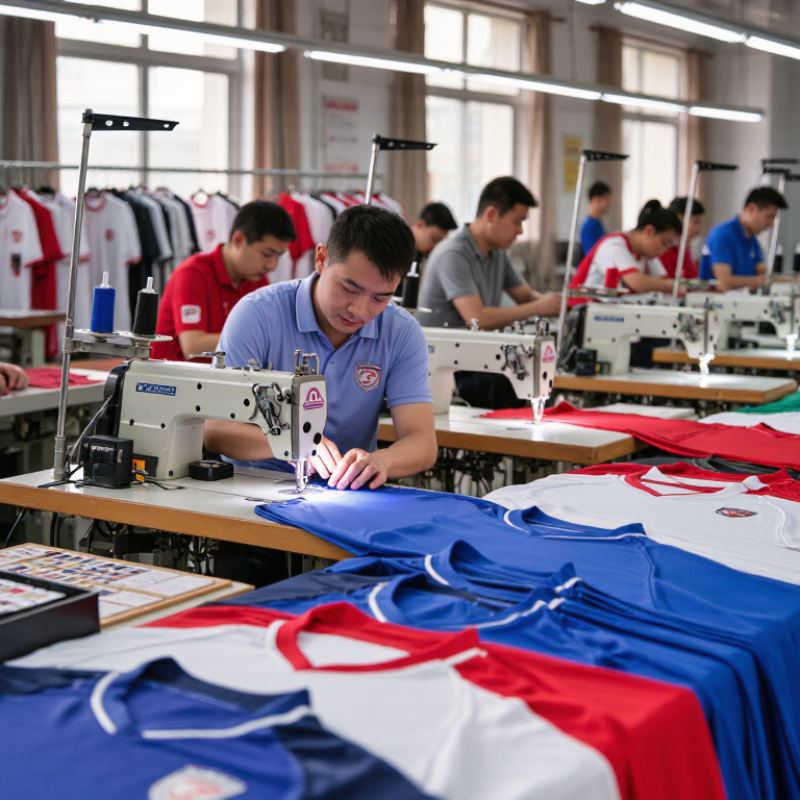
Custom football kit manufacturers are specialized production partners for clubs, schools, academies, and amateur teams. They convert a design brief into match shirts, shorts, socks, and training wear. Their market role extends beyond printing names. They manage fabric selection, grading, sampling, quality control, and international fulfillment.
Grand View Research estimated the global sports apparel market at roughly US$203 billion in 2023, with continued growth expected through 2030. This expansion supports demand for smaller-batch teamwear and personalized uniforms. Meanwhile, the FIFA Professional Football Report 2023 recorded more than 128,000 professional players worldwide. That figure shows the scale of organized football, although it excludes many community teams. The opportunity is larger than professional statistics suggest.
Reliable manufacturers usually provide measured size charts, colorfastness tests, and pre-production samples. A practical buyer should inspect stitching around the shoulders and check whether numbers remain readable after repeated washing. Fabric weight also matters. Lightweight polyester may improve comfort, but it can feel less durable during frequent training.
The gap remains.
Manufacturers serving global buyers must also handle regional sizing, customs paperwork, and realistic lead times. Claims about “premium quality” mean little without test records or clear replacement policies. Some suppliers still prioritize visual mockups over fit testing. That is a weakness worth questioning. A strong market partner combines production experience, transparent communication, and evidence-based quality checks.
Mapping the Main Types of Global Kit Manufacturing Services
Global football kit manufacturing services usually fall into three practical categories.
Fully custom cut-and-sew production gives buyers control over patterns, collars, panels, badges, and fabric weight.
Sublimation printing creates detailed graphics directly within polyester fibers. It suits gradient designs, sponsor layouts, and repeat orders with stable artwork.
However, color matching can shift between factories or fabric batches. A physical approval sample remains essential.
Stock customization starts with an existing shirt block, then adds colors, numbers, names, and selected trims. It is faster and often suitable for youth clubs, schools, and smaller seasonal orders.
Full-service manufacturers may also handle design files, size grading, production, inspection, packing, and export documents. That wider service reduces coordination, but buyers must verify responsibilities in writing.
Ask for fabric GSM, shrinkage results, seam strength, measurement charts, and replacement terms. Use a pre-production sample.
From practical sourcing work, minimum order quantities often determine the best service type.
A flexible supplier may accept mixed sizes, but customization limits can increase unit costs.
Lead times need separate dates for sampling, approval, sewing, inspection, and shipping.
I have seen attractive quotations fail because artwork corrections were not included.
The lesson is uncomfortable: cheap production is not always dependable production.
Factories should explain labor standards, material origin, and quality checks clearly. Import documents and labeling should match destination rules.
Evaluating Fabrics, Design Options, and Production Standards
Choosing top custom football kit manufacturers requires more than comparing colors and prices. Fabric performance matters during repeated sprinting, rain, and machine washing. Textile Exchange’s Materials Market Report 2024 states that polyester represented 59% of global fiber production in 2023. It remains popular because it dries quickly and holds printed graphics well. However, recycled polyester can vary in strength and surface quality. Ask manufacturers for fabric weight, fiber composition, shrinkage results, and colorfastness records.
Design flexibility should support movement, not only appearance. A reliable supplier can offer mesh zones, reinforced seams, flat stitching, and player-specific sizing. Production standards also deserve close inspection. ISO 9001-based quality systems can improve traceability, while documented pre-shipment inspections help catch numbering, stitching, and measurement errors. The International Organization for Standardization reports that ISO 9001 focuses on consistent processes and customer requirements. Still, certification alone proves little about every finished shirt. Samples can mislead. Bulk production may differ.
Tips: Request a size set before approval. Wash one sample repeatedly. Check sponsor graphics after heat exposure. Ask for independent test reports, not promises. Clarify acceptable defect limits and replacement procedures in writing. A slightly higher fabric cost may reduce returns, but this is not guaranteed. Delivery schedules also need realistic buffer time. Five extra production days can prevent rushed mistakes.
Comparing Orders, Pricing, Delivery, and International Support
Choosing a custom football kit manufacturer starts with order control, not colorful mockups. Ask whether samples, size sets, and final production use the same fabric. A reliable supplier should confirm quantities in writing, including goalkeeper shirts, youth sizes, and spare socks. Request a pre-production sample before approving a full order. It prevents expensive surprises. In my experience, clear measurement charts reduce exchanges, especially when clubs combine adult and junior players.
Pricing deserves a line-by-line review. A low shirt price may exclude names, numbers, woven badges, packaging, or setup charges. Compare the complete delivered cost, not the headline quotation. Ask about minimum order quantities and price breaks for repeat seasons. Payment stages should match production milestones, with invoices identifying every item. Some quotes look impressive. They can be incomplete. A reasonable deposit is useful, but rushing payment before artwork approval creates avoidable risk.
Delivery planning needs realistic dates. Confirm sample dispatch, production time, inspection, and transit separately. International buyers should receive tracking details and a contact who understands time-zone differences. Ask how delays, missing cartons, or incorrect sizes are handled. A documented replacement policy matters more than friendly promises. Support should cover artwork files, customs paperwork, and care instructions in clear English. I once underestimated a holiday shutdown; the order arrived after the opening match. That mistake changed my checklist. Now I request a calendar with buffer days and keep a small reserve of training tops.
Selecting a Reliable Manufacturer for a Football Team or Brand
Selecting a reliable football kit manufacturer requires more than comparing prices. FIFA’s Professional Football Report 2023 recorded 128,694 professional male players across 135 countries, showing how varied team requirements can be. A dependable supplier should confirm fabric weight, size grading, colour fastness, stitching strength, and repeat-order consistency before production. Request a physical sample. Check it after washing, stretching, and repeated use. Small details matter.
Ask for documented quality procedures, factory addresses, production capacity, and realistic delivery records. ISO 9001 certification can indicate structured quality management, but it does not guarantee perfect kits. Independent inspections remain valuable. Review pre-production samples, measurement charts, carton labels, and defect tolerances. A supplier that avoids clear answers is a risk. So is one promising impossible delivery times.
Material sourcing deserves equal attention. Textile Exchange’s 2024 Materials Market Report estimated global fibre production at more than 124 million tonnes in 2023, with polyester still dominating the market. Buyers should ask whether recycled fibres are verified, whether colour consistency is tested, and whether production records are traceable. Request relevant certificates, not attractive claims. A lower-impact fabric may feel different on the pitch. That needs testing. No manufacturer is flawless. Even careful buyers can overlook seam comfort, late size changes, or packaging damage. Build communication checkpoints into the order, record approvals in writing, and judge the manufacturer by evidence rather than polished sales language.
FAQS
The main options are fully custom production, sublimation printing, and stock customization. A pre-production sample remains important.
Ask for fiber composition, fabric weight, shrinkage results, and colorfastness records. Polyester dries quickly and holds printed graphics well. Recycled fabric quality can vary.
Colors may change between fabric batches or factories. A sample reveals sizing, artwork, stitching, and fabric problems before bulk production. Digital mockups are not enough.
Review the complete delivered cost, including names, numbers, badges, packaging, and setup fees. Some low quotations are incomplete. That can be costly later.
Request separate dates for sampling, approval, sewing, inspection, and shipping. Add buffer days for holidays and delays. Five extra days may prevent rushed mistakes.
Request a measurement chart and a complete size set before approval. Include adult sizes, youth sizes, goalkeeper shirts, and spare socks. Wash one sample repeatedly.
Ask about seam strength, measurement accuracy, print durability, and defect limits. Documented inspections improve traceability. Certification alone proves little.
The supplier should clarify packing, tracking, customs paperwork, labeling, and care instructions. Replacement terms should be written clearly. Friendly promises are not enough.
Conclusion
Choosing the right custom football kit manufacturer is essential for teams, clubs, academies, and sports brands seeking professional, consistent, and distinctive apparel. These manufacturers support the full process, from concept development and fabric selection to pattern creation, customization, production, and quality inspection. Global buyers can work with specialized teamwear producers, private-label factories, or full-service suppliers, depending on their order size, design requirements, and business goals.
Important evaluation factors include breathable and durable fabrics, accurate sizing, flexible color and graphic options, reliable printing or embroidery, and consistent production standards. Buyers should also compare minimum order quantities, sample procedures, pricing transparency, production schedules, shipping arrangements, and international customer support. A dependable supplier should communicate clearly, provide realistic delivery expectations, protect design details, and maintain stable quality across repeat orders. By reviewing these areas carefully, football organizations and brands can select a manufacturing partner that delivers attractive, functional kits while supporting long-term growth and professional team presentation.