Direct factory-engineered sportswear, bespoke outerwear, and high-definition crest applications. Fully customizable across pantone shades, substrate compositions, and bonding backings with complete CE and OEKO-TEX documentation.
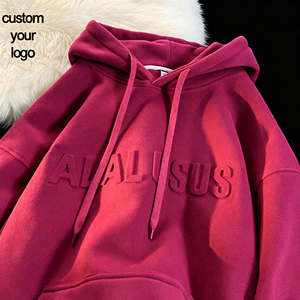
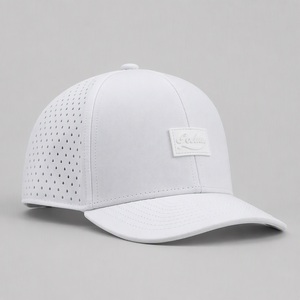
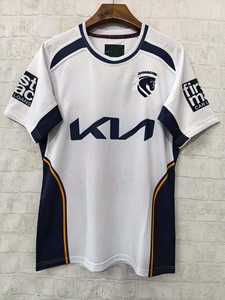
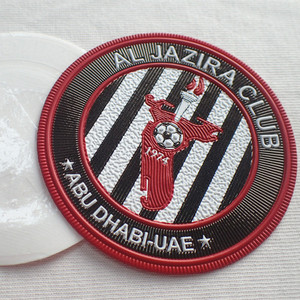
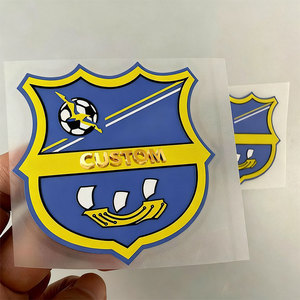
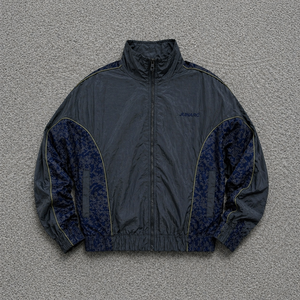
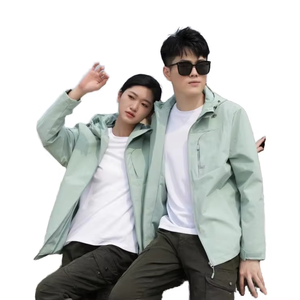
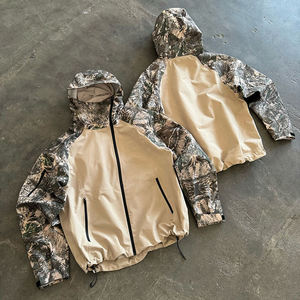
Centrally headquartered in the world-renowned sporting goods manufacturing epicenter of Defence Road, Sialkot, Pakistan, our facility bridges high-capacity cut-and-sew garment manufacture with cleanroom-grade club crest engineering. By operating an integrated vertically consolidated plant, we eliminate third-party embellishment brokers and streamline export clearances.
European and British market regulations mandate stringent chemical and mechanical safety standards on textile trims. Our bespoke club crests—whether high-frequency TPU, silicone, or polyester embroidery—strictly conform to CE standard directives, REACH Annex XVII restrictions (zero lead, cadmium, or toxic phthalates), and OEKO-TEX Standard 100 Class I chemical purity.
Unlike multinational manufacturing syndicates requiring 10,000-unit minimum runs per colorway, our modular production lines accommodate professional academies, independent apparel labels, and tournament franchises starting from 50 to 100 pieces. We formulate precision copper and CNC aluminum tooling in-house, significantly lowering buyer sampling expenses.
Maxso Sports unifies garment manufacturing with emblem engineering under one roof. Sourcing jersey blanks from one vendor and emblems from another creates logistical bottlenecks and heat-press bonding liability. Our Sialkot facility oversees fabric knitting, pigment dyeing, laser cutting, automated crest welding, custom barcoded packaging, and unified container packing.
Over the past three decades, sports crest manufacturing has undergone a profound technological transformation—shifting from abrasive, heavy hand-stitched twill badges to weightless, aerodynamic, multi-layered 3D Thermoplastic Polyurethane (TPU) and high-density silicone micro-injections.
| Technology / Crest Architecture | Composition & Metallurgy | Tensile / Flex Recovery | Thermal Wash Limit | Primary B2B Application | Wearer Friction Index |
|---|---|---|---|---|---|
| 3D Embossed TPU Emblems | Aromatic/Aliphatic Polyurethane | Highly Elastic |
60°C Domestic / Dry-Clean Safe | Pro Matchday Soccer Kits, High-Performance Tracksuits | Zero skin irritation; zero internal backing itch |
| Micro-Injected Silicone Crests | Liquid Silicone Rubber (LSR) | Flexible Soft Touch |
90°C Autoclave / Boiling Resistant | Weatherproof Caps, Streetwear Windbreakers, Rugby Outwear | Ultra-smooth surface, non-abrasive edges |
| Automated Thread Embroidery | Trilobal Polyester / Rayon Filament | Rigid Mechanical Interlock |
60°C Standard Laundering | Heritage Polos, Heavyweight Hoodies, Team Travel Warmups | Requires internal non-woven pellon interlining |
| High-Definition Woven Crests | Damask 50-Denier Poly Yarn | Ultra-Thin Supple Flat |
60°C Standard Laundering | Sub-academy team jerseys, lifestyle fan merchandise | Smooth flat surface with merrowed or overlocked border |
| Chenille Wool Bouclé Letters | Yarn Loops + Felt Backing | Moderate Low Flex |
30°C Delicate / Wool Cycle Only | Varsity Jackets, Retro Basketball Fleeces, Fashion Hoodies | Bulky decorative finish; intended for exterior outerwear |
As international sporting federations and corporate apparel enterprises align with ESG guidelines and high-velocity supply chains, procurement officers are fundamentally rewiring their sourcing criteria. Here are four dominant macro-trends shaping technical trim contracts:
Corporate sustainability legislation across the EU and North America is making traditional virgin petrochemical trims obsolete. Procurement mandates are accelerating the adoption of post-consumer recycled (PCR) polyester backings, water-based non-solvent screen adhesives, and bio-TPU polymers synthesized from organic non-food biomass feedstocks. Sourcing teams now demand cradle-to-gate Life Cycle Assessments (LCA) with every production batch.
ESG & Carbon AccountingDisperse dyes utilized in modern sublimated polyester jerseys frequently gas off under the thermal pressure of subsequent heat-press operations, permanently discoloring white, silver, or bright crest highlights. Future-proof crest manufacturing mandates an integrated activated charcoal or cross-linked polymer block-out barrier layer in the thermo-adhesive film, locking dyestuff into the garment core permanently.
Chemical Defect MitigationBy 2027, European eco-design regulations will require verifiable transparency for athletic apparel. Club crests are evolving into the digital nexus of the garment: embedded micro-NFC antennas and invisible tamper-evident forensic watermarks within the 3D TPU relief enable instant anti-counterfeiting verification, stadium turnstile entry access, and post-consumer textile recycling classification.
NFC / Web3 AuthenticationGeopolitical supply-chain shocks and long trans-ocean lead times from Far Eastern monopolistic hubs have driven European and American brands toward agile manufacturers in Sialkot, Pakistan. Tooling turnaround windows have shrunk from six weeks to 72 hours via multi-axis CNC laser-cutting stations. Hybrid order models pair bulk ocean freight with just-in-time air-shipped replenishment capsules.
Supply Chain ResilienceObjective engineering clarifications addressing compliance, application tolerances, artwork prepress, freight operations, and custom bonding specs.
In textile trim manufacturing, CE certification validates that all polymeric substrates, metallic foils, adhesive chemicals, and colorants satisfy European Union harmonized consumer safety regulations. This encompasses EN 71-3 safety validation for non-toxic children's sportswear trims, mechanical shear resistance against choking hazards, and full conformance with REACH Annex XVII banning restricted azo colorants, organotins, formaldehyde, and plasticizing ortho-phthalates.
Standard industrial bonding of our copolyester-backed 3D TPU club emblems requires a calibrated pneumatic flat-bed heat press. Optimal baseline settings are: temperature between 145°C and 155°C (293°F - 311°F), pneumatic pressure between 4.0 and 5.0 kg/cm² (55-70 PSI), with a dwell cycle of 12 to 15 seconds. For delicate water-resistant nylon windbreaker shells, we provide low-temperature modified hot-melt backings that cure at 125°C to preserve fabric hand-feel.
Standard thermoplastic films fail when applied directly to fabrics treated with durable water repellent (DWR) fluorocarbon or silicone finishes because the fabric tension resists adhesive wetting. Maxso Sports solves this by incorporating a reactive cross-linking polyurethane primer film onto the badge reverse, which chemically bonds with treated fibers under heat without requiring local chemical solvent stripping.
For micro-injected silicone and high-frequency 3D TPU badges, vector files are essential: Adobe Illustrator (.AI), Scalable Vector Graphics (.SVG), or CorelDraw (.CDR) with all type converted to paths. Because tooling cuts three-dimensional relief, please define multi-level artwork using separate layered vectors specifying relief elevations (e.g., base layer 0.4mm, crest shield contour 1.2mm, raised club monogram 1.8mm). Pantone Matching System (PMS Solid Coated) codes must be explicitly designated.
Every production run undergoes systematic inline testing in our Sialkot QA laboratory. We verify wash stability per ISO 105-C06 (A2S condition for 50 commercial laundry cycles without corner delamination), perspiration colorfastness under ISO 105-E04, and Martindale abrasion resistance up to 25,000 cycles without polymer skin flaking. Full mechanical and chemical test reports are included with shipping dossiers.
We export on FOB Karachi / FOB Sialkot International Airport terms, with flexible CIF and DDP delivery options via our contracted forwarders (DHL, FedEx, Kuehne+Nagel, and Maersk). Standard terms for verified corporate buyers begin with a 30% production deposit upon golden sample approval, with the 70% balance settled against presentation of the ocean Bill of Lading (B/L) or Air Waybill (AWB) along with commercial invoices, Certificate of Origin (COO), and packing lists.
Connect directly with our senior Sialkot engineering desk. Whether you need 50 pieces for elite squad validation or 100,000 branded units for seasonal global distribution, request our technical specification dossiers, physical swatch kit, and wholesale quote today.