CE Certified Iron On Patches Manufacturers & Suppliers
Technical Engineering, Polymer Rheology, REACH Annex XVII Chemical Safety, and Direct Factory Supply Chains for High-Durability Thermosensitive Apparel Emblems
Verified Product Showcase
Featured Technical Trims & Custom Apparel Programs
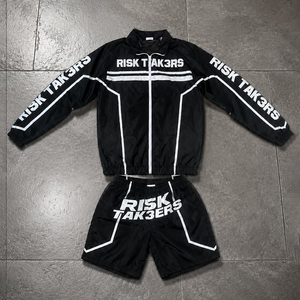
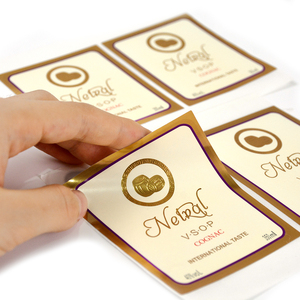
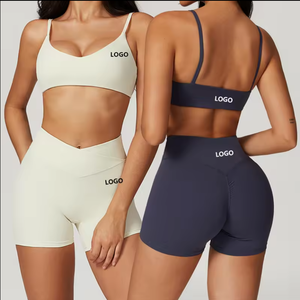
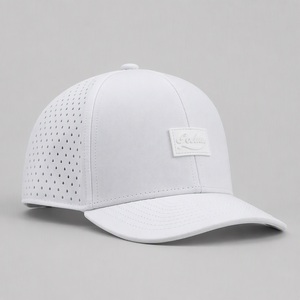
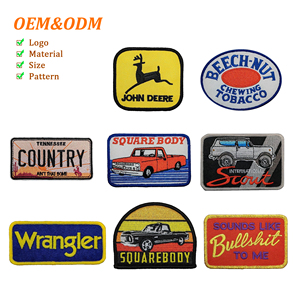
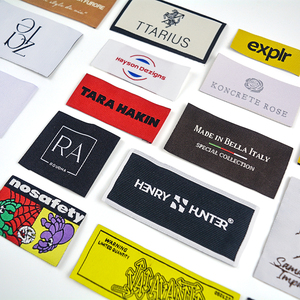
Explore factory-direct OEM/ODM reference styles engineered with hot-melt adhesives, laser-cut borders, multi-needle embroidery, and high-performance textile integration.
1. Deconstructing CE Marking Protocols for Thermosensitive Apparel Emblems
Within international supply chains, securing authentic CE Certified Iron On Patches from qualified manufacturers requires a rigorous understanding of the regulatory directives governing garment-applied embellishments. While commercial marketing frequently conflates generic adhesive badges with fully certified trims, European Union harmonization mandates compliance with specific directives when patches are integrated into protective workwear, athletic performance apparel, and commercial uniforms subject to personal protective equipment (PPE) regulations.
For custom iron-on patches, CE conformity intersects directly with Regulation (EU) 2016/425 (applicable when patches are affixed to high-visibility, flame-retardant, or technical garments), alongside compliance under Directive 2001/95/EC (General Product Safety Directive) and the comprehensive chemical screening enforced by REACH Annex XVII. A verified CE certification demonstrates that the hot-melt adhesive backing, substrate yarns, metallic stabilization layers, and dye formulations do not release restricted aromatic amines, phthalates (DEHP, BBP, DBP, DIBP), organotins, or heavy metal residues (Cadmium, Lead, Nickel) under conditions of mechanical friction and thermal bonding.
Technical Audit Note: In factory verification audits, a legitimate CE certificate for heat-sealable badges must be supported by accredited laboratory test reports (SGS, TÜV Rheinland, Intertek) confirming testing against EN ISO 13688:2013 (General Performance Requirements for Clothing) and ISO 105-C06 (Color Fastness to Domestic and Commercial Laundering).
From an engineering perspective, obtaining CE clearance requires the manufacturer to maintain full traceability across the chemical formulation of the Hot Melt Adhesive (HMA) film. Whether employing copolyester (PES), copolyamide (PA), or thermoplastic polyurethane (TPU) matrices, the adhesive layer must withstand activation temperatures without off-gassing volatile organic compounds (VOCs) or experiencing adhesive embrittlement down to -20°C in alpine or cold-storage work environments.
The operational lifespan of an iron-on badge relies fundamentally on the interfacial bonding physics between the liquidous adhesive melt and the micro-textile interstices of the host fabric. Choosing an incorrect adhesive polymer induces adhesive strike-through (staining the front face), polymer crystallization, or delamination after domestic washing. In our precision automated laminating facilities, we configure four primary adhesive architectures matched to specific fiber blends:
Adhesive Polymer
Activation Temp (°C)
Dwell Time (Sec)
Optimal Host Substrates
Laundry Cycle Rating
Hydrolysis Resistance
High-Tensile TPU (Aliphatic)
145°C – 165°C
12 – 16 s
Spandex Blends, Nylon 66, Polyester Interlock
60°C (ISO 6330)
Superior (Grade 5)
Copolyester (Modified PES)
135°C – 155°C
10 – 14 s
100% Cotton, Heavy Canvas, Twill, Denim
90°C Industrial
Moderate (Grade 3.5)
Copolyamide (COPA Micro-Dot)
120°C – 140°C
8 – 12 s
Silicone-Treated Polyester, Heat-Sensitive Voiles
40°C Delicate
High Dry-Clean Grade
Cross-Linked Polyolefin (PO)
155°C – 175°C
15 – 20 s
Non-Woven Polypropylene, Heavy Cordura®
75°C Tunnel Wash
Maximum (Grade 5)
As demonstrated in the polymer specification matrix, enterprise brands sourcing across athletic categories must mandate Aliphatic Thermoplastic Polyurethane (TPU) films. Unlike aromatic variants that undergo photochemical degradation and yellowing when exposed to solar ultraviolet radiation, aliphatic TPU maintains complete optical clarity and an elongation-at-break exceeding 450%. This elasticity ensures that when a patch is fused to a four-way stretch activewear fabric (such as our yoga sets or running windbreakers), the adhesive stretches synchronously with the textile without catastrophic shear failure along the perimeter edge.
Market Intelligence & Sourcing Vectors
Future Procurement Trends in Heat-Fusible Embellishments (2026–2030)
Procurement directors are fundamentally overhauling trim specifications to align with digital circularity mandates, closed-loop recycling systems, and high-velocity supply chain hubs.
Mono-Materiality & Circularity
Under the impending EU Ecodesign for Sustainable Products Regulation (ESPR), multi-material garments that cannot be disassembled represent serious financial liabilities. Sourcing shifts toward 100% mono-material construction: PET embroidered threads, coupled with recycled rPET twill carriers and 100% polyester-compatible hot-melt films, allowing whole-garment shredding and mechanical recycling without manual badge stripping.
Elimination of mixed-metal lurex threading
Post-consumer recycled (PCR) polyester backings
Zero chemical contamination in recycled pulp
Digital Product Passports (DPP)
By late 2026, European customs declarations will increasingly verify Digital Product Passports linked directly to garment trims. Next-generation iron-on badges now integrate microscopic UHF RFID inlays or high-density encrypted 2D DataMatrix thread structures capable of surviving 50 industrial wash cycles, giving brands end-to-end traceability from yarn spinning to final consumer resale.
High-frequency RFID chip micro-lamination
Zero-profile embedded antenna layouts
ISO/IEC 18000-6C compliant tracking integration
Low-Temperature Fast-Dwell Bonding
High-energy heat tunnel application lines consume significant grid power and risk damaging delicate synthetic elastanes. Sourcing programs are prioritizing advanced reactive polyurethane (PUR) and catalyzed copolyamide resins engineered to bond at a low 110°C with a 6-second dwell time, mitigating thermal puckering, fabric glaze marks, and dye sublimation bleed.
Anti-migration barrier blocking layers
Ultra-short heating cycles for automated press heads
Compatible with sheer, heat-sensitive fabrics
3. Failure Mode Mitigation: Rheology, Overheating, and Peeling Kinetics
Delamination of iron-on emblems in the field creates severe brand degradation and costly retailer returns. In our laboratory stress testing under ASTM D903 (Standard Test Method for Peel or Stripping Strength of Adhesive Bonds), failure modes typically originate from three fundamental processing defects during thermal application:
A. Sub-Activation Temperature & Viscosity Deadlock
Every hot-melt film possesses a distinct melt flow index (MFI). If the pneumatic heat press fails to deliver calibrated heat transfer into the adhesive boundary (often caused by thick embroidery twill acting as a thermal insulator), the polymer cannot drop below its critical wetting viscosity (η < 1,000 Pa·s). Consequently, the adhesive merely rests upon the superficial fiber peaks rather than penetrating into the yarn bundles, reducing initial peel strength from the standard 35 N/25mm down to an unacceptable 8 N/25mm.
B. Dye Sublimation Migration ("Ghosting Bleed")
When applying white or pale embroidered patches onto 100% disperse-dyed polyester garments (such as team soccer kits or tracksuit windbreakers), the thermal application process re-vaporizes the disperse dyes within the garment fibers. Without a specialized Carbon-Black Anti-Sublimation Sub-Layer integrated into the patch backing, these dye gases migrate upward through the hot-melt glue, permanently discoloring the embroidery thread within 48 to 72 hours post-pressing.
C. Hydrolysis and Surfactant Attack in Industrial Laundering
Standard retail iron-on backings utilize low-cost EVA (Ethylene Vinyl Acetate). Under the hot water alkalis, builder salts, and chlorine/peracetic bleach chemistry characteristic of commercial laundries (governed by ISO 15797), EVA ester linkages rapidly hydrolyze, causing the adhesive to turn brittle, crumble into fine powder, and detach cleanly from the garment substrate.
Direct Factory Infrastructure
Integrated Cut, Sew & Embellishment Infrastructure
Headquartered on Defence Road, Sialkot, Pakistan, our modern facility merges world-class sports apparel manufacturing with high-precision badge and trim production under one engineering management umbrella.
Phase 01
Swiss Laser & Tajima Embroidery
High-speed multi-head Tajima embroidery arrays running Madeira high-luster polyester threads, coupled with optical-camera CO2 laser cutters ensuring +/- 0.1mm border accuracy without frayed edges.
Phase 02
Automated Hot-Melt Calendar Line
Continuous dual-heated rolling calenders fuse certified high-tensile TPU and Copolyester adhesive matrices to textile backings under precise pneumatic tension, eliminating internal air voids and thickness irregularities.
Phase 03
Full Cut & Sew Apparel Integration
Direct integration into wholesale tracksuits, football kits, heavyweight hoodies, performance windbreakers, and caps. Zero middlemen; patterns graded directly to global size charts (UK, US, EU).
Phase 04
FOB Export Documentation
Complete compliance documentation managed in-house: Commercial Invoices, Packing Lists, Certificates of Origin, and CE DoC declarations, coordinating seamlessly with nominated forwarders globally.
Detailed answers to critical engineering, testing, certification, and commercial questions confronting overseas importers, clubs, and apparel brands.
What specific test reports validate that an iron-on patch is truly CE compliant?
True CE compliance mandates laboratory test records confirming: (1) REACH Annex XVII screening for restricted azo dyes, nickel release, and phthalates (<0.1% w/w); (2) EN ISO 13688:2013 mechanical harmlessness testing; and (3) ISO 105-C06 colorfastness to washing. The manufacturer must provide a formal Declaration of Conformity (DoC) accompanied by third-party audit reports from notified bodies like SGS or Intertek.
How do you stop dye migration when heat-applying patches to dyed polyester uniforms?
We incorporate a specialized activated charcoal or modified polyurethane barrier layer between the adhesive film and the patch substrate. This anti-migration blocker creates an impermeable chemical barrier that traps vaporized disperse dyes during heat pressing at 150°C–160°C, preventing yellowing or pinking of white embroidery threads.
What is the minimum order quantity (MOQ) for custom patches and matched garments?
Standalone custom embroidered or woven iron-on patches start at 100 pieces per design to optimize automated laser cut and adhesive lamination setups. For fully assembled cut-and-sew apparel programs (such as custom tracksuits, hoodies, or sublimated kits), our factory minimum begins at just 50 pieces per style, enabling boutique brands and regional clubs to launch without excess inventory risk.
Can patches be heat-sealed onto waterproof DWR-treated outerwear jackets?
Standard hot melts struggle to wet out fluorocarbon or silicone-based Durable Water Repellent (DWR) coatings. For treated shells and windbreakers, we formulate our backings with cross-linking isocyanate primers or recommend our proprietary low-surface-energy TPU adhesive films, ensuring peel strengths over 30 N/25mm without degrading the jacket’s water-repellent membrane.
What is the difference between sew-on, iron-on, and velcro backing specifications?
Sew-on utilizes an untreated twill or non-woven stabilizing backing intended for traditional lockstitch border attachment. Iron-on features an automated, calendered hot-melt film activated under pneumatic heat presses. Hook-and-loop (Velcro) backings feature sonic-welded or stitched polyamide micro-hooks, optimized for tactical uniforms, military gears, and modular outerwear systems.
How are samples handled before committing to bulk commercial production?
We produce physical pre-production strike-offs (1 to 3 physical patch samples or full decorated prototype garments) within 5 to 7 working days. High-resolution microscopic imagery and digital peel-test reports are shared instantly, followed by express international air couriering (DHL/FedEx). Commercial bulk cutting and stitching only commences after signed physical sample sign-off.
What international export payment terms and shipping arrangements do you accept?
We quote standardized Incoterms including FOB Karachi/Sialkot, CIF destination port, or door-to-door DDP via express air freight. Standard B2B payment terms involve a 30% to 50% deposit upon proforma invoice confirmation to initiate yarn procurement and sample proofs, with the remaining balance released against proof of bill of lading (B/L) and final AQL 2.5 inspection certification.
How does an embroidered patch compare to high-density silicone or woven badges?
Embroidered patches offer classic 3D textured relief, ideal for varsity badges and heritage club crests. Woven patches utilize fine-denier warp/weft yarns capable of rendering micro-lettering down to 2mm height. Silicone emblems deliver an architectural, matte-rubber finish with exceptional chemical resistance and high elasticity, favored in modern motorsport, techwear, and tactical equipment.
Consult With Our Technical Engineering Team
Request comprehensive lab test reports, physical strike-off sampling, or full FOB export pricing for custom CE-compliant iron-on patches, activewear sets, and technical teamwear directly from our Sialkot manufacturing floor.