Explore our certified reflective thermal transfer applications, customized high-frequency TPU badges, and technical activewear manufactured with tight tolerance control.
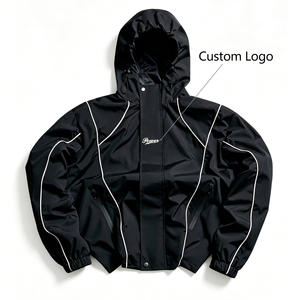
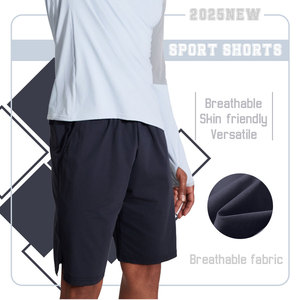
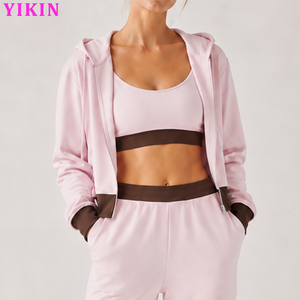
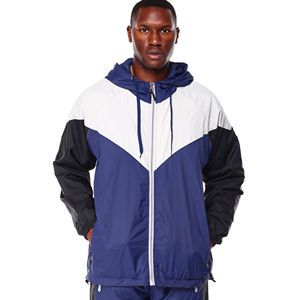
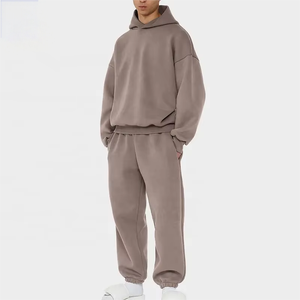
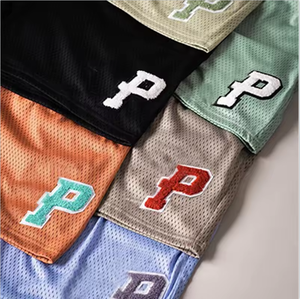
In modern technical apparel, sportswear, and industrial personal protective equipment (PPE), reflective embellishment has evolved from a passive safety requirement into a sophisticated intersection of polymer chemistry, photonics, and structural textile engineering. As China's premier manufacturer and direct exporter of reflective heat transfers, our manufacturing lines integrate high-refractive-index glass microbead dispersion with specialized thermoplastic polyurethane (TPU) and copolyester (PES) hot-melt adhesive matrixes. Achieving certified photometric compliance while maintaining soft hand feel and four-way elastic elongation requires rigorous control over each layer within the heat transfer composite.
Retroreflection differs fundamentally from specular reflection (mirror-like bounce) and diffuse scattering (rough surface dispersion). When ambient vehicle headlamps or illumination sources strike a retroreflective surface, light returns directly toward the source with minimal dispersion, maximizing human eye recognition over distances exceeding 300 meters.
High-purity barium titanate glass beads ($1.90 \le n \le 1.93$ refractive index) embedded into a durable carrier sheet. Each bead is vapor-coated on its lower hemisphere with optical-grade pure aluminum, functioning as a catadioptric system with wide observation angle tolerance.
Engineered cube-corner microscopic prisms hot-embossed into optical vinyl or polyurethane. Delivering exceptionally high straight-line candlepower, prismatic transfers excel in harsh weather conditions and marine safety gear requiring long-range target acquisition.
Co-extruded fluoropolymer or transparent aliphatic polyurethane top coats protect the bead matrix against mechanical abrasion, salt-spray oxidation, and aggressive laundering detergents without diminishing total luminous transmittance.
A frequent point of failure in imported apparel transfers is delamination after consumer wash cycles. The primary culprit is mismatching the thermal adhesive formulation with the base textile substrate. For instance, standard copolyester hot-melt films exhibit excellent anchorage on 100% ring-spun cotton and heavyweight poly-fleece, but experience interfacial bond failure when applied to hydrophobic, silicone-finished, or DWR (Durable Water Repellent) treated nylon windbreakers.
To eliminate bond degradation, our manufacturing facility engineers three distinct chemical adhesive matrixes:
The table below demonstrates certified lab parameters for our primary reflective transfer series across common garment substrates, verified under ISO 6330 industrial wash protocols:
| Transfer Grade / Code | Recommended Substrate | Heat Press Temp (°C) | Dwell Time (Sec) | Pressure (Bar / PSI) | Peel Method | ISO 6330 Wash Cycles |
|---|---|---|---|---|---|---|
| Silver Standard (RHT-400S) | 100% Poly / Poly-Cotton Blends | 145°C – 155°C | 10 – 12s | 3.5 – 4.5 Bar (50 PSI) | Cold Peel | 50 Cycles @ 60°C |
| High-Stretch TPU (RHT-600E) | Spandex / Lycra / Active Knits | 135°C – 145°C | 12 – 15s | 4.0 – 5.0 Bar (60 PSI) | Warm / Cold | 40 Cycles @ 40°C |
| Anti-Migration Poly (RHT-800B) | Sublimated Polyester Team Kits | 130°C – 140°C | 12 – 15s | 3.0 – 4.0 Bar (45 PSI) | Cold Peel | 50 Cycles @ 60°C |
| Flame Retardant (RHT-900FR) | Aramid / Nomex / FR Cotton PPE | 160°C – 175°C | 15 – 20s | 4.5 – 5.5 Bar (70 PSI) | Warm Peel | 50 Wash + 30 Dry Clean |
| Rainbow Iridescent (RHT-300IR) | Fashion Streetwear / Tech Hoodies | 140°C – 150°C | 10 – 12s | 3.5 – 4.5 Bar (50 PSI) | Cold Peel | 30 Cycles @ 40°C |
Exporting to North America, the European Union, the United Kingdom, and Australasia demands strict adherence to rigorous safety and chemical thresholds. Every master roll of reflective heat transfer film manufactured in our facilities undergoes strict qualification in accordance with:
Actionable market insights for athletic apparel product directors, PPE procurement specialists, and private-label sportswear brands planning their 2026–2030 supply chains.
Global brands are phasing out virgin polyester carrier liners. We offer 100% post-consumer recycled PET (rPET) release films coupled with bio-based solvent-free polyurethane adhesives, slashing Scope 3 carbon emissions without compromising peel release smoothness.
With the rapid adoption of ultra-lightweight synthetic performance fabrics (15D to 20D micro-ripstop nylons), traditional 160°C transfer heat presses cause puckering and thermal distortion. The next generation utilizes catalysts that activate cleanly at 115°C–125°C.
Solid vinyl strips impede garment breathability. Segmented, chevron, and laser-perforated transfers have become mandatory across soccer uniforms and marathon activewear, delivering superior skin evaporation, moisture dissipation, and natural torso articulation.
Athleisure and cyberpunk streetwear require reflective logos that look pitch-black, metallic chrome, or gradient iridescent under daylight, yet instantly explode into intense retroreflection under flashlights and automotive headlights.
Direct tier-1 factory capability eliminating trading intermediaries, providing international apparel brands with rigorous consistency, documented provenance, and scale.
Our ISO Class 7 clean-room coating lines guarantee that reflective glass bead settlement occurs in a dust-free environment. This eliminates micro-pinholes, voids, and optical cloudy patches across continuous roll runs.
Every production batch is certified using optical retroreflectometers and spectrophotometers. We test entrance angles ($5^\circ, 30^\circ, 40^\circ$) and observation angles ($0.2^\circ, 0.33^\circ$) before packaging.
Equipped with camera-guided high-speed galvo-laser cutting systems, we reproduce ultra-fine typography, vector logos, and custom 3D textured edges with zero knife-drag distortion or weeded bridge breakage.
Unlike standalone film convertors, our facilities operate full cut-and-sew apparel workshops. We test transfer adhesion directly on finished soccer kits, activewear sets, and windbreakers under real manufacturing constraints.
Accelerate your product development cycle. We engineer custom pre-production prototype transfers, physical strike-offs, and pantone-matched reflective swatches within 3 to 5 business days with FOB sample couriering.
Decades of exporting expertise to the US, Germany, the UK, France, Australia, and Japan. Complete documentation including Commercial Invoices, Packing Lists, Certificates of Origin (CO/Form A), and MSDS safety dossiers.
Detailed technical answers addressing adhesive failure prevention, dye migration, minimum order quantities, and custom production timelines.
Premature peeling or cracking typically traces to one of three mechanical factors: (1) Insufficient platen pressure during heat pressing, which prevents the hot-melt adhesive from penetrating deeply into the textile weave; (2) Incompatible adhesive chemistry, such as using rigid PES films on high-stretch Lycra fabrics; or (3) Peeling the carrier liner while hot when the technical specification explicitly calls for a cold peel after crystallization.
During thermal pressing at 150°C, volatile disperse dyes in polyester sublimated garments turn into gas and infiltrate conventional adhesives, turning crisp silver reflective logos dull pink or gray. We resolve this by applying an active carbon black barrier layer between the adhesive and reflective bead film, effectively neutralizing dye sublimates.
For stock silver films with custom laser cutting, our MOQ starts at just 100 to 300 pieces per design. For custom colored, iridescent, or 3D high-frequency embossed TPU reflective crests requiring custom metal tooling, MOQs generally begin at 500 to 1,000 pieces, with volume-tiered pricing scaling past 100,000 units.
Yes. While standard sports activewear transfers are rated for domestic washes at 40°C–60°C (ISO 6330 Method 6N), we manufacture a specialized Industrial Laundry & FR Series. This series utilizes high-molecular-weight cross-linked polyurethane and aramid backers, enduring up to 50 cycles of 75°C tunnel washing and industrial drying.
We provide lot-traceable photometric test certificates using standardized optical retroreflectometers measured at $\alpha = 0.2^\circ, \beta_1 = +5^\circ$. Customers can also perform standard field verification via calibrated luminance meters or retroreflective comparison test cards under fixed-distance collimated light beams.
We require vector artwork formatted in Adobe Illustrator (.AI), Scalable Vector Graphics (.SVG), or vector PDF with all fonts converted to outlines. Minimum line stroke thickness for plotter cutting is 0.8mm; for laser cutting, lines as fine as 0.35mm can be cleanly resolved.
Custom sample strike-offs take 3 to 5 business days. Bulk orders of 1,000 to 50,000 pieces typically produce within 7 to 12 working days. We export under FOB Ningbo/Shanghai/Shenzhen, CIF, or door-to-door DDP air freight (DHL, FedEx, UPS) arriving within 4–6 business days worldwide.
All our transfer formulations are strictly solvent-free, formulated without PVC, formaldehyde, or heavy metal catalyst traces. They comply fully with OEKO-TEX Standard 100 Class I (safe for babies and prolonged direct skin contact), EU REACH regulations, and California Proposition 65 standards.