Every production run is executed to client tech-pack specifications, utilizing certified OEKO-TEX® raw materials, automated laser perimeter cutting, and high-tenacity bonding agents engineered for global brand compliance.
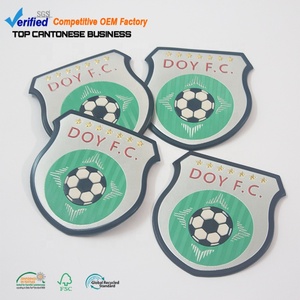
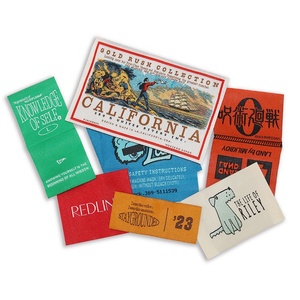
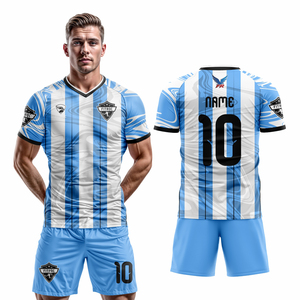
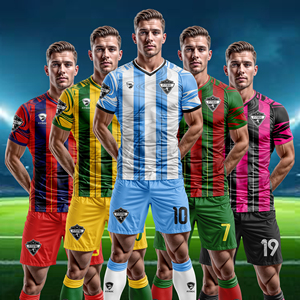
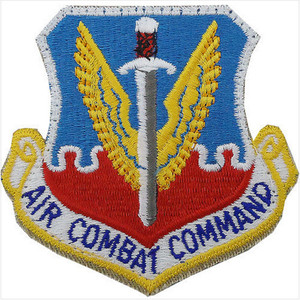
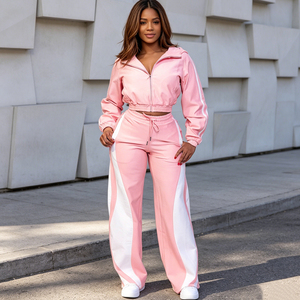
In international apparel sourcing, corporate recognition programs, youth scouting councils, military units, and professional athletic leagues, the custom merit badge represents far more than decorative embroidery. It is an emblem of verified credentialing, institutional heritage, and elite team identity. Sourcing these precision emblems directly from China wholesale custom merit badge factories and exporters offers global supply chains unmatched economic scale, micro-precision digitizing, and rapid tooling capabilities that traditional local embroiderers cannot replicate.
Historically, merit badges were restricted to circular twill backings bordered by conventional overlock merrowing. However, contemporary B2B buyers now navigate a diverse spectrum of polymer sciences, precision woven damask looms, multi-head Tajima computer-guided embroidery, and high-frequency thermoplastic polyurethane (TPU) vulcanization. China's integrated industrial textile ecosystem enables international procurement directors to consolidate emblem creation, specialized apparel backing development, and complete cut-and-sew performance uniform assembly under a single, ISO-audited production pipeline.
Utilizing 50-denier to 75-denier ultra-fine polyester filament yarns on high-speed European air-jet rapier looms, achieving microscopic typographic clarity impossible with needle-borne thread embroidery.
Precision-milled CNC brass tooling combined with high-frequency vacuum bonding creates sharp dimensional facets, matte-to-gloss tactile surface variations, and impervious liquid-barrier crests.
Proprietary hot-melt film laminations applied under calibrated thermal pressure guarantee sheer resistance surpassing 150 N/cm² peel strength, certified for 50+ commercial wash and dry-cleaning cycles.
Selecting the optimal decoration method requires balancing aesthetic fidelity, fabric compatibility, durability expectations, and budget boundaries. The following engineering matrix provides technical benchmarks across the primary manufacturing technologies utilized in our export facilities:
| Substrate / Process | Resolution Limit | Wash Durability (ISO 105-C06) | Standard Backing Options | Tooling / Setup Cost | Typical Sourcing Applications |
|---|---|---|---|---|---|
| 3D Molded TPU Emblems | 0.15 mm detail Micro-Facet | 60°C Heavy Cycle (50+ Washes) | Thermal Heat-Seal, Velcro®, Direct Stitch | Moderate (CNC Mold tooling amortized) | Elite Pro Football, Performance Tracksuits, Technical Outerwear |
| High-Density Damask Woven | 0.25 mm text High Density | 90°C Commercial Laundering | Iron-on, Self-Adhesive, Merrowed Sew-on | Low (Jacquard Punching setup only) | Academic Merit Badges, Boy Scout Emblems, Apparel Hem Labels |
| Multi-Head Rayon/Poly Embroidery | 0.80 mm stroke | 60°C Standard Cycle | Felt Backing, Plastic Film, Hook-and-Loop | Low (Standard DST digitizing) | Traditional Varsity Emblems, Tactical Patches, Martial Arts |
| Micro-Injection Soft PVC | 0.40 mm radius | Resistant to Salt Spray, UV, Sub-Zero | Sewing Channel, Hook Backing, Magnet | Moderate (Steel Die tooling) | Military Rucksacks, Marine Badges, Outdoor Adventure Gear |
| Dye-Sublimated Hybrid Twill | Continuous Tone (1200 DPI) | 60°C Medium Cycle | Heat Transfer Hot Melt, Overlock Border | Minimal (Direct digital RIP profiling) | Photographic Mascot Badges, Multi-Color Tournament Crests |
As international supply chain legislation tightens and brand protection concerns mount, custom merit badge manufacturing is experiencing an unprecedented technological evolution. Forward-looking buyers must account for the following structural procurement transitions:
Embedding flexible, high-temperature radio frequency transponders directly between the woven base and the adhesive substrate to enable instant digital authentication, automated tournament athlete tracking, and event gate access.
Accelerated transition toward Global Recycled Standard (GRS) certified rPET threads derived 100% from post-consumer recycled plastic bottles, accompanied by halogen-free bio-based TPU elastomers.
Automated CAD-to-mold laser engraving and robotic single-head prototyping systems that reduce sampling turnarounds from two weeks down to 48 hours, radically lowering commercial trial thresholds to just 50 pieces.
Sourcing procurement models are moving away from disconnected vendors. Modern buyers require an integrated supplier capable of manufacturing both the performance garment and the applied badge in a single quality-controlled stream.
The progression of custom merit badges reflects broader material advances across performance textiles. What originated in scout troops as rough cotton drill fabric with hand-turned edges has evolved through distinct technological leaps:
This technical trajectory means contemporary procurement teams are no longer forced to sacrifice graphic complexity for durability. Whether specifying a high-relief golden crest for a championship tracksuit jacket or producing 250,000 scout achievement tokens, our factory engineers formulate the backing chemistry, thread denier, and adhesive melt indices to match the host garment's exact physical properties.
Eliminating intermediaries to deliver true factory-direct pricing, absolute tech-pack fidelity, and rigorous batch-to-batch colorimetric consistency across all international export lines.
We routinely clear freight across the UK, USA, Canada, Australia, and the European Union. Export documentation—including customized Commercial Invoices, Packing Lists, GSP Form A, and Certificate of Origin—is handled strictly in-house to ensure zero clearance holdups at destination ports.
Unlike isolated trim agents, we operate a fully integrated supply network spanning custom badge manufacturing and cut-and-sew garment facilities. This allows us to sample the emblem alongside your bespoke tracksuits, football kits, or hoodies, testing thermal adhesion properties before mass cutting.
Every single badge batch undergoes rigorous automated camera inspection for missing stitches, misaligned registration, or raw yarn tails. Finished emblems undergo accelerated wash, rub-fastness, and tensile shear evaluations according to AATCC and ISO protocols before export boxing.
Straightforward engineering, pricing, sampling, and shipping guidance direct from our factory production floor.
Our standard production runs begin at just 50 to 100 pieces per design for woven damask labels and Tajima embroidered merit badges. For 3D molded TPU and micro-injected soft PVC emblems requiring custom steel tooling, our entry MOQ is 300 to 500 units to amortize mold fees efficiently. If you are ordering badges alongside our OEM apparel production (tracksuits, football uniforms, hoodies), badges can be produced in smaller trial runs matching your exact garment quantity.
We require vector artwork in Adobe Illustrator (.AI), Scalable Vector Graphics (.SVG), or high-resolution vector PDF formats with all typographic fonts outlined. For color specification, our digital dyeing kitchen and thread-winding stations work strictly from the Pantone Matching System (PMS Solid Coated) palette. If you submit raster artwork (PNG, JPG, PSD), our in-house digitizers will vectorize and generate stitch simulations for engineering sign-off prior to tooling.
The choice of backing dictates application speed, durability, and repositionability:
Physical pre-production counter-samples are dispatched within 3 to 5 business days for woven labels and standard embroidery, and 7 to 9 business days for molded 3D TPU or PVC badges requiring bespoke CNC steel tooling. High-resolution macro photography and video inspections are supplied free of charge. Tooling and setup fees are fully refunded or credited toward the bulk invoice once order volumes exceed 5,000 units.
Yes. All raw yarns, plasticizers, base backings, and thermal adhesives conform to OEKO-TEX® Standard 100 Class I (Baby Article Safety), the European Union REACH Annex XVII SVHC candidate list, California Proposition 65 (Lead, Cadmium, and Phthalate limits), and the US Consumer Product Safety Improvement Act (CPSIA). Third-party test reports from SGS, Intertek, or TÜV Rheinland are available upon request.
Modern performance apparel often features DWR (Durable Water Repellent) coatings, siliconized finishes, or high elastane percentages that resist conventional hot melts. If you provide garment fabric swatches during sampling, our adhesive engineering laboratory conducts tensile peel tests (ASTM D903) and accelerates wash cycles to formulate an adhesive film matching your substrate's specific surface tension.
Proper tariff classification prevents unnecessary customs duties. We declare products under standard international categories:
Our computerized manufacturing plants operate across continuous shifts with over 60 multi-head Tajima embroidery setups and 40 automated high-frequency welding presses. High-volume runs between 10,000 and 100,000 pieces are typically completed within 14 to 18 calendar days following counter-sample approval. Staggered partial shipments can be scheduled via air freight to accommodate immediate assembly needs while bulk containers transit via ocean.
Yes, this is our core operational advantage. Instead of shipping loose badges to third-party cut-and-sew factories—incurring secondary freight, handling, and application scrap—our factory teams position, align, and heat-press or stitch your emblems in-house during uniform assembly. Your apparel arrives fully finished, tagged, bagged, and ready for retail distribution.
For standard export orders, we accept Telegraphic Transfer (T/T with a 30% deposit upon proforma invoice issue and 70% balance payable upon final QC inspection prior to bill of lading issuance). For verified long-term corporate procurement clients and government scout organizations, we offer irrevocable Letters of Credit (L/C at sight) and open account financing (OA 30/60 days).
Ready to initiate your custom badge technical brief with our senior engineering team?