Source factory-direct woven labels, 3D TPU emblems, chenille varsity badges, and technical sportswear assemblies with full supply chain traceability, competitive tiered wholesale volume pricing, and guaranteed lab-tested color fastness.
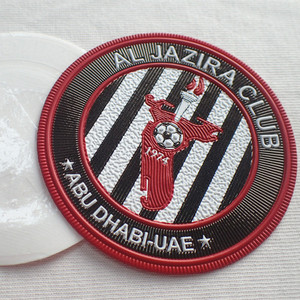 High-Frequency 3D
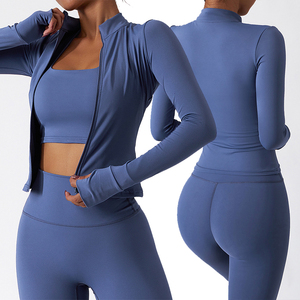 Private Label Active
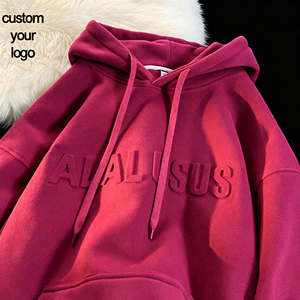 Heavyweight 450 GSM
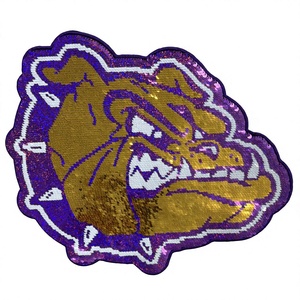 Tactile Chenille
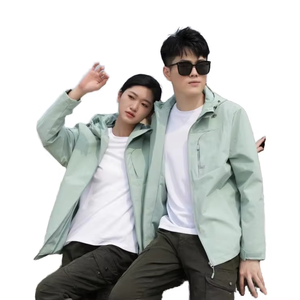 Technical Outerwear
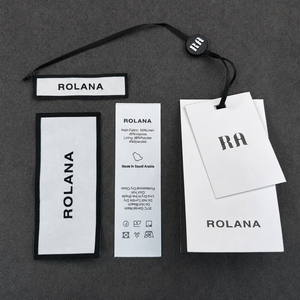 Complete Branding Kit
 Club Crest Standard
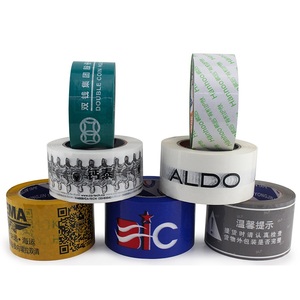 Packaging Trim
In modern garment engineering, a woven label is far more than a brand signature; it is a critical contact interface between the textile product and the human epidermis. In high-end ready-to-wear, athletic apparel, and bespoke tailoring, inferior trims lead to scratching complaints, skin irritation, and immediate brand erosion. As an industrial manufacturing leader and dedicated exporter, our production facilities employ advanced Swiss-engineered Jakob Müller air-jet and rapier looms configured to execute micro-damask, high-density satin, and structural taffeta weaves with micron-level precision.
The structural integrity of woven clothing labels depends fundamentally on the relationship between warp tension, weft insertion rates, and yarn linear mass density (measured in denier). Standard commercial garment labels conventionally use 100D or 150D polyester threads. While economical, these coarse filaments produce serrated typographic curves, pixelated brand logos, and stiff structural hand-feels. Our precision manufacturing standard utilizes 50D and 75D ultra-fine polyester filaments woven at pick counts exceeding 110–130 picks per inch. This high-density architecture enables our computerized looms to render intricate sans-serif typefaces down to 0.8mm vector heights and multi-layered gradient crests with needle-sharp definition.
Employs fine-gauge polyester yarns woven in tight twill or satin ground configurations. Delivers a soft, supple hand-feel, zero skin friction, and razor-sharp typographic legibility for luxury neck labels and external sleeve tags.
Utilizes floating warp yarns over multiple wefts to generate a reflective, silk-like luster. Ideal for bridal couture, formal menswear, and designer outerwear where high sheen and smooth skin contact are non-negotiable.
Engineered with a plain criss-cross weave structure yielding exceptional dimensional stability, high tear resistance, and rapid drying properties. Ideal for wash-care instructions, technical activewear, and outerwear waistbands.
Beyond the weave structure, edge conversion technology determines garment comfort. Traditional hot-knife mechanical shearing melts the thermoplastic polyester filaments into rigid, beaded perimeter borders that abrade human skin. Our export facilities exclusively integrate multi-axis ultrasonic slitting and cold laser profiling systems. By subjecting the woven ribbon to localized 40kHz acoustic vibrations, the polymer chains are molecularly bonded without forming beaded edges, yielding an ultra-soft, micro-plush border that withstands repeated domestic washing without fraying or stiffening.
The international textile trim industry is undergoing a regulatory and technological paradigm shift. Global apparel brands face tightening international trade legislation, statutory circularity requirements, and heightened consumer scrutiny over supply chain authenticity. When sourcing woven clothing labels from China, enterprise buyers must align their procurement strategies with four dominant macro trends:
Mandatory European Digital Product Passports (DPP) require scannable physical carriers. Woven labels with integrated high-contrast micro QR matrices or embedded UHF RFID silicon transponders bridge the physical garment to decentralized circular datasets.
Global Recycled Standard (GRS 4.0) compliant rPET yarns spun from post-consumer ocean-bound plastic bottles are replacing virgin polyester. Enterprise buyers now mandate complete chemical input verifications and Scope 3 carbon reduction metrics.
To eliminate labor-intensive trim sorting at textile recycling plants, buyers specify mono-material assemblies—such as 100% polyester damask woven labels sewn with polyester thread onto 100% polyester performance apparel, enabling pure cradle-to-cradle recycling.
Brands are moving away from bloated, multi-million piece trim orders that incur warehousing overhead and risk obsolescence. Modern China exporters offer rapid digital proofing, modular 50–500 piece MOQ production runs, and automated multi-warehouse freight fulfillment.
In response to these industry demands, our export facilities have converted 70% of standard production lines to certified recycled polyester filaments certified under GRS and OEKO-TEX Standard 100 Class I (safe for infant mouth contact). Furthermore, we provide end-to-end testing verification against ISO 105-C06 wash-fastness, ISO 105-X12 crocking/rubbing resistance, and ASTM D3776 linear fabric weight standards before any consignments leave our factory docks.
Selecting the optimal garment branding medium requires balancing visual fidelity, hand-feel, production lead time, and laundering endurance. The matrix below outlines laboratory performance metrics and application guidelines across our core trim categories:
| Trim Engineering Type | Primary Composition | Washing Cycle Endurance | Skin Comfort Rating | Fine Detail Resolution | Typical B2B Applications |
|---|---|---|---|---|---|
| 50D High-Density Damask | 100% Recycled or Virgin PET | 80+ Home Cycles | Superior (Ultrasonic Slit) | Up to 0.8mm Typography | Main Neck Tags, Sleeve Labels, Exterior Pocket Tabs |
| Lustrous Satin Weave | Polyester Filament Warp/Weft | 60+ Home Cycles | Ultra-Soft / Silky | Medium Resolution | Formal Wear, Intimates, Bridal Couture, Luxury Bedding |
| 3D High-Frequency TPU | Polyurethane Elastomer | 50+ Industrial Cycles | Non-Abrasive Exterior | 3D Volumetric Contour | Outerwear Chest Badges, Team Crests, Performance Footwear |
| Varsity Chenille & Felt | Acrylic Pile + Poly Felt | 40+ Delicate Cycles | Heavy Tactile Texture | Bold Graphic Only | Letterman Jackets, Streetwear Hoodies, Statement Emblems |
| Printed Cotton / Poly Care Tag | Cotton Twill / Poly Taffeta | 60+ Home Cycles | Soft Breathable Touch | Micro-Text & QR Codes | Legal Wash-Care Tags, Country of Origin, Fiber Composition |
Operate directly with the source production facility. By eliminating export brokers, regional trade agents, and trading company surcharges, we offer clients 25–40% net cost savings on bulk trim packaging and garment branding programs.
Our dedicated computerized prototyping workshop produces physical woven master strike-offs within 48 to 72 hours. Digital high-resolution macro proofs are rendered and shared for immediate dimensional verification prior to loom setup.
Every dye-lot undergoes spectrophotometer delta-E color matching against Pantone Solid Coated/TCX standards. Inline optical sensors detect skipped stitches or thread breaks, ensuring defect rates remain below 0.1% AQL 1.5 standards.
Consolidate your entire brand identity package in one purchase order: woven neck labels, care tabs, hang tags with custom eyelets, woven zip-pullers, embroidered crests, and branded shipping tape shipped together to reduce inbound logistics overhead.
Experienced export logistics division provides complete commercial invoicing, packing lists, HS-code classification (HS 5807.1000 for woven badges/labels), certificates of origin (Form A/E), and customs clearance to the US, EU, UK, Canada, and Australia.
Direct communication with fluent bilingual textile engineers. We review your vector art, advise on warp/weft limitations, verify sewing allowances, and guide you through complex end-fold, mitre-fold, and loop-fold tailoring requirements.
A frequent error in tech pack preparation is selecting an incompatible fold style for the targeted garment seam. Our automated folding and packaging machinery supports all recognized international edge and fold specifications:
Mechanics: 5–7mm seam allowances are folded under both the left and right edges. Applied via single-needle topstitching on the folded flaps.
Applications: Luxury suit collar interiors, outerwear neck yokes, denim waistband tabs, knitwear hem borders.
Mechanics: The woven strip is folded in half horizontally, leaving raw cut edges at the top that are captured within a closed seam.
Applications: T-shirt back necklines, side-seam brand flags, beanie turn-ups, care label clusters inside activewear trousers.
Mechanics: Similar to a loop fold, but with the top raw edges turned inward, providing a pristine, clean-finished visible tab.
Applications: Exterior sleeve cuffs, hem tags on heavyweight hoodies, pocket borders, and outerwear accessories.
Mechanics: Ends are folded upward at a 45-degree angle, creating two vertical tabs that sew neatly into the top collar seam.
Applications: Acts as both a decorative hanger loop and branding tag on coats, heavyweight chore jackets, and trench coats.
Mechanics: No folds. The label is cut using ultrasonic blades to fuse the edges cleanly, designed to be stitched flat around all four margins.
Applications: Patch-style branding on denim jackets, oversized sweatshirt chests, baseball caps, and tote bags.
Mechanics: Backed with thermal heat-seal film or pressure-sensitive glue for non-sewing application via heat press.
Applications: Footwear insoles, hard luggage linings, headwear crowns, and temporary promotional brand tags.
Below are authoritative answers to the most common engineering, commercial, and logistical inquiries submitted by apparel brand buyers and supply chain managers:
While our factory operates large-scale industrial looms, our standard sampling MOQ starts at just 500 to 1,000 pieces per design. For tiered wholesale contract orders, price breaks improve substantially at 3,000, 5,000, 10,000, and 50,000 pieces due to loom warp setup and threading efficiencies.
Skin friction is prevented through two engineering safeguards: first, utilizing ultra-fine 50D micro-filament yarns that yield a smooth textile face; second, deploying ultrasonic edge slitting that melts and fuses polyester edges at a molecular level without creating abrasive beads or sharp burrs.
We accept vector artwork in Adobe Illustrator (.AI), PDF, or vector EPS. All typographic fonts must be outlined (converted to curves). Specify Pantone Solid Coated (PMS) or Pantone Fashion, Home + Interiors (TCX) color codes for precise yarn dye matching.
Yes. When garments undergo garment-dyeing or intense enzyme washing, we weave with pre-shrunk, solution-dyed high-tenacity polyester yarns that maintain dimensional stability and colorfastness up to 95°C water temperatures and aggressive wash baths.
"D" stands for denier (grams per 9,000 meters of yarn). 100D is the coarse industry standard suitable for basic tags. 75D is a refined mid-grade yarn. 50D is an ultra-fine micro-yarn that allows double the weave density, enabling razor-sharp text, soft drape, and zero pixelation on intricate luxury logos.
Yes. Our yarns and processing chemicals comply with OEKO-TEX Standard 100 Class I (free from harmful aromatic amines, formaldehyde, and heavy metals). We also supply GRS (Global Recycled Standard) certified post-consumer recycled polyester woven labels with full transaction certificates.
Digital proofs are provided within 24 hours. Physical strike-off pre-production samples are woven and dispatched in 3 to 5 business days. Once the sample is approved, bulk production of 5,000–50,000 units is completed in 7 to 10 business days.
We support EXW, FOB Shanghai/Ningbo/Shenzhen, CIF, and DDP air/sea freight directly to your garment assembly factory or distribution center. We issue complete commercial invoices, packing lists with net/gross weights, and HS classification declarations.
Initiate direct communication with our senior trim engineering team. Receive factory-direct quotes, physical sample swatch kits, and technical tech-pack evaluations within 24 hours.