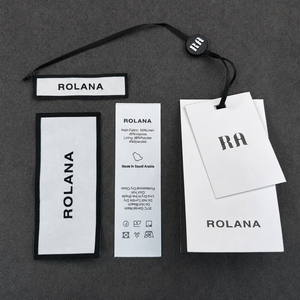
Engineering compliant, high-density woven trims, ultrasonic soft-edge satin labels, and sustainable zero-carbon garment identification systems for Tier-1 fashion groups and industrial importers worldwide.
50M+
Monthly Label Capacity
100%
OEKO-TEX Class 1 & GRS
85+
Direct Export Jurisdictions
<0.02%
Industrial Wash Defect Rate
Precision Manufacturing Portfolio
Featured Custom Care Labels & Engineered Branding Solutions
Explore our primary production lines engineered for industrial laundering endurance, micro-type legibility, zero-chafing skin contact, and international customs regulatory compliance.
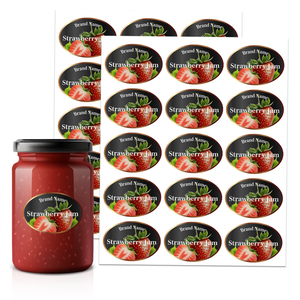
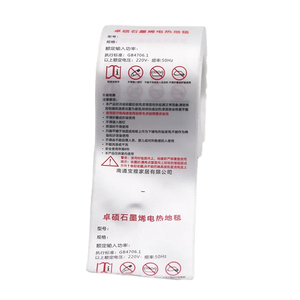
Engineered with high-shear destructive vinyl substrates and solvent-proof UV rotary inks. Provides non-reusable tamper-evidence and chemical resistance against concentrated cosmetic lipids.
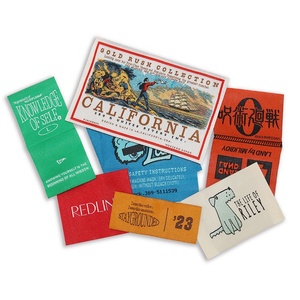
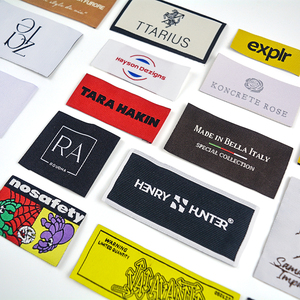
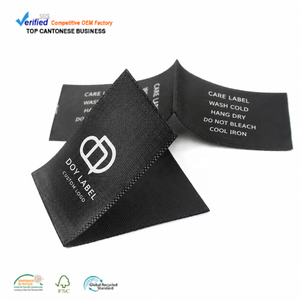
Woven on 50D fine-filament Swiss looms to resolve micro-text wash symbols down to 0.8mm font heights. Features ultrasonic soft-cut selvages that completely eliminate skin scratching.
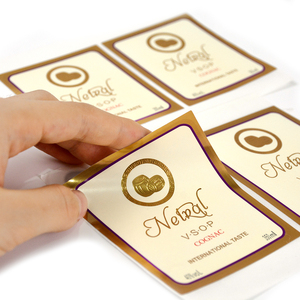
Roll-fed BOPP film labels engineered for high-speed automatic bottling dispensers. Features metallic hot-foil stamping and scuff-resistant matte lamination proofed against shower humidities.
Woven from pure mulberry silk filament or silk-blend satins. Delivers the ultimate in drape and zero-tactile skin sensitivity for haute couture, luxury lingerie, bridal gowns, and silk sleepwear.
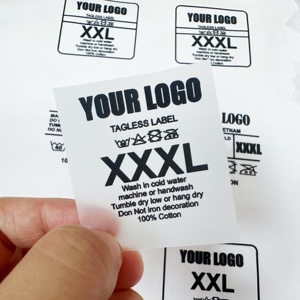
An all-in-one consolidated trim suite: woven neck labels, heavy-weight FSC paper swing tags, safety seal pins, and satin wash tags color-matched to strict brand delta-E color standards.
Care Label Substrate Engineering & Durability Comparative Matrix
Selecting the correct label substrate is a rigorous balance between tactile human physiology, mechanical wash endurance, dynamic printing resolution, and international customs compliance.
In the technical sphere of modern garment manufacturing, care labels have transitioned from an afterthought into an essential engineered trim component. A sub-standard care label that curls, frays, fades into illegibility, or scratches the wearer's neck creates immediate consumer friction and triggers expensive return claims on e-commerce platforms. From an engineering viewpoint, the selection of the substrate dictates not only the aesthetic perception of the garment but also determines whether the product complies with legal standards set by global regulatory bodies such as the United States Federal Trade Commission (FTC), the European Union Ecodesign Directorate, and China’s SAMR (State Administration for Market Regulation).
Technical Insight: The Ultrasonic Slitting Advantage
Unlike obsolete hot-knife thermal slitting—which leaves a hardened, bead-like molten plastic ridge along the cut ribbon edges—our manufacturing protocol employs advanced 40kHz ultrasonic slitting acoustic horns. Ultrasonic cavitation vibrates the molecular chains of the polyester filament, separating and fusing the weave simultaneously at a molecular level without elevated bulk thermal distortion. The resulting selvage is microscopically rounded and indistinguishable from natural woven cloth, satisfying the most stringent skin-contact sensory guidelines for infants and neuro-sensitive consumers.
Furthermore, legibility under severe laundry abrasion cycles is paramount. When printing wash care instructions, ink formulation must be harmonized with substrate absorption characteristics. Our facilities utilize flexographic rotary printing heads using polyamide and polyolefin hybrid resin inks crosslinked with heat curing. When exposed to harsh home laundering formulations (such as sodium percarbonate oxidizers, high-pH linear alkylbenzene sulfonates, and industrial tumble-drying temperatures exceeding 80°C), the printed micro-symbology maintains contrast density metrics without blistering, flaking, or pigment wash-out.
International Trade Architecture
Navigating Multi-Jurisdictional Care Labeling Regulations
Exporting apparel to major consumer economies requires flawless execution of multi-lingual statutory information, standardized care symbols, and emerging traceability mandates.
USA / FTC 16 CFR Part 423
Mandates permanent attachment of care instructions that remain legible throughout the garment's operational lifespan. Must explicitly disclose country of origin, RN (Registered Identification Number) or business name, and exact generic fiber percentages in descending weight order. Symbols must align with ASTM D5489 guidelines.
European Union (Regulation 1007/2011)
Requires fiber composition labeling in the official national language of each member state where the apparel is commercialized. GINETEX / ISO 3758 wash symbols are legally binding. Care labels must explicitly mention non-textile parts of animal origin (e.g., leather patches, horn buttons, down feathers).
China National Standards (GB/T 8685 & GB 18401)
Enforces the world's most rigorous physical testing verification. Wash symbols must conform strictly to GB/T 8685 (mirroring ISO 3758). The label must state product name, size standard (GB/T 1335), safety technical classification (Category A for infants, B for skin contact, C for non-skin contact), and manufacturer identity.
Failure to comply with destination-market labeling protocols is one of the leading catalysts for customs holds, container seizures, and port re-labeling fines. When importing apparel into the United States, for instance, US Customs and Border Protection (CBP) inspects garments for conspicuous, durable placement of country of origin marking. Under 19 U.S.C. 1304, if a care label with country of origin marking detaches during customs scrutiny or uses ambiguous abbreviations (e.g., omitting "Made in China" or failing to utilize the exact English designation approved by the FTC), an entire commercial shipment can be held, incurring catastrophic demurrage and chargebacks.
Similarly, for European importers, the EU’s newly established Ecodesign for Sustainable Products Regulation (ESPR) is introducing the Digital Product Passport (DPP). This system shifts care labeling from purely static printed textile ribbons into connected intelligent interfaces. Brands sourcing from China must prepare to integrate high-resolution Scannable 2D Data Matrix barcodes, dynamic QR codes, or woven passive UHF RFID tags directly into their care trim architecture, linking every single garment directly to its cloud-hosted chemical inventory, fiber recycling instructions, and carbon footprint telemetry.
Strategic Horizon 2026–2030
Future Procurement Trends in Apparel Care Labels & Trim Systems
The global trims supply chain is undergoing profound structural reconfiguration driven by decarbonization mandates, micro-lot customization, and digital hardware convergence.
1. GRS Recycled rPET Satins
Procurement is shifting rapidly to 100% post-consumer recycled polyester (rPET) derived from oceanic and consumer plastic flakes. Verified under Global Recycled Standard (GRS) chain-of-custody, these ribbons match virgin polyester in tensility while dropping life-cycle emissions by 45%.
2. Digital Product Passport (DPP)
Care labels are becoming the physical anchor for European DPP data architectures. High-precision laser-etched and variable-data printed QR codes must withstand 50+ washing cycles while maintaining a reading verification rate of over 99.8% on standard consumer smartphone optics.
3. Monomaterial Design
To satisfy circular economy mandates, garments must be mechanically recycled without tedious trim removal. We weave 100% pure polyester or 100% unblended organic cotton care tags that match the host garment's polymer class, ensuring clean, single-stream fiber-to-fiber recycling.
4. Zero-Inventory Variable Runs
Global fashion houses are abandoning rigid multi-ton inventory reserves. Utilizing automated digital thermal transfer and modular shuttleless weaving looms, our factory facilitates dynamically grouped micro-orders down to 500 pcs per SKU without setup cost penalties.
As the apparel market bifurcates into hyper-fast on-demand micro-collections and ultra-durable premium basics, procurement managers must adapt their purchasing models. The legacy approach of ordering 500,000 generic printed satin rolls from trading intermediaries leads to massive deadstock when regulatory changes render static care text obsolete. The forward-thinking supply chain director establishes direct factory partnerships with modern, digitally integrated Chinese producers capable of variable-data printing (VDP). This technical capability allows real-time dynamic printing of localized translations, dynamic QR codes, and production lot serial numbers on-demand, directly synchronized with upstream Enterprise Resource Planning (ERP) databases.
Direct factory manufacturing eliminates margin dilution, guarantees traceable raw materials, and provides unmatched technical engineering for complex global trim programs.
ADVANTAGE 01
Swiss Jakob Müller Shuttleless Looms
Our weaving plant houses 48 high-speed Swiss-engineered Jakob Müller computerized needle looms. Capable of processing ultra-fine 30D and 50D micro-denier yarns at warp speeds of 1,200 rpm, delivering razor-sharp text fidelity that remains distinct down to sub-millimeter scales.
ADVANTAGE 02
Automated Inline CCD Vision Inspection
Eliminate human sorting error. Our slitting and roll-packaging lines integrate high-speed multi-spectrum CCD vision cameras that automatically identify weft misalignments, ink voids, smear bleeding, and dimensional drift in real-time, instantly rejecting out-of-spec tags.
ADVANTAGE 03
In-House Certified Environmental Testing Lab
Every production batch undergoes destructive testing inside our internal ISO 17025 accredited laboratory. We rigorously evaluate laundering fastness under AATCC 61 4A, home dry cleaning solvent resistance, Martindale surface abrasion, and crocking color migration.
ADVANTAGE 04
OEKO-TEX Standard 100 Class I Certified
Safety without compromise. Every yarn, carrier film, resin ink, and thermal adhesive we process holds OEKO-TEX Standard 100 Class I certification, validating total freedom from formaldehyde, heavy metals, arylamines, phthalates, and banned fluorinated PFAS chemicals.
ADVANTAGE 05
Global Export Documentation & EDI Integration
We handle the complexities of international trade in-house. Direct issuance of Certificate of Origin (Form A, RCEP), full customs tariff classification (HS Code 5807.10 / 5807.90), consolidated container loading, and seamless automated Electronic Data Interchange (EDI) processing.
ADVANTAGE 06
Turnkey Trims & Packaging Consolidation
Beyond standard care labels, we produce matching brand packaging suites: high-bulk FSC swing tickets, woven main labels, silicone badges, woven zipper pulls, and barcoded polybags. Consolidating trims under one roof ensures absolute Pantone delta-E color consistency.
Procurement Intelligence
Frequently Asked Technical & Sourcing Questions
Practical, engineering-grade clarity on MOQs, wash degradation testing, regulatory drafting, and sample turnaround times directly from our technical sales directors.
What is the absolute minimum order quantity (MOQ) for custom woven vs. printed care labels?
For custom printed satin care labels, our standard production run starts at 1,000 pieces per artwork version. For high-density damask woven care labels, our baseline setup MOQ is 1,000 pieces due to the extensive setup time involved in warping our Swiss Jakob Müller shuttleless looms and configuring jacquard punch cards. However, for multi-size, multi-language branding collections, we provide batch-grouping options where multiple text splits share a common base roll width, substantially lowering the per-SKU threshold for emerging brands and corporate pilot runs.
How do you guarantee printed text and laundry icons do not fade after repeated home laundering?
We prevent print degradation by combining high-adhesion polyamide hybrid inks with inline thermal curing tunnels operated at precisely regulated temperatures. Post-cure, our internal quality lab subjects random production swatches to the standardized AATCC 61 (Option 4A) accelerated laundry cycle. This protocol simulates five consecutive commercial washings at 71°C with chlorine-free alkaline detergents and solid stainless steel balls in an abrasive laundering chamber. Our labels routinely achieve a Colorfastness to Laundering rating of Grade 4.5 or higher, ensuring clear legibility across 50+ real-world domestic wash cycles.
Are your care labels compliant with OEKO-TEX Standard 100 Class 1 for baby and infant garments?
Yes, our woven damask, printed polyester satins, and organic cotton tapes are certified under OEKO-TEX Standard 100 Class I—the most demanding certification tier specifically designed for infants up to 36 months of age. Our raw polyester filaments, organic cotton yarns, flexographic inks, and ultrasonic slitting binders undergo exhaustive third-party laboratory verification proving non-detectable levels of heavy metals (cadmium, lead, nickel), free formaldehyde, aromatic amines, organotin compounds, and polyfluoroalkyl substances (PFAS). Official certification documents and test reports are supplied alongside your commercial shipping documentation.
What is the standard production lead time for pre-production physical samples and bulk shipments?
Upon receipt of vector artwork files (Adobe Illustrator .AI or vector PDF) and approved Pantone reference numbers, physical prototype swatches are completed and photographed within 3 to 4 business days. Express international courier dispatch (DHL/FedEx/UPS) delivers physical samples to your overseas design office in 3 to 5 business days. Once pre-production prototypes are formally confirmed, bulk manufacturing cycles typically span 7 to 10 working days for orders up to 100,000 units. For urgent retail production deadlines, expedited 5-day flash manufacturing runs are available upon consultation.
How do you resolve skin irritation and chafing complaints caused by sharp label edges?
Skin chafing is primarily caused by traditional thermal "hot knife" slitting, which melts polyester fibers into sharp, rigid microscopic plastic globules along the perimeter of the tag. We eliminate this issue completely by employing cold-cut ultrasonic soundwave slitting horns or selecting woven-edge double-face satin ribbons. Ultrasonic resonance molecularly shears and seals the fibers without thermal bead formation, creating an exceptionally soft, pliable edge. Furthermore, for intimate apparel, base layers, and infant apparel, we frequently advocate for loop-folding, soft end-folds, or completely tagless PU heat transfer solutions.
Can your facility produce variable data and dynamic QR codes for European Digital Product Passports (DPP)?
Yes, our technical print shop is equipped with industrial variable-data digital printing systems capable of generating unique, serialized 2D Data Matrix barcodes and high-resolution dynamic QR codes on-the-fly. We utilize specialized UV-curable and high-resolution thermal transfer printheads that resolve micro-QR patterns down to 8mm x 8mm dimensions while maintaining an ANSI/ISO barcode verification grade of 'A' or 'B'. These dynamic links route consumers and automated sorting facilities to localized digital product passports, detailing fiber provenance, repair tutorials, and circular end-of-life recycling pathways.
What file formats and layout details should brands submit for accurate quote generation?
To provide an unalterable, comprehensive FOB or DDP quotation on the first response, we require: (1) Vector artwork in Adobe Illustrator (.AI), vector .PDF, or .EPS format with all fonts converted to outlines; (2) Exact label dimensions including finished width, length, and sewing margin allowance (typically 5mm to 7mm for loop or end-folds); (3) Specified Pantone Matching System (PMS) solid coated color codes; (4) Desired substrate construction (e.g., woven damask, printed satin, organic cotton, or TPU); and (5) Projected volume quantity splits across each variation.
How do you assist foreign buyers with multi-language translation and international symbol compliance?
We maintain an in-house compliance regulatory review desk that pre-screens all incoming client artwork against the mandatory care labeling statutes of your target export markets. Our prepress team verifies that the sequence and glyphs of your care symbols comply accurately with ISO 3758 (European and global consensus), ASTM D5489 (North America), or GB/T 8685 (China). We can cross-reference multi-language fiber translations across all 24 official EU member languages, helping you avoid customs seizure, commercial recalls, or non-compliance penalties at ports of entry.
What are the advantages of sourcing woven care labels compared to printed satin labels?
Woven care labels provide structural permanence because the instructions and icons are woven directly into the structural architecture of the label using colored warp and weft yarns, rather than sitting as a topical surface coating. Consequently, woven labels can never chip, flake, or wash away—even under harsh industrial boiling water laundries, dry cleaning solvents, or stone-washing processes. Printed satin labels, conversely, allow for finer micro-type clarity down to smaller sizes, softer hand-feel for delicate fabrics, and lower initial unit cost, making them the preferred option for high-volume basics and multi-language tags with extensive legal disclaimers.
What export payment terms, commercial shipping terms, and trade facilities do you offer?
We support flexible global trade mechanisms tailored to order volume and buyer credit standing. Standard trade terms include FOB Ningbo/Shanghai/Shenzhen, EXW, and CIF/DDP air or ocean freight directly to your warehouse. For initial or sample orders, we accept secure international wire transfers (T/T). For established corporate brand partners and recurrent contractual trim programs, we extend open account terms, structured 30% deposit with 70% balance payable against the original Bill of Lading, or irrevocable Letters of Credit (L/C at sight).
Streamline Your Global Trim Supply Chain Today
Connect directly with our senior engineering and export dispatch team in China. Request a bespoke material swatch kit, upload your tech pack for immediate review, or get an all-inclusive FOB quote within 24 hours.