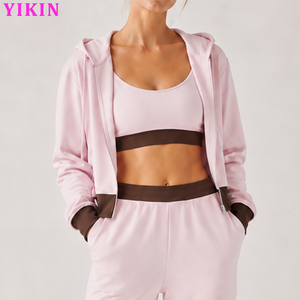
From direct patch applique to specialized cut-and-sew athletic garments, our manufacturing facility delivers fully customized textile solutions for international fashion labels, tactical uniform suppliers, and corporate distributors.
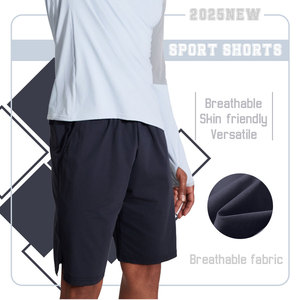
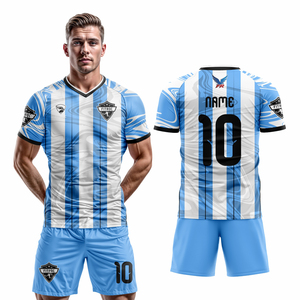
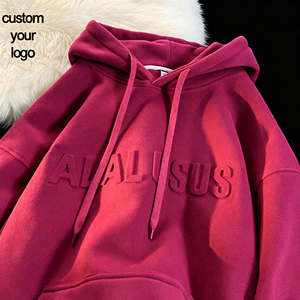
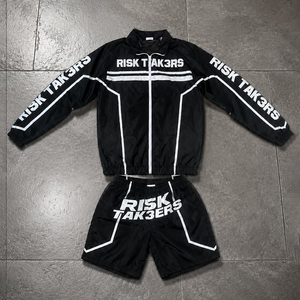
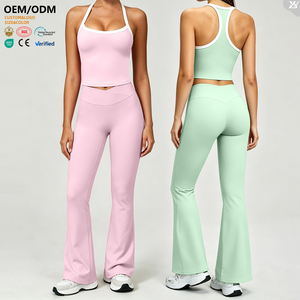
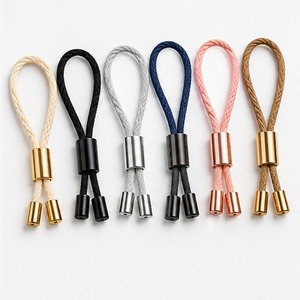
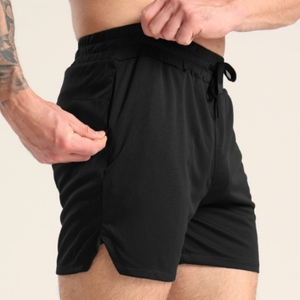
Custom embroidered patches occupy a central nexus between textile chemistry, computerized mechanical drafting, and tactile brand identity. In high-volume industrial contract manufacturing, producing emblems that resist thermal degradation, industrial laundering cycles, and extreme mechanical shearing requires precise control over stitch density, underlay architecture, thread composition, and foundational twill substrates.
The structural backbone of any durable embroidered patch is its base canvas. Contract apparel brands typically choose between 100% poly-cotton woven twill (70/30 or 65/35 ratio), heavy non-woven felt, or specialty ballistic nylon for military tactical insignias. High-density woven twill provides dimensional stability, preventing puckering or warping when needle penetrations exceed 1,500 stitches per square inch. For high-contrast law enforcement and fire rescue emblems, heat-resistant aramid and flame-retardant synthetic backings are deployed to prevent ignition under flash temperatures exceeding 260°C.
Selecting thread is critical to aesthetic and mechanical longevity:
Trilobal Polyester Filament (100% Poly): Renowned for high tensile strength, resistance to chlorine bleach, and superior color fastness under continuous UV radiation. Its triangular cross-section reflects light uniformly, delivering a rich sheen while withstanding commercial laundries operating at 85°C. It is the gold standard for sportswear, corporate uniforms, and tactical deployment gear.
Viscose Rayon Thread: Derived from organic wood pulp cellulose, Rayon delivers a luxurious, silk-like luster with superior softness and zero static build-up. However, it displays lower tensile resilience under bleach treatments, making it ideal for luxury streetwear collections, bespoke designer fashion, and lifestyle apparel.
Metallic & Conductive Filaments: Engineered with a polyamide core wrapped in micro-thin vaporized aluminum foil. Commonly selected for military ceremonial chevrons, luxury fashion branding, and smart garment integration.
Stitch coverage directly affects cost calculations, tactile flexibility, and production speed:
50% Twill-Exposed Embroidery: Thread work covers 50% or less of the surface area. The colored twill substrate serves as the background field, creating a lightweight, supple emblem suitable for lightweight garments, caps, and thin technical shells.
75% Moderate Coverage: Strikes an optimal balance between detailed thread dimensionality and fabric drape. Ideal for athletic club badges and school crests.
100% Full-Field Coverage: The entire emblem face is densely layered with needlework. This creates a solid, heavy-duty badge with high rigidity, structural presence, and premium hand-feel, essential for varsity outerwear, motorcycle clubs, and tactical plate carriers.
Select the ideal mechanical adhesion and perimeter border execution engineered for your exact operational environment and garment composition.
| Backing System | Application Method | Tensile / Shear Strength | Wash Durability | Primary Application Context |
|---|---|---|---|---|
| Industrial Heat Seal (Iron-On) | Pneumatic Heat Press: 165°C–180°C for 15–20s at 4.5 bar | High initial bond; 25–35 N/cm peel resistance | Moderate (Up to 50 home wash cycles; avoid boiling) | Retail merchandise, cotton hoodies, event apparel, casual workwear |
| Mil-Spec Hook & Loop (Velcro) | Interlocking micro-nylon hooks sewn to garment loop base | High shear resistance (>12 N/cm²); reusable mating | Indefinite (Withstands repeated laundering once detached) | Tactical armor vests, SWAT uniforms, modular athletic kits, operator caps |
| Peel & Stick (3M High-Tack Adhesive) | Pressure-sensitive acrylic adhesive, manual peel release | Temporary shear resistance; rapid zero-tool attachment | Single-use (Non-washable; leaves trace residue if washed) | Trade show giveaways, single-day events, film wardrobe, quick branding |
| Traditional Sew-On (Paper / Plastic Backed) | Manual lockstitch / chainstitch perimeter needlework | Maximum structural integrity; anchored directly to garment yarns | Extreme (Permanent; exceeds garment lifecycle) | Biker leathers, heavyweight denim jackets, professional team sports jerseys |
| Merrowed Overlock Border | Continuous 3-thread overlock wrap around symmetrical shapes | Heavy sealed rim; prevents substrate fraying | Industrial laundering compliant (>90°C wash cycles) | Circular, shield, rectangular, and oval patches with smooth outlines |
| Laser Ultrasonic Heat-Cut Border | Micro-sealed perimeter cut via concentrated laser beam | Sharp precision edges; supports irregular/complex silhouettes | Resistant to edge fraying without overlock bulk | Intricate custom shapes, sharp angles, inner cutouts, flush appliques |
How digital vector integration, automated multi-head mechanics, and stringent sustainability mandates are transforming global patch manufacturing supply chains.
Global environmental mandates, particularly EU Ecodesign and US FTC textile compliance standards, require brand owners to document origin tracing. Future procurement contracts will increasingly mandate Global Recycled Standard (GRS) certified post-consumer recycled polyester (rPET) threads.
The historical bottleneck in custom embroidery has been manual digitizing—converting 2D vector graphics (.AI, .EPS) into machine-readable coordinate files (.DST, .PES, .EMB). Modern Chinese manufacturing facilities now leverage neural-network digitizing pipelines.
Purchasing managers are actively phasing out fragmented multi-vendor supply chains where patches are produced at one facility and shipped to an offshore cut-and-sew garment factory. Vertical consolidation inside China minimizes lead-time waste.
Our production floor utilizes the latest generation of computerized multi-head embroidery systems from Tajima (Japan) and Barudan, configured in 15-needle to 20-needle arrays. Operating at speeds exceeding 1,200 stitches per minute (SPM), these platforms integrate high-precision servo motors that maintain thread tension uniformity across all running heads, virtually eliminating thread breaks, birds-nesting, and tension looping on intricate typographic badges.
Traditional embroidery required labor-intensive manual thread snipping to remove jump stitches between lettering segments. Modern industrial heads incorporate dynamic pneumatic under-thread cutters that slice jump stitches flush to the backing at 0.2mm tolerances. Furthermore, coaxial visual camera alignment systems scan the base fabric twill in real-time, automatically recalibrating the X-Y coordinate axis to compensate for microscopic fabric grain skewing during high-speed framing.
Modern fashion lines demand complex visual and tactile depth. Our factory combines computerized embroidery with secondary embellishment stations:
3D High-Density EVA Foam (Puff Embroidery): Precision-milled 2mm to 4mm high-density ethylene-vinyl acetate (EVA) foam is anchored over the base fabric, with 200% density satin stitches encapsulating the foam block. The needle cuts the perimeter, leaving a firm, three-dimensional relief emblem that will not collapse under wash pressure.
Sublimated Photo-Realistic Embroidery Hybrids: For graphics featuring photorealistic gradients, skin tones, or micro-details exceeding stitch resolution capabilities, we first print a dye-sublimation image onto white polyester twill at 1440 DPI, then overlay computerized embroidery for edges, typography, and prominent outlines.
A transparent, fully trackable contract manufacturing process built to eliminate communication gaps and ensure full spec fidelity.
Engineering artwork review to calibrate stitch angles, compensation factors, underlay runs, and Pantone/Madeira color matching.
Creation of a physical swatch sample within 48 hours for macro-photographic client inspection and mechanical dimension sign-off.
Synchronized multi-head machine execution with automated jump-thread slicing and inline tension sensor monitoring.
Contour laser perimeter seal, backing application, AQL 2.5 defect audits, and custom barcoded packaging for global shipping.
Unlike broker houses and isolated trim producers, we operate integrated cut-and-sew garment lines alongside our computerized embroidery divisions, reducing secondary handling and transit costs.
Equipped with in-house master digitizers, our sampling line operates 24/7. Digital rendering proofs are generated within 4 hours; physical machine strike-offs are prepared in under 48 hours.
Every single production batch undergoes 100% optical inspection for needle misalignments, loose filaments, boundary bleeding, and adhesion stability prior to palletized packaging.
Straightforward answers addressing design limitations, stitch calculations, backing longevity, and international logistics.
Wholesale unit cost is determined by four core variables: Total Stitch Count, Dimensions (Height × Width in inches or mm), Base Fabric Substrate, and Backing/Border Type. Stitch count reflects the physical time a machine head spends embroidering the item. To calculate patch size: (Width + Height) / 2. A 3-inch patch with 75% coverage typically averages between 12,000 and 16,000 stitches. Send us your vector file (.AI, .PDF, .EPS), and our digital pre-flight team calculates the precise stitch count and unit price within 4 business hours.
Physical thread mechanics dictate resolution limits. In standard #40 trilobal polyester thread, the absolute minimum legible capital letter height is 4.0mm to 4.5mm (approx. 12-14pt font) with a minimum line thickness of 0.8mm to 1.0mm. For designs requiring micro-lettering down to 2.5mm or micro-details, we utilize ultra-fine #60 or #75 specialty filament threads paired with #65/9 needles, or recommend a hybrid woven/embroidered badge where micro-text is woven into the base while bold graphic elements receive 3D embroidery.
We cross-reference graphic vector specifications with international Pantone Formula Guide Solid Coated (PMS) standards, directly matching color codes against authoritative industrial thread conversion libraries including Madeira Classic/Polyneon, Marathon, and Isacord. In situations where an exact dyed spool is not standard in stock, our dyehouse facility custom-dyes filament runs to achieve a Delta-E color variance under 0.8.
A Merrowed Border utilizes an overlock sewing mechanism that wraps a dense 1/8-inch yarn chain around the outer perimeter of the patch. This is ideal for traditional geometric shapes (circles, squares, shields, triangles) and prevents edge fraying. A Laser Heat-Cut Edge uses a high-precision laser beam to melt and cut through the outer synthetic twill fabric, sealing the edge with zero bulk. Laser cutting is mandatory for complex, jagged silhouettes, sharp angles, inner cutouts, or modern tactical patches where a flush garment interface is required.
Never apply industrial iron-on patches with an uncontrolled domestic handheld iron. Optimal institutional bonding requires a commercial heat press calibrated to: Temperature: 165°C to 180°C (330°F–355°F); Pressure: 4.0 to 5.0 Bar (Firm, uniform downward pressure); Dwell Time: 15 to 20 seconds. For optimal adhesion without scorching high-density embroidery threads, heat the garment from the reverse/underside, or apply a non-stick PTFE (Teflon) cover sheet over the face. Allow the thermoplastic film to cool completely (cold peel) to set the cross-linked adhesive bond.
Yes. For workwear, military uniforms, and healthcare hospital garments subjected to industrial dry cleaning or autoclaving, we formulate patches using 100% solution-dyed trilobal polyester threads, high-density aramid/polyester twill backings, and permanent lockstitch sew-on application or high-temperature polyurethane cross-linking film. These badges resist 85°C wash cycles, sodium hypochlorite bleach exposures, and high-heat drying without shrinkage, thread rot, or color loss.
Our standard production schedule: Digital Embroidery Proof: 12–24 hours; Physical Machine Swatch / Strike-off: 2–4 business days (photo/courier approval); Bulk Production (500 to 10,000 units): 7–10 working days following final sample sign-off. Our minimum order quantity starts as low as 50 pieces per design for custom emblems, allowing emerging streetwear brands and localized teams to scale up to full container shipments without friction.
We work directly with native vector assets: Adobe Illustrator (.AI), Scalable Vector Graphics (.SVG), Encapsulated PostScript (.EPS), and Vector PDF with all fonts converted to outlines. If vector assets are unavailable, we accept high-resolution raster files (300+ DPI .PNG, .PSD, .TIFF). Our master digitizing division converts flat imagery into proprietary machine embroidery coordinate formats (.DST, .DSB, .EMB) with calibrated stitch compensation.
Initiate direct communication with our senior engineering team. Whether you need 50 prototype patches, 10,000 military velcro chevrons, or integrated full cut-and-sew apparel manufacturing, our factory is prepared to deliver competitive FOB quotes and precision digitizing strike-offs within 24 hours.
Contact Us