Explore our top-tier manufacturing lines engineered for institutional durability, wash fastness, and dimensional accuracy. Each specification is fully customizable across denier, weave density, substrate bonding, and border finishes.
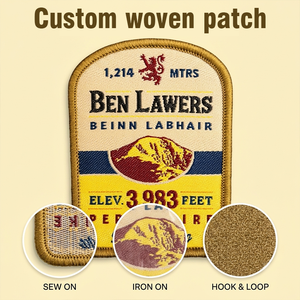
Uniform crests serve as functional visual identifiers, institutional signatures, and security assets. Designing and manufacturing uniform crests for military branches, security personnel, elite private academies, and professional sporting clubs requires deep precision in tensile metallurgy, yarn crystallization, and polymer chemistry.
| Crest Production Technique | Primary Substrates & Filament Spec | Micro-Detail & Text Resolution | Abrasion & Rub Resistance | Industrial Wash & Chemical Tolerance | Best Institutional Fit |
|---|---|---|---|---|---|
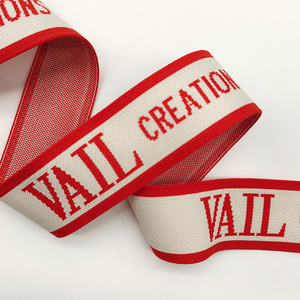
| High-Density 50D Woven Damask Jacquard Weave with Hot-Melt Interlining | Recycled rPET Micro-Polyester filament; dope-dyed high-tenacity yarns | Text down to 0.8mm height | 50,000+ Martindale cycles; non-pilling, snag-resistant flat weave | Resistant to 60°C laundering, perchloroethylene dry-cleaning, and optical bleaches | Academy blazers, corporate flight crew jackets, active sports league uniforms |
| Multi-Head Precision Direct Embroidery Satin, Tatami & Complex Stitch Layering | Trilobal high-sheen polyester & rayon thread; felt or twill buckram support | 3D tactile depth; 3mm min text | Heavy-duty surface durability; high tensile thread break rating (>1200cN) | Withstands commercial tumble drying, steam pressing, and mild chlorine exposure | Law enforcement uniforms, polo chest crests, emergency medical response wear |
| 3D Micro-Injected Silicone & High-Frequency TPU Multi-Level Relief with Polyurethane Adhesive | Liquid optical-grade silicone; aliphatic polyether TPU film; non-migrating pigments | Sub-millimeter relief profiles | Zero fiber fraying; elastic recovery up to 300%; chemical barrier protection | Hydrolysis resistant; ISO 6330 washing fastness; zero shrinkage at extreme thermal flux | Pro football kits, Olympic athletic jackets, maritime & tactical foul-weather shells |
| Bullion Wire Hand-Embroidered Badges Metallic Purling, French Purl & Gold/Silver Wire | Gilt wire, silver plated copper coiled wire, velvet or melton wool fabric core | Sculpted 3D heraldic motifs | Delicate wire surface; dry-clean only; requires archival storage or ceremonial care | Specialized dry-cleaning compliant; zero laundering or moisture immersion | Military officer dress blazers, yacht clubs, consular services, heraldic armorial crests |
| Tactical Sonic-Welded PVC & Cordura Hybrids Low-IR Reflectance with Mil-Spec Hook Backing | Mil-spec 500D/1000D coated Cordura nylon; flexible matte-finish PVC formulation | High legibility covert identification | Extreme puncture, tear, and salt-fog resistance; UV stable (Xenon arc 500 hrs) | Submersible, petroleum/fuel spill resistant, zero delamination under mud/debris | Special forces, SWAT tactical plate carriers, security vests, rugged field gear |
In modern high-performance uniform programs, mechanical failure almost always occurs at the adhesive interlining rather than the face fabric itself. For iron-on or heat-press uniform crests, our China manufacturing facility utilizes dual-stage, co-extruded thermoplastic polyurethane (TPU) and modified copolyamide (CoPA) films. While standard commercial heat-seal backings lose shear strength after 10 commercial laundries, our formulated adhesives maintain a peel strength exceeding 28 N/25mm across a broad range of treated shell fabrics, including DWR (Durable Water Repellent) flurocarbon-free membranes, high-tenacity ripstop nylon, and polyester-cotton twills.
Furthermore, our ultrasonic laser-trimming cell operates under optical coordinate registration. This prevents edge fraying without producing the hard, brittle "melt-bead" common in lower-tier thermal slitting. The resulting edge remains soft against human skin while providing complete structural integrity against unraveling during automated tunnel finishing.
From digital thread-pitch simulation to certified color spectrophotometry, we control the entire vertical manufacturing continuum. Eliminate intermediaries, reduce supply chain lead variance, and secure audit-ready consistency.
We house 60+ Swiss Jakob Müller computer jacquard looms, 45 Japanese Barudan multi-head embroidery systems, and clean-room micro-injection molding equipment. Complete tooling from vector digitizing to CNC aluminum mold fabrication is executed in-house within 48 hours.
All our threads, backing polyurethanes, stabilizers, and colorants are certified under OEKO-TEX Standard 100 Class I (safe for infants) and comply rigorously with EU REACH Annex XVII, CPSIA, RoHS, and California Proposition 65 without heavy metal or formaldehyde traces.
We utilize Datacolor spectrophotometer verification under standard D65, TL84, and A light sources to maintain a Delta E (ΔE) < 0.6 across re-orders spanning multiple years, guaranteeing that replacement uniform badges precisely match legacy institutional apparel batches.
Physical pre-production samples delivered to North America, Western Europe, and Australasia within 4 to 6 working days via DHL Express. Flexible production schedules support starter runs of 100 units through to multi-million crest seasonal institutional drops without production bottlenecks.
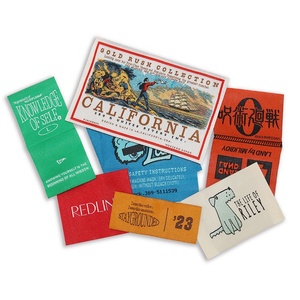
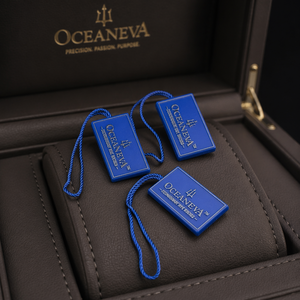
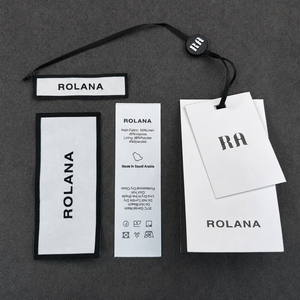
We combine main chest crests, arm badges, epaulette rank slides, woven care labels, anti-counterfeit security seals, and premium retail hangtags into synchronized packaging kits, eliminating the need to source trims across multiple disconnected vendors.
In-house customs clearance compliance handling FOB Shanghai/Ningbo, CIF, and full DDP door-to-door delivery. Every consignment includes Certificate of Origin (CO), FORM A, packing lists with barcode serialization, and standardized carton drops tailored for automated fulfillment centers.
Procurement teams can no longer view uniform crests merely as ornamental badges. Advancements in traceability regulations, sustainable circularity mandates, and wearable technology are fundamentally transforming the global emblem landscape.
With impending EU Ecodesign for Sustainable Products Regulations (ESPR), uniform crests are evolving into digital carriers. We embed flexible, wash-proof RFID and NFC micro-chips (tested to withstand 100+ industrial wash cycles and 8-bar laundry presses) directly between the damask face and backing substrate. This enables instant gate access control, authentication, asset laundry tracking, and end-of-life recycling verification via mobile scan.
Global government agencies, emergency departments, and educational institutions are mandating verified ESG compliance in tender documentation. Our factory has converted over 75% of our high-volume jacquard production to Global Recycled Standard (GRS) certified post-consumer rPET filaments. These yarns maintain identical tensile yield, sheen, and abrasion resistance to virgin polymers while reducing lifecycle carbon footprint by up to 48%.
Traditional flat embroidery is increasingly supplanted by hybrid technical badges combining micro-injected matte silicone letters mounted directly onto metallic wire woven grounds, surrounded by ultrasonic-welded Cordura borders. This multi-layered tactile architecture provides an elite, premium visual weight while dramatically improving soil resistance and preventing snagging in tactical environments.
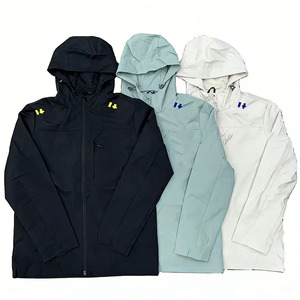
Environmental standards are phasing out solvent-cast heat-seal adhesives containing residual VOCs. The future of uniform crest lamination belongs to water-dispersed, bio-derived polyurethane films with lower thermal activation thresholds (135°C–145°C). This allows reliable bonding to sensitive synthetic technical fabrics—such as ultralight membrane windbreakers and recycled nylon jerseys—without risking thermal shine or fabric distortion.
Every production run in our China factory undergoes rigorous mechanical, optical, and chemical verification before release, adhering to MIL-STD-105E / ISO 2859-1 Sampling Procedures (AQL 1.0 Major / 2.5 Minor).
Digital measurement of lab-dips and bulk thread lots using X-Rite / Datacolor spectrophotometers under D65, TL84, and UV illuminants. Ensures absolute chromatic tolerance below ΔE*ab 0.8 across repeat dye lots.
Thermal endurance evaluation through three consecutive wash cycles at 60°C followed by commercial tumble dry cycles. Allowable dimensional distortion and warp/weft shrinkage is strictly governed under < 1.2%.
Calibrated universal tensile testing rigs quantify interfacial adhesion between hot-melt adhesive films, hook-and-loop backings, and target garment shells, requiring sustained peel resistance exceeding 25 N/cm.
Martindale and Wyzenbeek oscillation abrasion testing subjecting the crest surface to 30,000+ continuous rubs under standard 9kPa pressure. The face must exhibit zero thread snap, fuzzing, or color bleeding.
ISO 105-E04 (acidic and alkaline perspiration) and ISO 105-B02 (Xenon arc light fastness) verification ensuring pigments do not migrate onto high-contrast white uniform blazers or degrade under sustained solar exposure.
High-resolution vision sensor cameras cross-examine woven details, stitch pitch, boundary laser clearances, and metallic bullion alignment against original vector artwork CAD files to catch deviations instantly.
Clear, direct answers regarding minimum order volumes, mold fees, sample lead times, international freight options, and technical specifications for custom uniform crests manufactured in China.
Our standard production MOQ starts at 100 pieces per design for woven damask badges, embroidered crests, and chenille varsity patches. For micro-injected 3D silicone or high-frequency TPU emblems, the initial order volume is typically 300 to 500 pieces due to CNC mold milling and machine setup overhead. However, we regularly accommodate lower trial prototype volumes for institutional qualification tenders upon request.
We match colors against standardized Pantone Matching System (PMS Formula Guide Coated / Uncoated) and Pantone TCX / TPX Cotton color systems. In our on-site dye lab, our color chemists utilize computerized spectrophotometers to assess lab dips and yarn cones under D65 daylight, incandescent, and store lighting (TL84), guaranteeing a commercial tolerance of Delta E < 0.8. We provide physical yarn dip strike-offs or pre-production woven proofs prior to mass production authorization.
Woven crests utilize ultra-fine 50-denier warp and weft yarns, allowing for significantly sharper text resolution (as small as 0.8mm font height), intricate heraldic crest linework, and clean gradients that would bunch, distort, or pucker if directly embroidered. Additionally, woven crests present a sleek, uniform, lightweight profile with zero skin-scratching backing threads, reducing fabric drag and preventing puckering on lightweight modern sports and corporate performance apparel.
The ideal backing depends on laundering and deployment requirements:
• Sew-on / Non-woven backing: The most durable permanent attachment method for heavy-duty workwear, military fatigues, and school blazers subjected to industrial tunnel dry-cleaning.
• High-melt CoPA/TPU Heat Seal: Best for rapid factory application on sportswear and windbreakers (applied at 150°C–165°C for 12–15 seconds at 4 bar).
• Mil-Spec Hook & Loop (Velcro style): Essential for tactical law enforcement, military plate carriers, and modular emergency uniforms requiring crest swapping or laundering detachability.
Physical pre-production counter-samples are typically completed in 3 to 5 business days. Once the sample is approved in writing, bulk manufacturing requires approximately 7 to 12 business days for orders up to 20,000 units. Rush production programs can be prioritized through our express jacquard loom queues. For urgent seasonal drops, international courier shipping (DHL/FedEx/UPS) delivers directly to overseas facilities in 3 to 5 transit days.
Yes. We manufacture uniform crests specifically engineered to comply with EN ISO 11612 (Flame Retardant Protective Clothing) using inherent aramid (Nomex/Kevlar) backing scrims, FR polyester threads, and flame-retardant heat-activated adhesives. All materials undergo periodic third-party testing via SGS / Intertek to verify zero detectable phthalates, AZO dyes, heavy metals, or organotins under EU REACH, RoHS, and US CPSIA regulations.
Submit your tech pack, vector artwork, or uniform specifications today. Our engineering team will review your file and provide a detailed quotation, material recommendations, and physical sample schedule within 24 hours.