Engineered Elastomer Technology · B2B Manufacturing

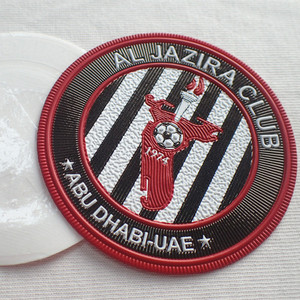
Top China TPU Sports Badges Manufacturers & Factory

Precision High-Frequency Embossing, Multi-Density 3D Micro-Molding & Thermal Transfer Polymer Badges for Tier-1 Athletic Apparel, Licensed Football Clubs, and Outdoor Performance Brands.

Precision Manufacturing Showcase

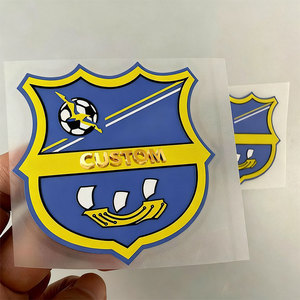
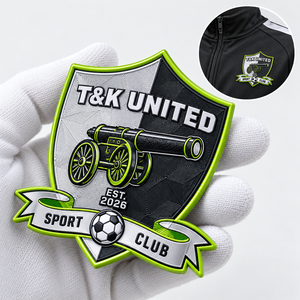
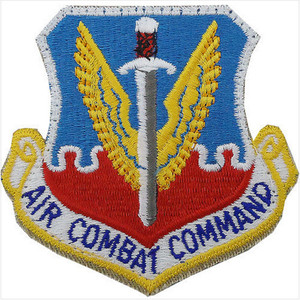
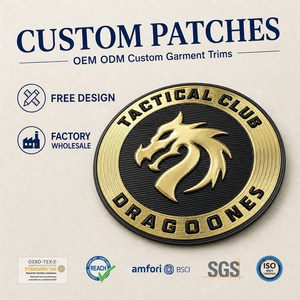
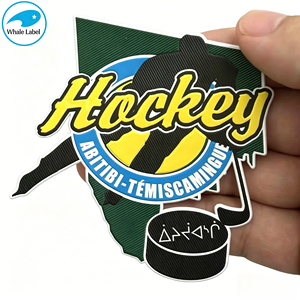
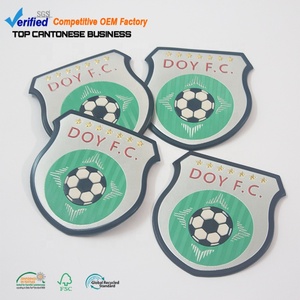
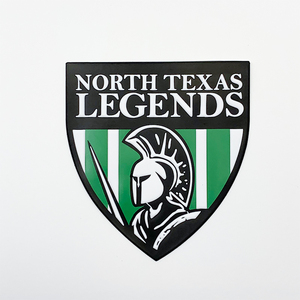
OEM/ODM Industrial TPU Sports Badges Portfolio

Engineered to resist dynamic stretch, extreme laundering temperatures, and UV degradation. Explore our benchmark thermal transfer and sew-on TPU crest solutions engineered directly in our specialized production facilities.

Material Chemistry & Process Metallurgy

Engineering Specifications: Why TPU Dominates Modern Athletic Crests

In high-performance sportswear manufacturing, legacy embroidery and heavy vulcanized PVC have been largely replaced by Thermoplastic Polyurethane (TPU). As China's premier high-precision TPU badge factory, we engineer molecular formulations that bridge the gap between microscopic crest detailing and aggressive kinetic laundering resilience.

Aliphatic vs. Aromatic TPU Molecular Stability

Aromatic TPU resins, while cost-efficient for industrial trims, degrade rapidly under UV radiation, causing yellowing on white football kits. Our factory utilizes strictly imported aliphatic TPU resins that maintain chromatic stability (Delta E < 1.2 after 500 hours Xenon arc exposure) ensuring crisp neon and pristine white team emblems throughout grueling competitive seasons.

  • Zero photo-oxidation yellowing
  • Hydrolysis resistant in high humidity
  • Enhanced clarity for metallic inclusions

Multi-Stage Dye Sublimation Blockers

Disperse dyes in 100% sublimated polyester shirts migrate into lightweight emblem polymers when activated by storage heat or perspiration. We integrate a proprietary activated charcoal anti-migration barrier within the hot-melt adhesive backing, completely neutralizing dye gas vapor without increasing badge thickness or stiffness.

  • Active carbon block membrane
  • Maintains pristine Pantone accuracy
  • Retains stretch recovery over seams

Multi-Hardness Shore Durometry Formulations

We co-extrude dual-durometer TPU matrices: an 85A Shore hardness structural cap to achieve crisp 0.1mm micro-textures and sharp bevels, fused directly with an ultra-pliant 65A elastomeric base layer. This allows badges to flex dynamically with high-spandex technical compressions without edge-lifting or cracking.

  • 85A rigid cap for micro-geometric ridges
  • 65A elastic core for athlete comfort
  • Tensile elongation exceeds 450%
Testing Dimension Aliphatic Polyether TPU (Factory Standard) Standard Polyester TPU Traditional Silicone Transfer Woven / Embroidered Crest
Shore Hardness Spectrum 70A – 95A (Custom Tunable) 80A – 98A (Rigid) 40A – 60A (Very Soft) N/A (Fabric Matrix)
Wash Fastness (ISO 6330 @ 60°C) 50+ Cycles (No Delamination) 25–30 Cycles 35–40 Cycles Fraying edges / puckering
Micro-Detail Resolution 0.08 mm Line Definition 0.18 mm Line Definition 0.35 mm Line Definition 0.60 mm Stitch Radius
Weight on Performance Jersey 4.2 g (Ultralight Aerodynamic) 5.1 g 7.8 g (Heavier Handfeel) 8.5 – 12.0 g
Anti-Migration Performance Integrated Carbon Barrier Film Requires Extra Layer Medium Permeability Prone to dye bleed-through
Environmental & Chemical Safety OEKO-TEX 100 Class I, REACH SVHC Free Standard REACH Siloxane VOCs Monitor Dye mordant screening
5,000,000+
Monthly Unit Capacity
±0.02 mm
CNC Mold Tolerance
48 Hours
Rapid Prototyping Turnaround
100%
In-House Quality Audited
Innovation Vector

Next-Generation Technological & Developmental Trends

The sports embellishment landscape is shifting rapidly from flat ornamentation to smart, lightweight, and bio-circular functional hardware. Here is how our production lines are driving technical evolution across the global athletic supply chain.

1. High-Frequency Dielectric Fusion

Transitioning beyond simple thermal stamping, our high-frequency dielectric tooling excites molecular dipoles within the polyurethane polymer in milliseconds. This delivers razor-sharp 3D crest topographies, seamless multi-colored laminations, and liquid-smooth metallic finishes that mechanical molds cannot replicate.

2. Nano-Optic Holographic Refraction

By micro-etching sub-micron diffraction gratings directly into our CNC copper tooling, our TPU badges generate iridescent color-shifting reflections without metallized inks or laminates. This achieves counterfeit-proof tournament security badges while dramatically reducing chemical waste.

3. Bio-Based & Circular Mass Balance TPUs

Responding to strict corporate decarbonization mandates, we offer ISCC PLUS-certified bio-attributed TPU resins formulated from non-food agricultural waste. Delivering identical Shore hardness, flexibility, and heat-seal durability, these reduce product carbon footprint (PCF) by up to 42%.

4. IoT-Enabled Smart Sports Emblems

Our clean-room lamination lines encapsulate ultrathin, flexible NFC (Near Field Communication) and RFID micro-chips within the internal TPU matrix. These waterproof chips survive industrial tumble drying, enabling stadium ticketing, digital fan engagement, and instant garment authentication via smartphone tapping.

5. Multi-Substrate Hybrid Texturing

Combining the tactile elegance of heritage materials with technical performance, our hybrid crests combine 3D TPU structures over high-density woven bases, reflective 3M micro-glass beads, or laser-perforated microfiber suede, giving apparel designers limitless aesthetic freedom.

6. Digital Heat-Transfer Film Automation

Eliminating carrier film distortion during high-speed automated heat seal robotic presses, our engineered carrier liners feature calibrated release-force silicone coatings, allowing high-throughput bonding in garment contract factories across Asia, Europe, and Latin America.

Procurement Intelligence

Future B2B Procurement Trends: Mitigating Risk & Scaling Margin

Procuring sportswear embellishments in 2025 and beyond requires navigating volatile ocean freight logistics, compressed seasonal turnaround cycles, and uncompromising sustainability legislation (such as the EU Corporate Sustainability Due Diligence Directive). Here is how strategic procurement executives are retooling their TPU badge sourcing matrix.

Tooling Amortization & Dynamic Low-MOQ Tiering

Historically, complex micro-injection molds required 2,000+ unit MOQs to justify CNC setup charges. Our advanced multi-cavity modular base systems permit rapid insert changeouts, enabling agile capsule collection runs starting at 100 pieces while maintaining low unit economics for mass club replica production.

Digital Sampling & Photorealistic CAD Digital Twins

Physical sample courier cycles add 14 to 21 days to typical development calendars. By supplying high-fidelity 3D texture files (.OBJ / .GLTF) mapped with precise specular and normal maps, our clients approve crest aesthetics directly in digital design studios (Clo3D, Browzwear), cutting lead times by 65%.

Pre-Qualified Direct Factory Auditing

Middlemen and trading companies inflate per-badge costs by 20% to 35% while complicating root-cause failure analysis during wash delaminations. Procurement leaders are partnering directly with vertically integrated Chinese manufacturers that operate captive mold workshops, lamination lines, and testing laboratories under one roof.

Ready to Engineer Your Next-Gen Emblems?

Download our complete material specification catalog, containing physical durometer swatches, color cards, heat press parameters, and test reports.

Get Catalog
Manufacturing Infrastructure

Why Tier-1 Sportswear Brands Rely on Our Factory

Combining decades of precision tool engineering with high-capacity polymer injection facilities, we bridge the gap between complex digital design files and flawless, high-volume production delivery.

Direct Factory Tooling

Operating 16 high-speed 5-axis CNC micro-carving centers in-house. We cut micro-textured copper and steel molds to ±0.02mm accuracy within 48 to 72 hours, eliminating third-party markups and tooling bottlenecks.

Zero Toxic Chemistries

Our TPU polymers, plasticizers, and pigment pastes are 100% free of phthalates, organotins, heavy metals, and PFAS. Fully certified according to OEKO-TEX Standard 100 Class I (safe for infants) and REACH compliant.

In-House Testing Lab

Every batch undergoes standard peeling force tension testing (>35 N/cm), Martindale abrasion checks (20,000 revs), accelerated QUV weathering, and 50-cycle commercial wash testing before global export dispatch.

Agile Global Export

Exporting directly to sportswear garment factories across the UK, USA, Canada, Germany, Italy, Pakistan, and Southeast Asia under FOB, CIF, or DDP terms with unified customs clearance support.

PHASE 01

Vector Analysis & Mold CAD

Our engineers optimize your vector artwork (AI, PDF, DXF), adjusting bevel angles, micro-draft profiles, and minimum wall thicknesses to ensure perfect polymer flow.

PHASE 02

Precision CNC Engraving

Tool steel or high-conductivity beryllium copper molds are precision carved on high-speed CNC centers, followed by optical mirror polishing and anti-stick nickel treatment.

PHASE 03

Micro-Injection & Lamination

Liquid color polymer micro-dispensing or high-frequency dielectric fusing layers the badge body, directly laminated with industrial-grade hot melt adhesive films.

PHASE 04

Automated QA & Export Pack

100% optical camera sorting checks for dimensional accuracy, color drift, and adhesive voids prior to moisture-barrier vacuum packing and worldwide courier dispatch.

Factory Operational Protocol

Industrial Heat Press Application & Processing Parameters

Even the highest-grade TPU badge will fail if heat seal parameters are incorrectly matched to performance apparel fabrics. Our engineering lab provides the exact operational windows required to achieve irreversible mechanical-chemical bond strength.

Garment Fabric Composition Platen Temperature Pneumatic Pressure Dwell Time Peel Protocol Critical Engineering Notes
100% Polyester Jersey / Interlock 145°C – 155°C (293°F – 311°F) 3.5 – 4.5 Bar (50 – 65 PSI) 12 – 15 Seconds Complete Cold Peel (<35°C) Use anti-migration carbon film to stop dye sublimating through the emblem.
Polyester / Spandex (Elastane Blends) 140°C – 148°C (284°F – 298°F) 3.0 – 4.0 Bar (45 – 60 PSI) 14 – 16 Seconds Complete Cold Peel Press with a Teflon sheet or silicon foam pad to prevent pressure bruising on sheen fabric.
Cotton / Poly Fleece Hoodies 150°C – 160°C (302°F – 320°F) 4.0 – 5.0 Bar (60 – 75 PSI) 15 – 18 Seconds Warm / Cold Peel Requires pre-pressing for 4 seconds to evaporate residual textile moisture before badge placement.
Nylon Windbreakers with DWR Finish 140°C – 150°C (284°F – 302°F) 4.0 – 5.0 Bar (60 – 75 PSI) 16 – 20 Seconds Absolute Cold Peel Specify our modified Polyamide (PA) hot melt film engineered to penetrate fluorocarbon coatings.
Procurement Intelligence FAQ

Frequently Asked Questions on TPU Badges Sourcing

Detailed technical, financial, and logistical answers to streamline your B2B sourcing decisions from inquiry to FOB delivery.

What is the true Minimum Order Quantity (MOQ) for custom TPU badges?

For custom 3D embossed and high-frequency TPU badges, our starter MOQ is typically 100 to 300 pieces per design, depending on physical dimensions and colorway complexity. Because we machine our own copper molds in-house, mold costs are kept nominal, allowing emerging brands to scale seamlessly without incurring heavy tooling debt.

How do you resolve badge delamination on DWR water-repellent jackets?

Standard PES hot melt adhesives cannot penetrate hydrophobic fluorocarbon DWR (Durable Water Repellent) surface chemistries. For outerwear applications, our factory laminates a low-surface-energy modified Polyamide (PA) or cross-linked reactive hot melt film. We recommend sending a 1-meter fabric swatch to our lab for shear pull testing prior to mass bulk production.

What artwork file formats are required for 3D mold tooling?

We prefer vector artwork in Adobe Illustrator (.AI), vector .PDF, or .EPS format with all fonts outlined. For intricate 3D variable-height crests (reliefs, textured crest bevels, rounded domes), supplying STEP (.STP), IGES, or high-resolution displacement maps ensures rapid CNC mold toolpath calculation without design ambiguity.

What are standard prototyping and mass bulk lead times?

Pre-production physical sampling takes 3 to 5 business days from final 3D vector approval, including CNC mold cutting and color matching to Pantone Solid Coated references. Mass bulk manufacturing of 1,000 to 50,000 units is fulfilled within 10 to 14 working days, with expedited runs available for urgent seasonal tournament drops.

Can TPU badges withstand industrial and commercial laundry cycles?

Yes. Our industrial-grade aliphatic TPU badges pass standard ISO 6330 laundering testing at 40°C and 60°C for up to 50 cycles with zero cracking, peeling, or color bleeding. For professional team kits subjected to commercial chemical washes, we specify heavy-duty cross-linking adhesive backings that withstand aggressive chemical detergents.

How does your factory prevent dye migration on red and neon football jerseys?

We co-extrude an impermeable activated carbon block barrier directly between the TPU decorative matrix and the heat-activated adhesive film. This microscopic barrier captures and neutralizes vaporized disperse dye molecules before they can migrate upward into white, gold, or silver emblems, preserving immaculate color integrity.

Initiate Your Factory-Direct Technical Sourcing Brief

Connect directly with our senior applications engineering team. We provide complete physical catalog packs, custom CAD renderings, and tailored FOB / CIF quotation schedules within 24 hours.

Get Catalog