Precision die-cut patches engineered alongside cut-and-sew athleticwear, outerwear, and high-tenacity branding trims. Direct FOB dispatch from our Sialkot manufacturing hub to international ports.
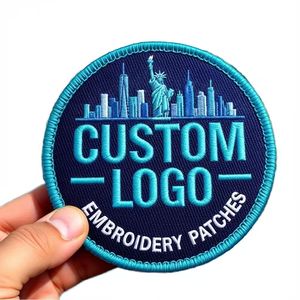 Embroidery
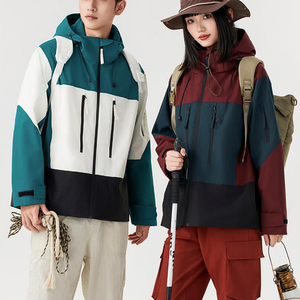 Outerwear OEM
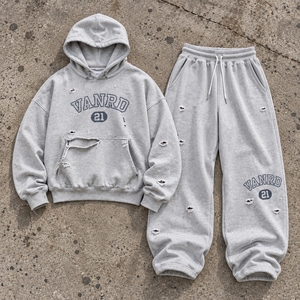 Cut & Sew
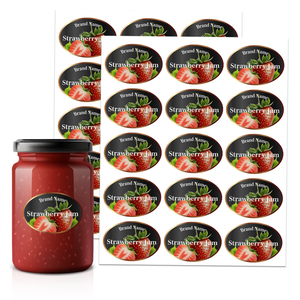 Security Label
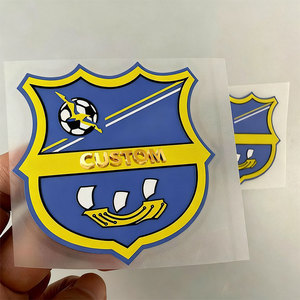 Club Crest
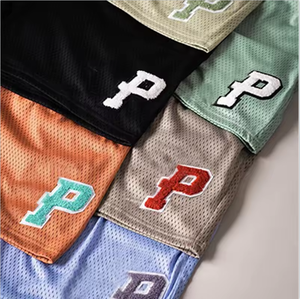 Teamwear
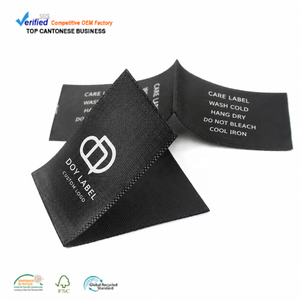 Trims & Care
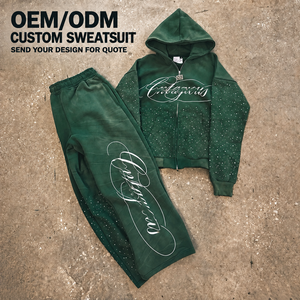 Vintage Washed
In modern industrial garment embellishment, a die-cut patch is not merely an embroidered or woven emblem; it is a multi-layered polymer-textile composite engineered to withstand thermal stress, mechanical shearing, repetitive domestic and commercial laundering, and severe environmental conditions. Whether applied to heavy-duty military uniforms, high-performance football team kits, streetwear hoodies, or technical climbing jackets, the integrity of a custom patch relies strictly on two core engineering parameters: precise geometric perimeter shearing (die-cutting) and laminar adhesive bonding chemistry.
At our primary manufacturing facilities on Defence Road, Sialkot, Pakistan, our die-cut patch fabrication replaces obsolete manual shears with automated dual-head CO2 optical vision galvanometer laser cutters and hardened rotary tool steel dies. Standard mechanical scissors or rough rotary blades inevitably produce frayed warp-and-weft margins on twill, felt, and chenille bases. By contrast, our CNC optical laser beams ablate fibers at 10,600nm wavelengths while simultaneously fusing thermoplastic filament ends, yielding a perfectly sealed micro-edge with dimensional tolerances held rigidly within ±0.2mm.
To cater to international retail, defense, and promotional standards, our die-cut patches incorporate four distinct structural layers:
Procurement-grade data parameters for evaluating patch substrate compatibility against operational garment fabrics and wash resistance.
| Patch Type & Substrate | Base Fabric Weight | Recommended Backing | Application Temp & Dwell Time | Peel Strength (ASTM D903) | Target Garment Classification |
|---|---|---|---|---|---|
| 3D Puff High-Density Embroidery | 320 GSM Poly Twill + EVA | CoPA Hot-Melt Film | 155°C – 165°C / 15–18 sec / 4 Bar | ≥ 42 N / 25mm | Headwear, Heavy Fleece Hoodies, Track Jackets |
| High-Frequency 3D TPU Badges | 100% Virgin Polyurethane (Shore 85A) | Low-Melt TPU Glue | 140°C – 150°C / 12–15 sec / 5 Bar | ≥ 48 N / 25mm | Football Team Kits, Running Mesh, Performance Windbreakers |
| Varsity Chenille & Felt Patches | Wool/Acrylic Loop Yarn + Dual Felt | Stitched / Hard Wax Melt | 165°C – 175°C / 20 sec / 3.5 Bar | ≥ 35 N / 25mm | Varsity Jackets, Streetwear Sets, Oversized Sweatshirts |
| Ultra-Fine High-Density Woven | 50D Damask Micro-Polyester | CoPES Hot-Melt or Sew-On | 150°C – 160°C / 12–14 sec / 4 Bar | ≥ 40 N / 25mm | Uniform Badges, Tactical Polos, Outerwear Branding |
| Tactical PVC Rubber Patches | Molded Plastisol / Silicone Polymer | Mil-Spec Hook & Loop | Mechanical Lock Stitching | Mechanical Shear ≥ 85 N | Outdoor Tactical Shells, Bags, Military Uniforms |
| Waterproof Destructible Vinyl Labels | 50 Micron Cast Destructible Film | Permanent Solvent Acrylic | Self-Adhering / 24hr Cure | Substrate Destructs on Peel | Cosmetic Bottles, Security Packaging, Equipment Tags |
Global apparel brands, athletic clubs, and corporate merchandising syndicates are fundamentally overhauling their supply chain procurement strategies. As geopolitical volatility and ocean freight variances dictate tighter margins, procurement directors are abandoning fragmented supply chains where emblems are digitized in one country, manufactured in another, and shipped to a third facility for cut-and-sew assembly. The future belongs to vertically integrated production ecosystems.
Procuring raw emblems independently from garments creates massive color-matching discrepancies, delayed transit legs, and disputed QA liability when adhesives fail on specialty shell fabrics. Forward-thinking procurement teams now utilize single-source manufacturing partners—such as Maxso Sports in Sialkot—where garment construction (tracksuits, jackets, kits) is executed simultaneously with custom badge creation. This guarantees chemical bonding compatibility between the fabric weave and the patch backing film before bulk roll-out.
The era of rigid 5,000-piece production minimums has ended. Direct-to-consumer (DTC) fashion brands and modern sports academies require initial agile drop volumes between 50 and 200 units to test seasonal market appetite, backed by lightning-fast bulk replenishment runs within 14 business days. Factories utilizing computerized Tajima multi-head machines and dynamic digital die-cutting allow low barrier-to-entry sampling with full industrial unit-cost economics at volume.
European and North American border authorities enforce strict limits on phthalates, toxic PVC plasticizers, formaldehyde, and azo colorants (REACH, California Proposition 65, OEKO-TEX Standard 100). Importers face severe product seizures if patches contain non-compliant solvent adhesives. The market is aggressively shifting toward water-based pigment inks, solvent-free Polyurethane (TPU) films, and GRS (Global Recycled Standard) certified rPET post-consumer embroidered threads.
High-tier football clubs and streetwear luxury brands are actively embedding sub-millimeter passive NFC (Near Field Communication) and UHF RFID transponders within the layered cavity of die-cut 3D TPU and woven crests. This transforms an ordinary brand badge into a tamper-evident digital authentication terminal for fan engagement and grey-market supply chain prevention.
The manufacturing architecture of die-cut patches has undergone three monumental generational transitions over the past two decades:
Gen 1 (Mechanical Steel Rule Forged Die-Cutting): Relies on hydraulic clicker presses forcing a pre-sharpened steel contour die through stacks of embroidered fabric sheets. While cost-effective for millions of identical standard circular or shield shapes, it yields high setup costs per custom silhouette ($80–$150 per physical steel mould), suffers from registration skew when fabric sheets shift under pressure, and cannot execute sharp internal radius cuts below 1.5mm.
Gen 2 (High-Frequency Micro-Injection & Ultrasonic Shearing): Highly prevalent for TPU and silicone badges. High-frequency dielectric heating fuses molecular chains of virgin polymer film directly into a carrier backing, while ultrasonic horns trim excess flashing at 20–40 kHz acoustic frequencies. This provides exceptionally clean, soft-touch edges that never scratch human skin, making it the premier choice for inner neck care labels and contact sportswear.
Gen 3 (Autonomous Optical CCD Vision Laser Cutting): The gold standard implemented inside our Maxso Sports manufacturing units. High-resolution charge-coupled device (CCD) industrial cameras scan the entire embroidered or printed bed in real-time, mathematically mapping every embroidery stitch distortion or textile stretch variable. The CNC galvo-laser automatically adjusts its vector cutting path to the physical contour, ensuring precise zero-bleed margins, flawless sharp angles, and thermally cauterized perimeter fibers with zero risk of structural separation.
Strategically positioned in Sialkot, Pakistan's world-renowned export manufacturing epicenter, combining decades of sporting goods mastery with modernized trim engineering.
Located on Defence Road, Sialkot, we are a direct manufacturing enterprise, not a domestic trading intermediary. Buyers bypass broker markups, communicating directly with export engineers for transparent pricing and direct production oversight.
We manufacture both the patches and the host garments under one roof. Whether ordering 50 custom club tracksuits, fleece hoodies, or 10,000 tournament football kits, trim dyes and shrinkage tolerances match perfectly.
Our computerized digitizing team translates complex vector artwork into calibrated embroidery files within 12 hours. We dispatch photographic and physical pre-production counter-samples in 3 to 5 business days for unconditional buyer sign-off.
All heat-activated adhesives and embroidery threads undergo 50-cycle commercial laundry stress testing (ISO 6330 standards). Our patches withstand severe wash cycles, tumbler heat drying, and heavy sweat exposure without degradation.
We routinely export to the United Kingdom, United States, Canada, Australia, and the European Union. In-house export staff prepare all Bills of Lading, Commercial Invoices, Packing Lists, and Certificates of Origin for rapid customs clearance.
We empower emerging streetwear creators, private label brands, and athletic academies by offering agile starter runs from 50 pieces per design, effortlessly scaling up to hundreds of thousands of units for major seasonal distributors.
Critical technical, operational, and commercial answers for brand sourcing directors, apparel merchandisers, and procurement managers.
A merrowed border (also termed an overlock edge) utilizes a specialized 3-thread sewing loop that wraps around the entire edge of the patch. It requires a uniform geometrical shape (circle, oval, rectangle, or shield) and creates a thick, 3mm to 4mm heritage border typical of scouting or classic service patches. By contrast, a laser die-cut border relies on CNC laser thermal ablation, cutting precisely along complex, jagged, or free-form custom contours (e.g., mascot silhouettes, typography). Laser borders are sleek, lie completely flat against the garment, and are sealed chemically via localized heat fusion, preventing any fiber unravelling.
Adhesive bond failure typically stems from one of three technical variables: insufficient platen pressure, inadequate thermal dwell time, or sublimation coating incompatibility. For professional garments, domestic hand irons lack the calibrated pneumatic pressure (minimum 4 to 5 Bar) required to force molten Copolyester or Polyurethane deep into the inter-fiber valleys of the host garment. Additionally, if the host fabric possesses a water-repellent DWR (Durable Water Repellent) fluorocarbon coating or silicone finish, standard adhesives cannot wet out the substrate; a specialized low-melt cross-linking adhesive backing must be applied during factory patch fabrication.
We require vector artwork formatted in Adobe Illustrator (.AI), CorelDRAW (.CDR), Scalable Vector Graphics (.SVG), or high-resolution vector PDF. Artwork must have all type fonts converted to outlines. For embroidered patches, isolated text lines should maintain a minimum height of 4.5mm and a stroke thickness of no less than 0.8mm to ensure individual needle penetrations do not collide and bunch. If your artwork contains photographic color gradients, we advise switching from pure thread embroidery to high-resolution dye-sublimated printed patches with an embroidered overlock border.
Our dye laboratory references the standardized Pantone Matching System (PMS Solid Coated). We formulate thread lots using certified continuous filament polyester that corresponds with spectrophotometer Delta-E readings held below 0.8. When producing 3D TPU or PVC injection badges, liquid masterbatches are weighed digitally to ensure that visual color under D65 artificial daylight booths matches client master brand standards across textile, ink, and polymer finishes.
Yes. Hybrid patches represent one of our primary core competencies. We regularly produce multi-medium emblems that combine high-density 3D puff embroidery with fine Damask woven centers, chenille varsity lettering framed by metallic gold bullion wire, or laser-ablated faux leather bases stamped with raised high-frequency TPU relief elements. These high-complexity hybrid badges provide extraordinary tactile luxury for premium lifestyle labels and championship teamwear.
Digitized digital proofs are delivered within 24 hours. Pre-production physical samples take 3 to 5 business days. Once client approval is received, standard bulk patch runs (500 to 10,000 units) ship within 10 to 14 business days. Air express shipments (via DHL, FedEx, UPS) take 3 to 5 transit days directly to your distribution center in the US, UK, Australia, or EU. For large sea-freight orders consolidated with custom tracksuits and team kits, shipments clear via Karachi Port with full documentation provided.
Receive an engineered manufacturing quotation within 24 hours. Submit your tech pack, artwork silhouette, or garment design concepts to our Sialkot factory export desk today.