Source directly from our certified manufacturing cluster. Explore reference technical components, 3D emblems, high-tenacity sportswear, and custom identity trims built to stringent international tolerances.
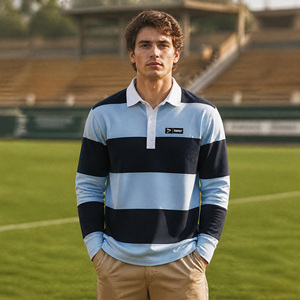
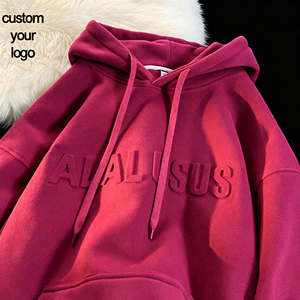
In modern technical sportswear, luxury streetwear, and activewear manufacturing, the woven hem tag is far more than a decorative accessory—it is an external hallmark of brand provenance, garment authenticity, and finished build quality. Positioned at the bottom hem of heavy 450gsm cotton hoodies, the lower cuff of windbreakers, or the side seam of athletic rugby polos, a hem tag undergoes extreme mechanical friction, cyclical laundry agitation, skin abrasion, and exposure to perspiration. Choosing an elite woven hem tag factory with integrated manufacturing capabilities ensures that brand marks retain pin-sharp line definition, chromatic stability, and soft tactile feel across the full lifecycle of the garment.
At our specialized production cluster, we engineer woven hem tags using high-speed computerized Jacquard air-jet and rapier looms configured with high-twist 50-Denier (50D) or 75-Denier (75D) filament polyester and recycled polyester (rPET) yarns. Traditional 100D or coarse taffeta weaves create rough, bulky labels that curl and cause skin irritation. By increasing the warp-and-weft pick density to upwards of 110 picks per centimetre, our high-density damask weaving process captures minute typography (down to 0.8mm font height) without bleeding or staircase pixelation.
Engineered for premium branding requiring crisp vector execution. Utilizes 50 Denier warp and weft yarns delivering 120+ picks per inch. Ideal for micro-lettering, intricate emblems, and dual-sided hem clips with zero reverse-side thread show-through.
Eliminates the stiff, abrasive heat-sealed edge common in low-tier manufacturing. High-frequency ultrasonic slitting melts the polyester filament ends at the molecular level, creating a velvety, scratch-free edge that complies with OEKO-TEX Standard 100 Class 1 skin safety.
Configured with customized fold architectures designed specifically for straddling bottom hems, sleeve cuffs, and beanie rims. Calibrated folding jigs eliminate stitch creep, diagonal slippage, and dimensional skew during flatlock or twin-needle apparel assembly.
B2B procurement directors and technical designers must balance weave profile, tactile softness, tensile elasticity, and budget. The table below delineates engineering benchmarks across the industry's primary woven label constructions:
| Weave Construction | Yarn Density (Denier) | Max Pick Count (/cm) | Edge Finishing Method | Recommended Apparel Placements | Durability Benchmark |
|---|---|---|---|---|---|
| High-Definition Micro-Damask | 50D Warp × 50D Weft | 110 – 130 | Ultrasonic Cold Slit / Laser | Heavyweight Hoodies, Tracksuit Hemlines, Active Polos | 100+ Domestic Wash Cycles (<1% Shrinkage) |
| Standard Damask | 75D Warp × 100D Weft | 70 – 90 | Ultrasonic Cut & Loop Fold | Sportswear Outerwear, Windbreaker Cuffs, Team Shorts | 75+ Commercial Wash Cycles |
| Loom Woven Satin | 75D Filament Weft | 80 – 100 | Woven Selvedge / Sonic Cut | Undergarments, Base Layers, Performance Leotards | 60+ Gentle Wash Cycles |
| Structural Taffeta | 100D Coarse Synthetic | 45 – 60 | Hot Knife / Heat Sealed | Utility Workwear, Outer Luggage, Heavy Industrial Bags | Extreme Abrasion Resistance |
| GRS-Certified Recycled PET | 50D/75D Post-Consumer Yarn | 105 – 120 | Ultrasonic Slit & Centre Fold | Circular Apparel Collections, Eco-Streetwear Lines | Meets Global Recycled Standard (GRS 4.0) |
The apparel labeling sector is experiencing radical disruption driven by global traceability mandates, circular fashion legislation, and smart digital interaction. Supply chain managers sourcing woven hem tags must anticipate three defining industry vectors:
The European Union's Ecodesign for Sustainable Products Regulation (ESPR) is accelerating the migration toward smart trims. Modern woven hem tag factories now laminate flexible, waterproof 13.56 MHz RFID/NFC micro-chips inside the center fold of the hem tag. This allows consumers to tap the garment with a smartphone to view supply chain provenance, carbon footprint, and automated recycling protocols.
Traditional multi-material trims (e.g., polyester tags sewn onto pure cotton or nylon garments with incompatible backing adhesives) impede industrial garment shredding and chemical recycling. Forward-thinking procurement now emphasizes mono-materiality: pairing 100% GRS-certified recycled polyester hem tags with matching polyester performance sportswear, or utilizing organic combed-cotton woven trims for 450gsm pure cotton fleece collections.
Inventory risk remains the top concern for international importers and independent streetwear labels. Leading factories have modernized weaving beam setups to offer split-beam runs—allowing brands to test multiple colourways across smaller minimum order quantities (from 50 to 100 pieces for completed custom garments and trims) without facing crushing tooling surcharges or multi-month lead times.
One of the most persistent failure points in global apparel production is the separation of trim suppliers from cut-and-sew garment factories. When labels are sourced from independent subcontractors, discrepancies in colour matching (differing dye lots), dimensional tolerance misalignment (tags that are too wide for the sewn hem tunnel), and customs clearance delays inevitably occur.
Operating out of the globally celebrated sporting goods and apparel cluster in Sialkot, Pakistan, our manufacturing facility provides end-to-end integration:
The two most common fold architectures are the Centre Fold (Loop Fold) and the Manhattan Fold. A Centre Fold creates a loop that wraps cleanly around the bottom hem or sleeve cuff with seam allowance tucked inside the hem stitch. The Manhattan Fold features top-and-bottom ends folded outward, providing a crisp, tailored finish ideal for single-layer hems or outer pockets.
We eliminate scratchiness through three controlled manufacturing steps: utilizing high-twist 50-Denier fine filaments, employing ultrasonic cold-slitting (which melts the yarn edge into a smooth, featherweight boundary rather than a hard plastic bead), and applying a post-weaving calendering heat-press that relaxes internal yarn tension to permanently prevent curling after hot washes.
For standalone woven tags and custom badges, our standard production runs start at approximately 100 to 250 pieces, while complete custom cut-and-sew garment lines (such as fleece hoodies, performance rugby shirts, and winter tracksuits) start from 50 pieces per style/colourway. This allows independent brands to launch balanced collections without surplus stock risk.
We calibrate our yarn dye vats to the Pantone Matching System (Pantone TPX/TCX and Solid Coated). Prior to full loom engagement, we weave a physical lab-dip strike-off ribbon for spectrometer evaluation. This guarantees that your hem tag's background and accent colours harmonize perfectly with dyed garment fabric rolls.
We require vector artwork supplied in Adobe Illustrator (.AI), Scalable Vector Graphics (.SVG), or high-resolution vector PDF format. All fonts must be converted to outlines, and minimum stroke weights should be kept at or above 0.3pt (approx. 0.1mm) to preserve structural clarity under Jacquard warp and weft interlacings.
Digital Jacquard weave simulations are completed within 24 to 48 hours. Physical sample strike-offs are typically produced and dispatched via express courier within 5 to 7 business days. Bulk garment and trim production schedules average 18 to 25 business days depending on order volume, seasonal capacity, and custom dyeing requirements.
Initiate factory-direct production with an established manufacturing partner in Sialkot. Upload your technical drawings, style specifications, or vector artwork today for an itemized quote, fabric swatches, and rapid pre-production sampling.