Engineered from lightweight mechanical-stretch interlocks, technical compression liners, and proprietary high-frequency emblems. Every component is custom manufactured in Sialkot under strict AQL 1.5/2.5 protocols.

The athletic apparel market in Japan represents one of the most operationally demanding, quality-sensitive sourcing landscapes in the world. As traditional Japanese trading companies (Sogo Shosha and Senmon Shosha) face margin compression and localized labor shortages, direct procurement partnerships with specialized cut-and-sew manufacturing clusters in Sialkot, Pakistan, have emerged as a high-margin, scalable solution. However, penetrating the Japanese domestic activewear market requires more than standard export practices: it mandates an absolute mastery of JIS (Japanese Industrial Standards), localized anthropometric sizing, thermal-hygrometric fabric chemistry, and exhaustive post-assembly safety inspection.
Strategic Sourcing Shift: Japanese buyers are increasingly moving away from high-tariff intermediaries, seeking tier-1 factory direct relationships that integrate in-house badge injection, dye-sublimation, and laser-guided pattern cutting under a single roof to mitigate lead-time vulnerabilities and ensure traceable quality control.
Modern Japanese consumers demand training apparel that transitions effortlessly between intense athletic rigor and clean, understated urban minimalism. Whether designing for Tokyo’s commuter-running subcultures, boutique functional fitness clubs in Minato-ku, or elite high school and collegiate sports clubs (Bukatsu 部活動), technical training shorts must satisfy contradictory demands: extreme featherweight lightness coupled with high tensile burst strength; aggressive four-way stretch dynamic mobility supported by non-sheer, opaque microfibers; and hyper-efficient moisture management that thrives in Japan's humid subtropical monsoon summers.
At Maxso Sports, we operate from the heart of Sialkot’s premier sporting goods cluster, bridging modern industrial production capacity with the meticulous micro-precision demanded by Japanese retail brands. By controlling the complete lifecycle—from yarn spinning verification and greige fabric knitting to pneumatic 3D TPU heat-welding and dual-head needle detection (Kenshin 検針)—we eliminate downstream supply chain variances, ensuring every production run satisfies Japan’s customs and retail standards upon arrival at Tokyo, Yokohama, or Kobe ports.
How our custom engineered athletic shorts are constructed to resolve specific performance challenges across four major athletic disciplines in Japan.
Tokyo's iconic imperial palace running circuit and metropolitan running clubs require shorts engineered for high visibility and humidity regulation. We integrate 360-degree Japanese micro-glass bead retroreflective heat transfers (exceeding 450 cd/lux) along side splits, coupled with ultra-silent, non-rustle mechanical stretch fabrics (110–125 GSM) that eliminate chafing over extended distance runs.
Japan's disciplined school athletic clubs operate on rigorous daily double-session practices. Apparel must withstand industrial machine wash cycles without color degradation or seam unraveling. We utilize high-tenacity, double-needle cover-stitched polyester interlock with reinforced bartacking at all stress points, ensuring 3+ years of daily team utilization.
From Shoot boxing to Brazilian Jiu-Jitsu dojos across Osaka and Tokyo, grappling shorts demand absolute structural integrity with zero hardware hazards. Our fight training shorts feature zero-external-metal construction, internal drawstring channels, 4-way stretch lycra crotch gussets, and 12-inch high-mobility side slits.
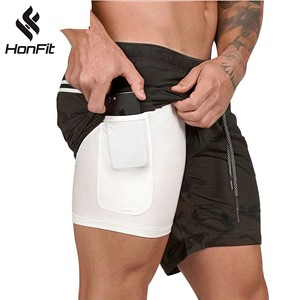
Japan has witnessed an exponential boom in 24-hour fitness facilities (Anytime Fitness, Chocozap, Joyfit). Modern members favor high-performance 2-in-1 shorts featuring compressive interior liners. Our inner tights utilize 220 GSM high-gauge nylon-spandex blends that deliver moderate muscle compression without restricting deep squat ranges of motion, paired with dedicated phone chambers that prevent bouncing.
Every fabric batch processed for the Japanese market undergoes certified laboratory validation before cut-and-sew operations begin.
| Testing Metric | Japanese Regulatory Standard | Conventional Export Quality | Maxso Sports Engineering Spec | Compliance Status |
|---|---|---|---|---|
| Colorfastness to Washing | JIS L 0844 Method A-2 | Grade 3.0 – 3.5 | Grade 4.5 or higher (No bleeding onto white trims) | JIS PASSED |
| Colorfastness to Perspiration | JIS L 0848 (Acid & Alkaline) | Grade 3.5 | Grade 4.5+ (High-solidity cationic disperse dyes) | JIS PASSED |
| Dimensional Shrinkage Rate | JIS L 1096 (5 Wash Cycles) | Within ± 4.5% | Within ± 1.5% (Pre-shrunk stenter heat-set finish) | JIS PASSED |
| Tensile Bursting Strength | JIS L 1096 Hydraulic Method | > 550 kPa | > 850 kPa (High-denier filament texturized core) | JIS PASSED |
| Formaldehyde Chemical Safety | Law No. 112 (Harmful Substances) | < 75 ppm | Non-Detectable (< 16 ppm / Baby Class Safe) | JIS PASSED |
| Broken Needle Inspection | Kenshin Standard (検針) | Random spot test | 100% In-line Tunnel Detector (0.8mm Steel Ball Test) | JIS PASSED |
B2B sportswear brands and athletic directors in Japan are recalibrating their technical specifications in response to structural lifestyle shifts. To provide real Information Gain for brand planners, our textile R&D department tracks three dominant industry macro-trends:
With Japanese summers recording unprecedented heat index metrics, training shorts must deliver an immediate thermodynamic cooling sensation upon skin contact. Our specialized Q-Max rating fabrics exceed 0.28 W/cm², utilizing micro-mineral embedded cross-section yarns that disperse heat 40% faster than standard synthetic fabrics.
In high-density Japanese subway environments and closed fitness studios, odor neutralization is non-negotiable. Our chemical finishing lines utilize eco-friendly, non-silver antimicrobial treatments (certified to standard SEK orange/blue Japanese thresholds), inhibiting bacterial growth even after 50 intense washings.
Japanese streetwear sensibilities favor a refined 5-inch to 7-inch inseam silhouette that elongates the leg line while maintaining complete modesty during deep stretching. Large, loud logos have been replaced by subtle matte TPU tone-on-tone accents and discreet interior brand detailing.
Operating directly on Defence Road, Sialkot, Maxso Sports integrates spinning partner networks, automated pattern drafting, cut-and-sew workshops, and direct export documentation under single-tier management. Japanese buyers avoid the 20-30% markups imposed by regional middlemen while securing uncompromised technical compliance.
Transparent, practical technical answers addressing customs, grading, minimums, and testing procedures for Japanese importers.