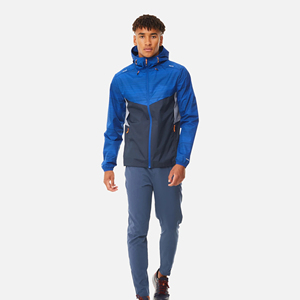
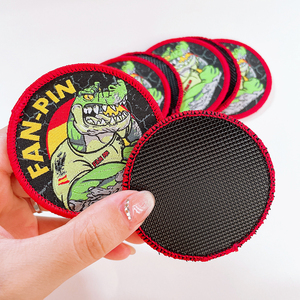
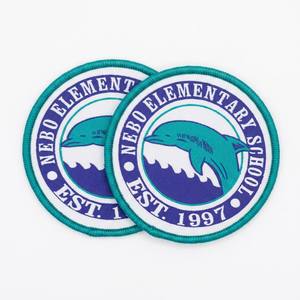
Factory-direct engineering compliant with Japanese industrial standards (JIS). Mix performance garments, windproof outerwear, and tactile high-definition crests within consolidated export shipments.
The Greater Nagoya Metropolitan Area (Chūkyō Industrial Core), anchoring Aichi Prefecture, represents one of Japan's most dynamic and high-density sporting corridors. Historically dominated by massive corporate federations, industrial company leagues (JFL and Tokai Soccer League), and top-flight professional establishments like Nagoya Grampus, the demand for high-caliber, bespoke match kit production is experiencing a paradigm shift. For decades, local athletic associations, collegiate powerhouse athletic clubs (such as Chukyo University and Aichi Gakuin University), and youth training systems relied heavily on domestic Japanese trading companies (sōgō shōsha) or tier-one global athletic distributors. However, inflated commercial retail markups, prolonged catalog lead times, and inflexible minimum re-order quantities have driven procurement executives and private-label teamwear brands across Nagoya to seek direct cut-and-sew manufacturing partnerships.
Our factory operation in Sialkot, Pakistan—the globally recognized epicenter of FIFA-grade soccer ball manufacturing and high-performance cut-and-sew sportswear—provides an agile, direct pipeline engineered specifically for the exacting requirements of the Japanese athletic sector. By establishing a direct manufacturer-to-buyer link with athletic organizations in Meieki, Sakae, Toyota City, and Ichinomiya, we eliminate multi-tiered distributor overheads. This yields an estimated 35% to 50% reduction in unit landing costs while delivering complete sartorial control over fabric composition, grammage, micro-perforated airflow mapping, and precision thermal transfers.
Football uniform engineering cannot adopt a "one-size-fits-all" methodology. The playing surfaces, local climate variables, tournament scheduling structures, and club identity aesthetics throughout the Tokai region require distinct structural fabric compositions and specialized finishing methods.
High-friction training grounds and rigorous weekend schedules across the Mizuho and Toyota training hubs necessitate reinforced twin-needle flatlock seams and 140g/m² micro-interlock polyester that endures high tensile stress during slide tackles on artificial turf.
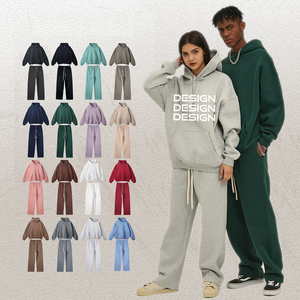
University programs competing in the Tokai Student Soccer League require comprehensive kit programs: home, away, goalkeeper, pre-match warm-up sets, and 380g/m² French Terry cotton tracksuits with serialized squad number heat-presses and woven school crests.
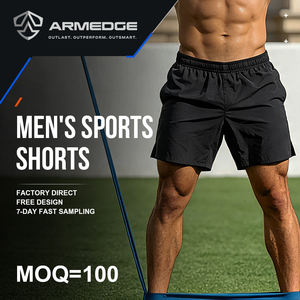
Aichi's robust automotive and industrial corporate soccer leagues demand elite, corporate-sponsored sublimation kits with crisp vector typography, Pantone-matched brand colorways, and lightweight 75D stretch running shorts for corporate fitness tournaments.
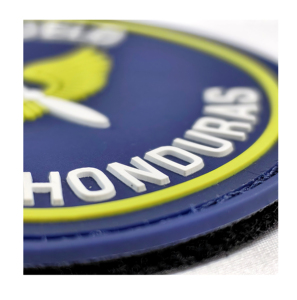
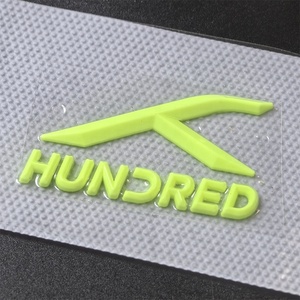
Apparel startups and streetwear boutiques in Nagoya's commercial fashion core leverage our bespoke cut-and-sew line for oversized lifestyle football jerseys, featuring custom neck tabs, embossed 3D silicone badges, and premium custom packaging.
Procurement directors across Aichi Prefecture face distinct environmental challenges. Nagoya's summer climate is notoriously characterized by extreme, humid heat ("Nagoya no natsu"), with ambient temperatures routinely exceeding 36°C alongside humidity indices greater than 75%. Standard closed-mesh jerseys trap perspiration, leading to moisture saturation, player exhaustion, and adhesive delamination of squad numbers. Consequently, our manufacturing line integrates three hyper-localized production methodologies:
We deploy cross-section polyester fibers that pull moisture from the dermal layer via capillary suction to the outer textile perimeter, enabling evaporation within minutes even under oppressive Chūkyō summer conditions.
Unlike conventional heavy screen inks that obstruct knit breathability, our high-temperature disperse dye sublimation fuses gaseous pigments straight into the synthetic polymers, preserving natural elasticity and zero tactile weight.
In accordance with Japan's Act on Promoting Green Procurement and local Aichi carbon-reduction frameworks, we provide GRS-certified (Global Recycled Standard) rPET fabrics sourced from post-consumer recycled plastic chips.
Japanese athletic apparel buyers uphold some of the world's most rigorous textile tolerance thresholds. Below is an itemized breakdown of our Sialkot production parameters compared against domestic Japanese Industrial Standards (JIS):
| Evaluation Parameter | JIS Standard Protocol | Maxso Sports Factory Delivery Standard | Strategic Advantage for Nagoya Buyers |
|---|---|---|---|
| Color Fastness to Washing | JIS L 0844 Method A-2 (Class 4.0) | Class 4.5+ (High-Temp Disperse Dye Sublimation) | Zero bleeding into contrasting white collar/sleeves |
| Perspiration Resistance | JIS L 0848 Acid & Alkaline (Class 4.0) | Class 4.5 Certified (Immersion tested for 24h) | No chromic degradation during prolonged summer play |
| Tensile Seam Strength | JIS L 1096 Seam Grab Method (>180N) | Dual-Needle 4-Thread Overlock (>240N) | Reinforced burst prevention along armscye & crotch |
| Dimensional Stability | JIS L 1096 Washing & Drying (±3.0%) | Controlled Pre-Shrunk Finishing (≤1.5% Drift) | Maintains fitted JASPO profile across repeated launderings |
| Hazardous Trace Metals | Formaldehyde Detection <75 ppm | Zero Detectable Free Formaldehyde / Oeko-Tex 100 | Hypoallergenic certification across youth academy apparel |
| Foreign Object Safety | Ferrous Needle Detection (NC-9800 System) | 100% Dual-Head Roller Needle Inspection (0.8mm Fe) | Fulfills zero-defect import mandate for school uniforms |
Maxso Sports operates an end-to-end industrial facility located along Defence Road, Sialkot. Sialkot manufactures over 70% of the globe's professional hand-stitched and thermally bonded association footballs, and hosts an integrated textile ecosystem that spans spinning, knitting, custom synthetic dyeing, specialized computerized embroidery, and laser trim fabrication.
When Nagoya importers partner with our factory, they bypass trading houses and speak directly with technical textile engineers. Our production layout encompasses:
We do not adapt oversized Western blocks for Japanese players. Our digitized Gerber pattern systems maintain dedicated JASPO grading tables (S, M, L, O, XO, 2XO) tailored to Japanese player proportions.
Every batch passes through raw fabric yarn testing, mid-line stitching audits, post-decoration heat-press peel verification, and final conveyor needle detection before hermetic carton packaging.
While domestic Japanese mills demand 500+ piece commitments for custom dye runs, our flexible production lines welcome starter runs from 50 pieces per design, allowing clubs to replenish rosters mid-season without deadstock.
Essential guidance covering logistics, customs clearance, Japanese sizing conformity, and pre-production sampling protocols.
Connect with our Sialkot factory export engineering desk. Submit your vector artwork, tech pack, or concept sketch to receive an itemized FOB quote, material swatches, and turnaround schedule within 24 hours.