Activewear
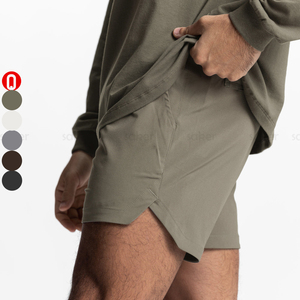
Explore our integrated apparel and custom emblem production. From micro-injected 3D rubber badges to high-durability sublimation kits and heavyweight sportswear, every item is manufactured to client specifications with factory-direct pricing for the Kenyan market.
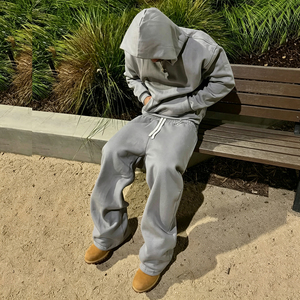
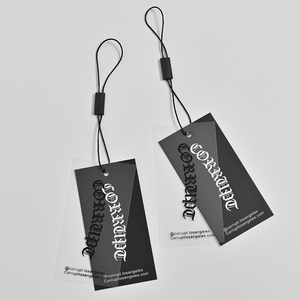
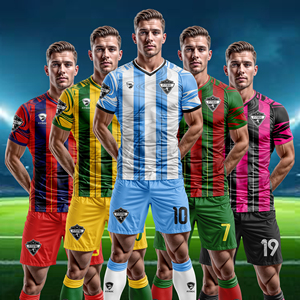
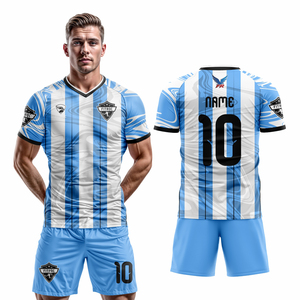
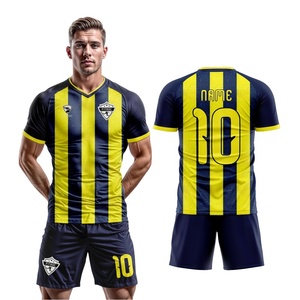
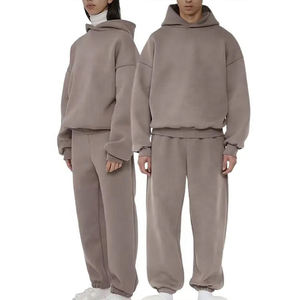
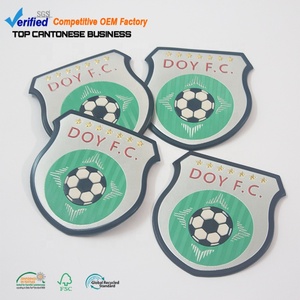
A comprehensive analysis of polymer chemistry, moulding tolerances, atmospheric resistance, and procurement standards for Kenyan commercial enterprises, government institutions, and private labels.
Procuring custom rubber badges, PVC insignia, and silicone embellishments for the Kenyan market requires an advanced understanding of polymer science and localized operational realities. Kenya's unique geographical juxtaposition—spanning high-altitude equatorial highlands in Nairobi, intense ultraviolet exposure in the Great Rift Valley, arid terrains in Turkana, and high-salinity coastal conditions in Mombasa—places rigorous demands on polymer compounds. Standard decorative garment badges manufactured with generic fillers rapidly suffer from plasticizer migration, UV photo-oxidation (leading to chalking and brittleness), and adhesive failure when subjected to equatorial sun and rigorous domestic laundering.
As a specialized factory-direct manufacturer located in the world-renowned industrial engineering cluster of Sialkot, Pakistan, we supply Kenyan security firms, sports governing bodies, uniform contractors, and export-oriented apparel brands with high-precision micro-injected emblems. By controlling the entire production sequence—from CNC copper tooling and liquid polymer formulating to automated dispensing, vulcanization, and secondary attachment backing—we eliminate middleman markups while enforcing strict physical quality control standards compliant with the Kenya Bureau of Standards (KEBS) and international RoHS/REACH environmental directives.
Selecting the correct substrate is paramount for cost optimization and operational lifespan. The following comparative engineering matrix outlines the technical characteristics of our badge formulations tailored for East African procurement:
| Substrate Material | Hardness (Shore A) | UV & Sunlight Stability | Optimal Attachment Method | Wash Durability Cycle | Ideal Kenya Application |
|---|---|---|---|---|---|
| Micro-Injected Soft PVC (DINP Plasticized) | 45 - 60 Shore A | High (Anti-UV Additive) | Sewing Channel, Hook & Loop (Velcro) | 80+ Industrial Washes | Security Uniforms, Tactical Vests, Outdoor Safari Backpacks |
| Liquid Medical-Grade Silicone | 30 - 50 Shore A | Maximum (UV Inert) | Thermal Heat-Seal, Direct Injection | 120+ Domestic Washes | Performance Athleisure, Baby Wear, Hypoallergenic Apparel |
| High-Frequency 3D TPU | 65 - 85 Shore A | Very High | Heat Press (140°C - 155°C), Ultrasonic | 90+ Commercial Washes | Football Club Crests (FKF), Rugby Jerseys, Caps |
| Glow-in-the-Dark / Phosphorescent PVC | 50 - 60 Shore A | High | Hook & Loop Backing, Heavy Stitching | 60+ Rigorous Washes | Mining Safety Crews, Night Security Patrols, Traffic Fleets |
Our micro-engineered rubber badges are utilized throughout Kenya's premier economic sectors. Explore how our custom emblems deliver unparalleled durability and brand prestige from Mombasa to Eldoret.
Kenya is home to hundreds of commercial guarding firms licensed under the Private Security Regulatory Authority (PSRA). Uniform durability and immediate optical authority are mandatory for security personnel stationed at commercial centers, banks, and gated compounds.
From the Maasai Mara ecosystem to Samburu and Amboseli, wildlife rangers, safari guides, and eco-lodge staff operate in severe outdoor conditions. Cloth patches easily snag on acacia thorns and absorb red volcanic dust, while our rubber emblems remain completely clean.
Kenya’s sporting landscape is surging, highlighted by the Football Kenya Federation (FKF) Premier League, the Kenya Rugby Union (KRU) Super Series, and vibrant grassroots athletics. Clubs require lightweight, dimensional crests that enhance performance jerseys without restricting mobility.
Nairobi's youth culture and streetwear revolution—influenced heavily by vibrant Matatu graphics and localized creative collectives in Westlands, Kilimani, and CBD—demand elevated tactile apparel trims. Generic prints no longer satisfy modern East African fashion consumers.
Apparel plants based in the Athi River and Ruaraka Export Processing Zones produce millions of garments under AGOA for North American and European retailers. We provide reliable high-volume bulk supply of compliant trims directly to factory loading docks.
Port operations at Mombasa Kilindini Harbour, logistics depots along the Standard Gauge Railway (SGR), and tea factories in Kericho require heavy-duty identification tags that withstand petroleum spills, grease, acid wash, and heavy weather conditions.
As the East African Community (EAC) integrates trade networks and Kenyan enterprises modernize their brand positioning, several key developments are reshaping procurement requirements.
Institutional buyers across Kenya are rapidly shifting away from legacy flat embroidery. Security directors and uniform managers recognize that embroidered threads pull apart, retain dirt, and show wear within six months, whereas 3D micro-injected rubber badges retain crisp detail and vivid coloration over years of daily service.
The Kenya Bureau of Standards (KEBS) and the National Environment Management Authority (NEMA) have tightened import guidelines on toxic plasticizers and heavy metals. Procurement officers are now explicitly mandating phthalate-free, non-toxic PVC and medical-grade silicone badges with verified chemical test certifications.
With an expanding middle class and booming fitness culture in urban hubs like Nairobi, Mombasa, and Kisumu, local gym chains and boutique sportswear labels are demanding high-definition 3D TPU and silicone logos that mirror top global athletic apparel brands.
Kenyan bulk importers are leveraging seamless clearance between the Port of Mombasa and the Inland Container Depot Nairobi (ICDN) at Embakasi. Sourcing complete programs—matching tracksuits, jerseys, and rubber badges within single consolidated sea containers—yields dramatic freight savings.
Counterfeiting of premium school uniforms, corporate workwear, and football merchandise remains a major concern in East Africa. Our computerized CNC tooling allows Kenyan brands to embed sub-millimeter micro-text, serialized lettering, and hidden tactile ridges that cannot be replicated by low-end counterfeiters.
Modern Kenyan entrepreneurs are moving away from massive stagnant inventory investments. By collaborating with an agile manufacturing partner offering initial badge MOQs starting at 50 to 100 units, brands can test regional markets before committing to high-volume manufacturing runs.
Operating from Sialkot, Pakistan—the world's historic hub for sportswear, leather gear, and technical trims—Maxso Sports combines multi-generational craftsmanship with computer-controlled polymer injection engineering.
We do not outsource tooling. Our facility operates high-speed multi-axis CNC milling centers that engrave solid copper moulds with micro-millimeter precision, ensuring your logos feature razor-sharp definition, multi-tier 3D stepped relief, and flawless curved contours.
Manual color dropping often leads to color bleeding and uneven thicknesses. Our computerized multi-nozzle robotic liquid dispensers inject custom-mixed Pantone polymer pigments into micro-cavities with zero cross-contamination, ensuring absolute repeatability across huge production volumes.
Eliminate unnecessary trading company commissions. By dealing directly with our production facility on Defence Road, Sialkot, you receive bottom-line FOB or CIF quotes that safeguard your operational profit margins when bidding on large government or institutional uniform tenders in Kenya.
Streamlined from your initial vector brief to customs release at JKIA or Mombasa Port.
Submit your AI, PDF, or CDR file. Our CAD designers engineer a 3D simulation specifying relief heights, sewing grooves, and Pantone TCX/C matches within 24 hours.
We machine the copper mould and cast 3 to 5 physical pre-production samples. High-res photos and HD videos—or courier sample units—are dispatched for your sign-off.
Upon sample approval, high-capacity automated ovens vulcanize the polymer batches. Every badge undergoes manual edge trimming and automated backing lamination.
Orders are packed in moisture-barrier cartons, accompanied by full export commercial invoices, packing lists, and Certificate of Conformity for rapid Kenyan customs clearance.
Transparent technical, logistics, and regulatory answers addressing the most common inquiries from Kenyan business owners, uniform contractors, and procurement managers.
Under the East African Community (EAC) Common External Tariff (CET), garment accessories and rubber badges generally fall under HS Code 3926.90 or 5810. Importers should account for standard import duty (typically 25%), Value Added Tax (VAT at 16%), Railway Development Levy (RDL at 2%), and Import Declaration Fee (IDF at 2.5%). We provide fully compliant, itemized commercial invoices and packing lists to ensure smooth processing with your clearing agent and the Kenya Revenue Authority (KRA) via the Simba / iCMS platform.
Yes. The Kenya Bureau of Standards enforces the Pre-Export Verification of Conformity (PVoC) program to ensure imported products are safe and free from banned toxins. Our rubber and silicone badges are manufactured from virgin, eco-friendly polymers compliant with REACH and RoHS standards, free from prohibited heavy metals and toxic phthalates. We coordinate with inspection agencies such as SGS, Intertek, or Bureau Veritas in Pakistan to facilitate Certificate of Conformity (CoC) issuance for large bulk shipments.
For urgent deadlines, sports season launches, or sample approvals, air cargo via DHL, FedEx, or dedicated air freight directly to Jomo Kenyatta International Airport (JKIA) in Nairobi takes approximately 4 to 7 business days from dispatch. For cost-effective commercial bulk runs (5,000+ pieces or combined with sportswear orders), ocean freight from Karachi Port to the Port of Mombasa averages 18 to 25 days transit time, followed by rapid transfer via the Standard Gauge Railway (SGR) to the Nairobi Inland Container Depot.
Because custom rubber badges require unique CNC copper tooling, standard factory MOQs across the industry often exceed 500 units. However, to support emerging Kenyan streetwear brands, local security firms, and regional sports academies, we offer an accessible starter MOQ from just 100 pieces per custom mould. For established apparel manufacturers and EPZ clients, our production lines easily scale to deliver 100,000+ units monthly with significant economies of scale.
For heavy-duty security and institutional uniforms laundered frequently, we strongly recommend a recessed perimeter sewing channel. This engineered 1mm groove shields the industrial thread from external friction, preventing unraveling. For tactical swat vests, tactical caps, and modular field gear, military-grade Hook-and-Loop (Velcro) backing—featuring heat-fused nylon hook pads and matching loop swatches—is the East African industry gold standard.
Absolutely. Maxso Sports is an integrated cut-and-sew sportswear manufacturer and trim specialist. You can consolidate your order by having us manufacture custom football kits, training tracksuits, gym hoodies, or safari windbreakers with your rubber crests pre-applied in-house. Consolidating garments and badges within a single consignment drastically reduces international courier costs and simplifies import declaration in Kenya.
Partner with an established Sialkot manufacturing powerhouse. Receive detailed 3D CAD design renderings, upfront transparent FOB pricing, and reliable delivery to your doorstep in Kenya. Speak directly with our export engineering team today.