Uzbekistan's strategic modernization under national textile development programs demands export-grade trims capable of withstanding industrial finishing and extreme climate shifts. Below are eight core sportswear and apparel product lines engineered for direct pairing with our customized soft PVC rubber patches, woven tapes, and technical trims.

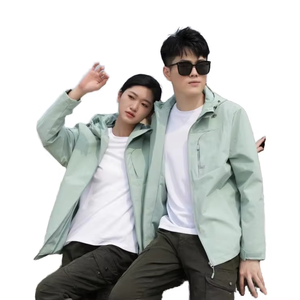
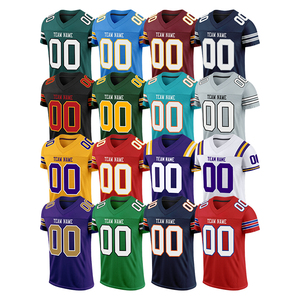
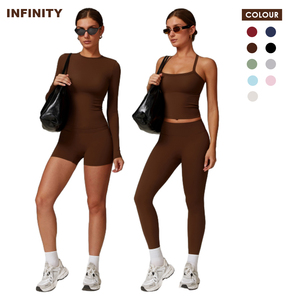
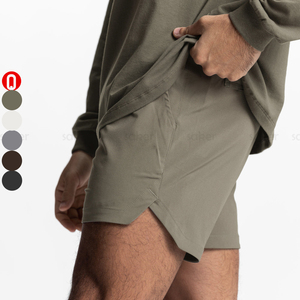
The Republic of Uzbekistan is executing one of the most comprehensive industrial upgrades in Central Asian economic history. Under the direction of the "Uztextileprom" Association and national modernization decrees, the country has made a calculated pivot: evolving from a historical exporter of raw cotton fiber into an integrated, vertically structured powerhouse of spun yarns, circular-knitted fabrics, and finished private-label garments. Today, modern industrial clusters located in Tashkent, Fergana, Namangan, and Samarkand supply massive European, Russian, and North American retail brands.
However, as global apparel buyers elevate compliance standards under the EU's Generalized Scheme of Preferences Plus (GSP+), Uzbek cut-and-sew manufacturers face an acute technical challenge: Trim-level component compliance and durability. Traditional flat embroidery and direct screen printing often suffer from chemical wash degradation, thread fraying under abrasive field operations, and poor colorfastness in harsh washing protocols. As a specialized manufacturing partner operating from Sialkot's globally renowned export hub, our factory provides high-precision Polyvinyl Chloride (PVC) rubber emblems, molded silicone badges, and custom thermoplastic elastomer trims designed specifically to bridge this value-added supply chain gap.
Our micro-injection process utilizes automated multi-axis computer-numerical-control (CNC) liquid dispensing manifolds capable of volumetric metering down to 0.01 milliliters per drop. This eliminates pigment bleed along intricate vector boundaries, ensuring that corporate insignias, national crests, and micro-text down to 0.4mm stroke width remain crisp, tactile, and non-distorted across decades of garment use.
Procurement directors across Uzbek garment hubs often deliberate between soft PVC, solid silicone, and high-frequency welded TPU. Each polymer architecture offers distinct thermodynamic, aesthetic, and mechanical performance characteristics. Choosing the appropriate formulation determines the final garment's wash survivability, tactile hand-feel, and landed production cost.
1. Shore Hardness Optimization (Durometer Selection): For activewear, rugby jerseys, and flexible athletic tracksuits, we formulate our soft PVC to a durometer rating of Shore 45A to 50A. This creates a flexible, pliable patch that moves naturally with knitted jersey textiles without causing garment bunching or localized fabric fatigue. For military tactical badges, heavy mining workwear, and backpack external tabs, we utilize Shore 60A to 65A compound mixes, delivering rigid perimeter retention and puncture resistance.
2. Ecological Compliance & Chemical Purity: European and US importers contracting factories in Tashkent and Namangan mandate total compliance with European REACH Annex XVII regulations, US CPSIA, and Oeko-Tex Standard 100 Class I (safe for direct skin contact). Our export-grade PVC compound is completely free of restricted ortho-phthalates (such as DEHP, DBP, BBP, DINP, and DIDM), heavy metal pigments (lead, cadmium, mercury), and organotin stabilizers. Independent SGS, Intertek, and TÜV laboratory test certificates are available with every bulk export consignment.
3. Perimeter Stitch Channel (Sewing Ditch) Architecture: The primary failure mode of secondary-market rubber patches is thread shredding during high-speed industrial lockstitching. If a sewing machine needle penetrates solid 3mm PVC, friction heat melts the polymer, coating the needle with gummy residue and breaking the polyester thread. Our molds integrate a dedicated, recessed perimeter sewing channel (width: 1.2mm, depth: 0.8mm) with a base thickness of only 0.6mm. This allows standard Juki, Brother, or Jack needle systems (Gauge 14 to 18) to glide cleanly around the patch circumference at up to 2,500 stitches per minute without needle deflection or skipped stitches.
Our engineering team configures patch compositions, adhesive substrates, and backing mechanics to meet the exact environmental and commercial demands of key Uzbek industries.
Export-oriented knitwear factories producing bulk hoodies, cotton joggers, and lifestyle streetwear for leading European brands require branded sleeve tabs, 3D chest badges, and zipper pullers that maintain their premium matte aesthetic through industrial stone-washing and enzyme treatments.
The Navoi Mining and Metallurgical Combine (NMMC) and Almalyk Mining and Metallurgical Combine (AMMC) require industrial protective workwear. Emblems must endure heavy contact with industrial greases, airborne mineral particulates, continuous UV radiation, and high-temperature laundering cycles.
Military, border patrol, and security agencies across Uzbekistan demand covert non-glare, infrared-reflective (IR), and phosphorescent PVC morale and unit insignia. Backings are fitted with authentic hook-and-loop (Velcro-compatible) systems reinforced with perimeter box-X stitching.
Football clubs (such as FC Pakhtakor and FC Bunyodkor), national Kurash federations, and boxing academies require lightweight, sweat-resistant, metallic-tinted or micro-textured silicone-feel club crests that do not chafe athlete skin during international championship performance.
Rapidly expanding e-commerce delivery networks across Tashkent and regional capitals require weather-shielded uniforms. Molded PVC shoulder badges withstand daily rain, sleet, and motorized delivery abrasion while displaying vibrant Pantone-accurate corporate identities.
Luggage manufacturers in Samarkand and Bukhara crafting Cordura backpacks, travel bags, and outdoor camping equipment utilize thick, rugged 4mm PVC branded plates with dual-sided reinforced sew channels, providing structural branding that outlasts the gear itself.
Standardize your production briefs using verifiable mechanical and chemical test data. The table below illustrates the material advantages of micro-injection PVC rubber patches relative to conventional garment embellishment techniques.
| Evaluation Parameter | Micro-Injection Soft PVC | High-Density Embroidery | Woven Polyester Damask | Direct Plastisol Screenprint |
|---|---|---|---|---|
| Dimensional Relief & Detail (3D) | Multi-tiered 3D sculptured depth up to 4.5mm | Layered thread build (max 1.5mm) | Flat planar 2D profile (<0.4mm) | Flat 2D thin film layer |
| Water & Weatherproof Rating | 100% Hydrophobic, zero absorption | Absorbs moisture, potential mildew | Absorbs moisture, slow drying | Impermeable but prone to micro-fissuring |
| Abrasion & Friction Resistance | Extreme; Shore 50A rubber flexes & recovers | Threads snag, fray, and break under friction | Edges fray if perimeter unravels | Flakes and cracks under shear friction |
| Wash Fastness (60°C Heavy Cycle) | Zero pigment fade or edge curling (50+ cycles) | Color leaching and puckering over time | Edge curling, dimensional shrinkage | Progressive cracking and peeling |
| Extreme Cold Stability (-25°C) | Retains flexibility (Polymeric Plasticized) | Unaffected | Unaffected | High embrittlement, snap-cracking risk |
| Attachment Versatility | Sew-in channel, Velcro, Hot-melt TPU, 3M peel | Sew-on, Iron-on backing | Perimeter stitch, Heat seal | Direct substrate bonding only |
| Tooling Cost Amortization | Low initial mold setup; highly scalable at volume | Digitizing fee only, high unit needle time | Loom setup fee, minimal unit cost | Screen separation costs per color |
A critical consideration for purchasing agents in Uzbekistan is delivery predictability and transit economy. Because Uzbekistan is a doubly landlocked nation, supply chains must operate via tested overland and air corridors. Our dedicated logistics department coordinates door-to-door (DAP Tashkent) and airport-to-airport freight forwarding tailored specifically for Uzbek textile enterprises.
Overland TIR Transit Corridors: For bulk volume orders (50,000 to 500,000+ pieces), road freight via TIR carnets offers the optimal balance between freight cost and speed. Cargo moves via established Central Asian highway networks through China/Kyrgyzstan into the border clearance posts of Andijan and Tashkent, with average transit times of 10 to 14 days. Packaging is executed in heavy-gauge moisture-sealed master cartons with internal desiccant bags, ensuring that humidity changes across high-altitude mountain passes do not compromise heat-seal adhesive backings.
Expedited Airfreight via TAS: When sample approvals or high-speed garment export deadlines loom, our factory dispatches via direct scheduled air cargo into Islam Karimov Tashkent International Airport (TAS). Transit windows range from 3 to 5 business days from dispatch. We provide full pre-customs documentation bundles including the Commercial Invoice, Packing List, Certificate of Origin (Form A / COO), and HS Code classification (Under Chapter 39: HS Code 3926.90.97 - Articles of Plastics / Soft PVC Badges) to ensure rapid clearance through Uzbek State Customs Committee inspection.
Based in the global sports manufacturing center of Sialkot, Pakistan, Maxso Sports integrates in-house mold tooling, CNC micro-injection molding, garment cut-and-sew operations, and strict ISO-aligned quality verification under one operational roof.
Our computerized high-speed CNC engraving machines carve copper and aluminum molds with 0.05mm fidelity, delivering prototypes from artwork vector files in 48 to 72 hours.
We eliminate high minimum order barriers for Uzbek brand builders. Start test production runs from just 50 garments or 100 patches before scaling to full container loads.
Equipped with computerized spectrophotometers, our color technicians match your brand identity to international Pantone Solid Coated references with delta-E < 0.8 accuracy.
Every single batch undergoes tensile stretch testing, rub-resistance checks, visual defect scanning under 10x magnification, and hot-water thermal cycling prior to export dispatch.
Direct, transparent answers regarding customs processes, technical sewing parameters, temperature stability, and payment terms for bulk orders destined for Uzbekistan.
Initial mold design and pre-production photo/video sampling takes 3 to 4 business days. Following digital approval, physical counter-samples can be couriered via DHL in 3 days. Bulk injection runs (1,000 to 20,000 pieces) are produced in 7 to 10 days. Total turnaround from technical freeze to DAP Tashkent delivery typically spans 14 to 18 days.
Yes. We engineer our patches with an integrated 0.8mm deep perimeter sewing ditch (channel) along the outside border. This thin 0.6mm floor allows your sewing floor to utilize standard industrial single-needle lockstitch machines (Juki DDL series, Jack A4/A5) with regular size #14 to #18 needles and bonded polyester thread without friction melting.
Standard commodity PVC snaps under sub-zero stress. Our export-grade compounds are enriched with cold-resistant polymeric plasticizers and impact modifiers that maintain durometer suppleness down to -30°C. They pass standard freeze-flex fatigue tests (DIN 53351 / ISO 5423) with over 30,000 flex cycles with zero surface micro-fracturing.
For industrial and mining workwear, we strongly recommend our perimeter sewing channel for permanent attachment that survives aggressive industrial laundry. For defense, police, and tactical security gear, we fuse mil-spec hook-and-loop (Velcro-compatible) backing using heat-welded adhesive backed by a secondary reinforced perimeter lockstitch.
Yes. European retailers importing finished goods manufactured in Uzbekistan require verifiable compliance under the GSP+ framework. We provide certified laboratory test reports confirming non-detection of restricted phthalates, Azo dyes, polycyclic aromatic hydrocarbons (PAHs), and heavy metals according to OEKO-TEX Standard 100 Class I and REACH Annex XVII.
We accommodate institutional procurement requirements via direct international wire transfers (SWIFT T/T in USD or EUR), irrevocable Letters of Credit (L/C at sight) for contract orders exceeding $15,000 USD, and recognized escrow systems for sampling and pilot orders. Commercial proforma invoices clearly outline currency and payment schedules.
Whether you manage an enterprise manufacturing hub in Tashkent or an expanding streetwear label in Samarkand, partner directly with our Sialkot production facility for direct wholesale pricing, rapid prototype tooling, and proven Central Asian delivery.
Send an Inquiry