Verified manufacturing specifications for commercial apparel distributors, premier sporting academies, collegiate uniform contracts, and streetwear labels across Johannesburg, Cape Town, and Durban.
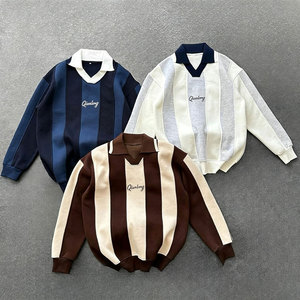
Navigating the wholesale tracksuits import landscape in South Africa demands a granular grasp of microclimates, sporting calendar shifts, currency hedging between the South African Rand (ZAR) and USD, and strict customs classification under the South African Revenue Service (SARS). Sialkot, Pakistan stands as the undisputed global nerve center for performance sportswear engineering—yielding over 70% of the world's hand-stitched athletic equipment and supplying premier European tier-one sports brands.
For South African commercial stockists, school uniform consortia, and emerging private streetwear brands, sourcing directly from a vertically integrated Sialkot manufacturing plant eliminates compounding third-party agency margins. We combine technical warp-knitted tricot fabrics, high-density cotton-polyester fleece, and aerodynamic micro-ripstop textiles with laboratory-certified colorfastness, tailored specifically for sub-Saharan UV exposure and heavy abrasive match conditions.
Whether servicing the high-volume demand of high school rugby tours in Pretoria, multi-branch fitness franchises along the Western Cape, or the trend-setting streetwear boutiques in Braamfontein and Maboneng, our cut-and-sew architecture offers scalable production slots starting from as low as 50 pieces per colorway.
Sportswear and tracksuits in South Africa represent more than recreational gear—they operate as fundamental assets in educational culture, elite competitive athletics, corporate identity, and urban youth fashion.
South African school sports (inter-schools rugby, hockey derbies, and athletics meets like Craven Week) command heavy tradition and substantial budgets. Uniform stockists require durable warm-up tracksuits that withstand winter frosty mornings on the Highveld while presenting crisp school crest embroidery and color-matched side tapings.
From the Premier Soccer League (PSL) feeder academies to regional rugby unions across the Eastern Cape and KwaZulu-Natal, professional and semi-pro clubs demand moisture-wicking micro-polyester tracksuits with ergonomic stretch gussets for optimal mobility during high-intensity warm-ups.
South African urban fashion hubs in Johannesburg and Cape Town set pan-African cultural trends. The surging Amapiano music lifestyle has propelled oversized, vintage-cut quarter-zip windbreaker sets and luxury heavyweight French terry fleece tracksuits to the forefront of youth culture retail.
Major commercial gym chains (Virgin Active, Planet Fitness) and private medical schemes organize massive annual corporate wellness challenges. Branded unified tracksuit programs project authority and corporate cohesion for coaching staff, physical trainers, and corporate participants.
South Africa hosts one of the world's most sophisticated private security sectors. Security companies and community policing forums deploy specialized black, navy, and tactical olive tracksuits for nighttime patrols, dog-handler units, and rapid-response transit teams requiring high visual authority and wind protection.
Johannesburg acts as the primary trading springboard into the broader Southern African Development Community (SADC). Regional traders from Botswana, Namibia, Zimbabwe, and Mozambique source consolidated containers of bulk athletic tracksuits from Gauteng master wholesalers.
Market dynamics in South Africa are evolving rapidly due to global shipping volatility, regional tariff revisions, and changing consumer tastes. Staying ahead requires aligning factory production with local demand pivots.
Traditional single-fleece tracksuits struggle across varied regional climates: Gauteng experiences freezing winter mornings (May-August) followed by 20°C afternoons, whereas Durban maintains high coastal humidity. Modern buyers demand hybrid tracksuits featuring breathable mesh linings paired with windproof shells or bonded poly-tricot fleece.
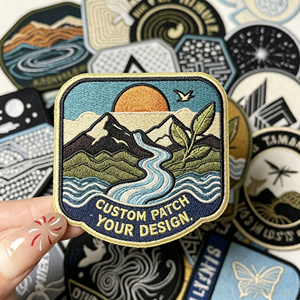
Flat screen printing is losing ground in mid-to-premium retail tiers. Buyers in Sandton and V&A Waterfront retail hubs prioritize high-density embossed TPU patches, laser-etched silicone club badges, and bonded reflective tapes that resist delamination under rigorous high-temp machine washing.
School and club procurement seasons have compressed. Purchase orders once confirmed 6 months in advance are now finalized within 90-120 days of the sports season kick-off in February/March. Factories with reliable, dedicated fabric staging in Sialkot offer a 20-day production turnaround edge.
South African multi-brand retail groups are increasingly subjected to corporate ESG guidelines, requiring suppliers to document OEKO-TEX Standard 100 dyeing certificates and traceability on post-consumer recycled polyester yarn blends for schoolwear lines.
| Fabric Class | Composition & Weight | Optimal South African Climate / Season | Primary Commercial Use | Wash & Abrasion Rating |
|---|---|---|---|---|
| Bonded Poly Tricot | 100% Polyester | 220 - 250 GSM | Highveld & Karoo Autumn/Winter (Dry Cold) | High school sports uniforms, club presentation kits | Level 4.5 • Extreme anti-pilling |
| French Terry Brushed Fleece | 65% Cotton, 35% Poly | 320 - 360 GSM | Nationwide Winter / Indoor Loungewear | Streetwear brands, collegiate hoodies & track pants | Level 4.0 • Soft handfeel |
| Micro-Ripstop Windbreaker | 100% Nylon / Polyester Taslan | 110 - 130 GSM | Western Cape Rainy Winter, Durban Coastal Gale | Outdoor athletics coaching, running clubs, sailing | Level 5.0 • Wind/Water resistant |
| Interlock Poly-Spandex | 90% Poly, 10% Elastane | 240 - 280 GSM | Trans-seasonal (Spring / Autumn / Pre-Season) | Semi-pro soccer/rugby training, gym athletic tights | Level 4.5 • 4-Way Elastic Recovery |
Direct industrial cut-and-sew operations eliminate intermediary price gouging, providing South African brands with authentic factory transparency, rigorous European QC standards, and bespoke tailoring flexibility.
From pattern grading on computerized CAD tables to fabric laser-cutting, high-tensile flatlock stitching, multi-head embroidery, and final bar-tacking—our complete processing chain remains housed within our Sialkot factory.
We do not merely sew tracksuits; we engineer comprehensive private-label identities. Our in-house branding division yields custom silicone badges, woven neck damask labels, metal aglets, embossed zipper pulls, and printed mailer cartons.
Our paperwork is configured for effortless SARS and clearance agent processing. We provide full packing lists itemized by carton gross/net weight, verified HS classification codes, and container loading inspections that guarantee undamaged maritime arrival.
Looking to benchmark current supplier pricing against an authentic Sialkot factory gate quote?
Contact UsReal-world procedural guidance covering SARS customs clearance, sample development, logistics freight options, and currency risk management.
Our standard manufacturing minimum order quantity starts at just 50 pieces per style/colorway. This can typically be split across a broad range of standard South African sizes (e.g., S through 3XL). For badge, patch, and woven label kit development, minimums are generally 100 units, which can be stored at our factory for staggered bulk reorders.
We routinely arrange FOB (Free on Board) Pakistan or CIF (Cost, Insurance, and Freight) to Durban Port and Port of Cape Town via major maritime carriers like Maersk, MSC, and CMA CGM with typical transit times of 22 to 26 days. For expedited needs, air cargo directly into O.R. Tambo International Airport (JNB) or Cape Town International (CPT) takes 4 to 7 working days.
Yes. South African collegiate and sporting athletes generally require broader shoulder drops, deeper chest profiles, and longer pant inseams compared to standard Asian cuts. We accept tech packs and measurement spreadsheets directly in centimeters, or we can provide our proven Southern African rugby/athletic standard grading pattern for your confirmation.
Apparel imported into South Africa is generally subject to customs duty under Chapters 61 and 62, along with 15% South African VAT. We assist your clearing agent by providing precise itemized commercial invoices and packing lists accurately stating composition (e.g., 100% Synthetic Warp Knit Tracksuit HS 6112.12) to ensure transparent, compliant tariff duty calculation without customs holds.
Absolutely. We strongly advocate for physical pre-production sample approval prior to releasing full bulk runs. We will engineer 1 to 3 prototype garments using the exact selected fabric GSM, custom dyeing, embroidery/TPU badges, and brand labels. Prototypes are couriered straight to your address via DHL or FedEx Express in 4 to 6 business days.
Our standard international B2B terms operate via Swift Telegraphic Transfer (T/T), typically 30% to 50% deposit upon proforma invoice sign-off to initiate fabric knitting/dyeing, with the balance payable upon bulk completion and review of high-res inspection photos/video before cargo dispatch. Irrevocable Letters of Credit (L/C at sight) are supported on commercial full-container orders.
Our manufacturing facility in the Madni Trade Zone, Defence Road, Sialkot is powered by industrial-grade backup diesel generators and rooftop solar PV infrastructure. This completely isolates our cut, sew, embroidery, and pressing assembly lines from regional grid fluctuations, guaranteeing that committed factory ship dates are reliably met.
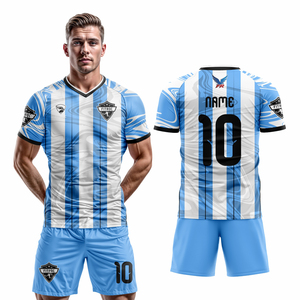
Yes. Many South African sports wholesalers and uniform retail chains combine custom tracksuits, rugby jerseys, sublimated football kits, coaches' long-sleeve polo shirts, and custom school badges into one consolidated ocean or air consignment. This strategy lowers per-unit shipping overheads and streamlines the SARS clearance process.
Connect directly with our Sialkot factory export desk. Share your tech pack, visual sketch, or volume target, and receive an itemized, fully transparent FOB or CIF quotation with guaranteed lead times within 24 hours.